Want to be in the loop?
subscribe to
our notification
Business News
VIETNAM’S ONE-MILLION-HECTARE RICE PLAN REACHES JUST 3% OF 2026 TARGET
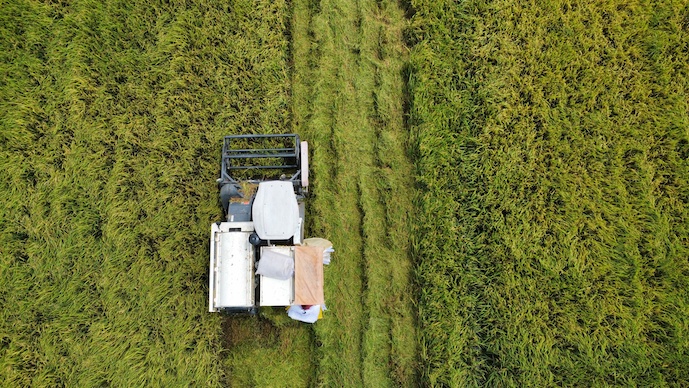
A combine harvester operates in a rice field in the Mekong Delta - PHOTO: TRUNG CHANH
CAN THO – Vietnam’s plan to develop one million hectares of high-quality, low-emission rice has reached just over 3% of its 2026 target, far below expectations.
The program aims to roll out nearly 470,000 hectares this year. However, only 14,766 hectares have been implemented so far, including 11,430 hectares in the 2025-2026 winter-spring crop, according to the Department of Crop Production and Plant Protection under the Ministry of Agriculture and Environment.
The figures were presented at a conference on crop production held on May 6 in the Mekong Delta province of Dong Thap.
To meet the 2026 target of 468,427 hectares, an additional 453,600 hectares must be deployed in the remaining months of the year.
Among localities, An Giang Province has recorded the largest implementation area, at more than 3,160 hectares, while Tay Ninh Province has the smallest, at 381 hectares.
Authorities said progress has been hindered by several factors. Some farmers remain hesitant to adopt new techniques, such as reducing seed and fertilizer use. Production organization remains unclear in some areas, while farming is still small-scale and irrigation infrastructure is not fully synchronized.
Credit policies linked to the program have also yet to attract strong participation from businesses and farmers.
Despite the slow rollout, pilot models have shown positive results. Seed use has fallen by 30-50% compared to traditional farming, while nitrogen fertilizer use has dropped by about 30%. The number of pesticide applications has been reduced by two to three times, and all models have adopted alternate wetting and drying irrigation methods.
Economic returns have improved. In Dong Thap, farmers participating in the model reported profits of nearly VND29.5 million per hectare, about VND5.3 million higher than traditional practices.
The model has also delivered environmental benefits, cutting emissions by an average of three to four tons of CO2 equivalent per hectare.
According to the department, over 15,530 hectares have been registered to join the World Bank’s Transformative Carbon Asset Facility (TCAF), with the participation of 9,956 households.
Source: The Saigon Times
Related News

MEMBER CORNER / PROMOTIONS
WINDSOR 11.11 FLASH SALE
Only on 11/11/2026. Exclusive Rates. Your Next Stay Awaits. Make your next stay in Ho Chi Minh City even more rewarding with Windsor Plaza Hotel’s exclusive 11.11 offer. Whether you're planning a business trip or a relaxing city getaway, enjoy Windsor hospitality at a special rate for one day only. Mark your calendar and book directly at windsorplazahotel.com.
MEMBER CORNER / PROMOTIONS
HOW TO REPLACE THE BATTERY IN YOUR SENTRYSafe SAFE - SIMPLE & EASY!
Electronic locks need proper battery maintenance to ensure reliable operation.SENTRYSAFE - Protecting What Matters Most.Contact Sen Wai Vietnam for expert advice on genuine SentrySafe safes.
TECHNOLOGY
KHÁNH HÒA EYES $15.5 MILLION HI-TECH PLANT
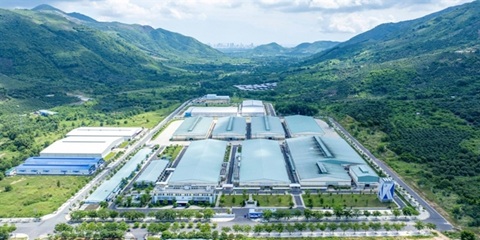
The south-central province of Khánh Hòa has granted an investment certificate for a VNĐ390 billion (US$15.5 million) high-tech plant to produce graphene, biochips and electronic components, as the province seeks to attract investment in advanced materials and biotechnology. The Hememics Vietnam project is backed by US firm Hememics Biotechnologies Inc, Vietnamese investor Viet Khanh JSC and others.
HOSPITALITY / TOURISM / ENTERTAINMENT
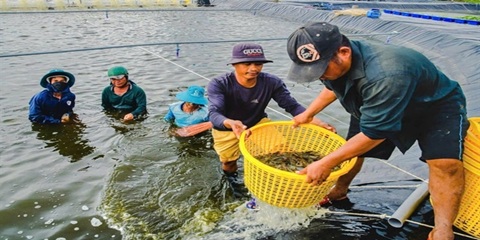
CÀ MAU SHRIMP FESTIVAL EXPECTED TO ATTRACT UP TO 10,000 VISITORS
The second Ca Mau Shrimp Festival, scheduled for November 21-23, is expected to attract 8,000-10,000 visitors, promoting the southernmost province’s shrimp industry, trade and tourism. The event, themed “Cà Mau Shrimp – Reaching Global Markets”, will take place at Phan Ngọc Hiển Square in An Xuyên ward, featuring around 350 booths showcasing achievements in shrimp farming, products under the One Commune, One Product (OCOP) programme, ecological shrimp farming, shrimp-rice farming models and high-tech application.

TECHNOLOGY
FOUR PRIORITIES FOR VIETNAM-AUSTRALIA COOPERATION IN DIGITAL TECHNOLOGY AND AI
Deputy Minister of Science and Technology Le Xuan Dinh called for selecting projects based on actual needs, linking research with commercialization, ensuring the effective operation of the V-Bridge platform, and clearly defining responsibilities and implementation timelines. The aim is to turn commitments to cooperate in digital technology, artificial intelligence (AI) and semiconductors into concrete products, projects and investment opportunities.
GARMENT / TEXTILE
JAPANESE FDI SUPPORTS GREEN TRANSITION IN VIỆT NAM'S MANUFACTURING SECTOR
Japanese Foreign Direct Investment (FDI) is strengthening Việt Nam's manufacturing capacity and accelerating the green transition, as more Japanese companies expand production and adopt sustainable industrial solutions. Việt Nam has become an important market and strategic manufacturing base in Southeast Asia for Japanese investors, reflecting their long-term confidence in the country’s economic potential and sustainable growth prospects.
Events Sponsors






















