Want to be in the loop?
subscribe to
our notification
Business News
JAPANESE FDI SUPPORTS GREEN TRANSITION IN VIỆT NAM'S MANUFACTURING SECTOR
Việt Nam has become an important market and strategic manufacturing base in Southeast Asia for Japanese investors.
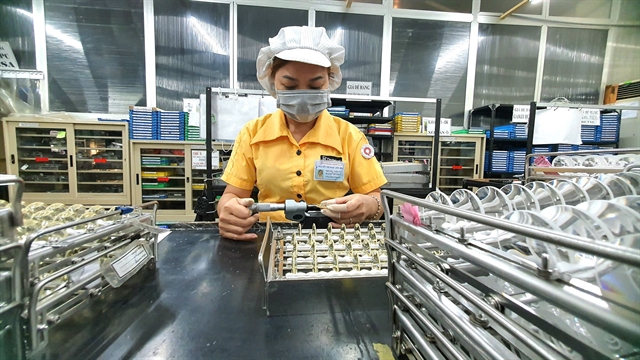
A worker checking products at a plant of R Technical Research Vietnam Co., Ltd., in Hoà Bình Commune, Phú Thọ Province. — VNS Photo Ly Ly Cao
HCM CITY — Japanese Foreign Direct Investment (FDI) is strengthening Việt Nam's manufacturing capacity and accelerating the green transition, as more Japanese companies expand production and adopt sustainable industrial solutions.
Việt Nam has become an important market and strategic manufacturing base in Southeast Asia for Japanese investors, reflecting their long-term confidence in the country’s economic potential and sustainable growth prospects.
Investment cooperation has been a key pillar of Việt Nam-Japan economic ties. According to the Vietnam Trade Promotion Agency under the Ministry of Industry and Trade, Japan has more than 5,800 active investment projects in Việt Nam, with total registered capital exceeding US$81 billion.
Free trade agreements (FTAs) have also created favourable conditions for businesses in both countries through tariff reductions, rules of origin, and trade facilitation, opening up opportunities for deeper participation in regional production networks and supply chains.
Major Japanese companies, including Honda, Panasonic, Kao Vietnam and Sumitomo, have maintained and expanded their operations in Việt Nam. Meanwhile, new Japanese investment is flowing into industrial parks, supporting greener manufacturing and the adoption of more sustainable production solutions.
A recent example is Japanese group Oji’s launch of construction of a new aseptic carton packaging factory under its Oji Liquid Pak (OLP) brand. The project, with an investment of $110 million, is located in Long Thanh High-Tech Park in Đồng Nai Province.
The investment demonstrates Oji Liquid Pak’s long-term commitment to Việt Nam and reinforces the country’s role as a strategic manufacturing and supply hub for the group in Southeast Asia.
It is also expected to support the region’s shift towards circular packaging solutions that meet evolving policy requirements.
Nguyễn Quốc An, deputy head of the Đồng Nai Industrial and Economic Zones Authority (DNIEZA), said large-scale projects like this would contribute to local industrial development, strengthen domestic production capacity and help Vietnamese businesses participate more deeply in regional supply chains.
The authority pledged to support investors throughout project implementation, provide timely guidance and coordinate efforts to resolve difficulties so that projects can proceed in line with regulations and begin operations as soon as possible.
Oji Liquid Pak General Director Kestutis Sliuzas said manufacturing industries, including packaging, were moving towards new standards that combine state-of-the-art recyclable materials and packaging, efficiency, and food safety.
The new factory will combine food packaging production with research and development, technical services, and the installation and maintenance of Japanese machinery and equipment. These activities are expected to contribute to a modern industrial environment with higher quality and added value.
Japanese investment also covers research and development in natural sciences, machinery repair and maintenance, equipment installation, and the import, export, and distribution of goods in accordance with Vietnamese law.
Trần Việt Hà, deputy head of the HCM City Export Processing and Industrial Zones Authority (HEPZA), said the authority was working to help investors start projects sooner after registration and reduce procedures related to planning and construction.
HEPZA aims to resolve matters within its authority directly and coordinate with other agencies on issues requiring inter-agency cooperation. It is also shifting from a focus on administrative procedures to monitoring projects throughout their life cycle, from investment preparation to operation.
These efforts align with Politburo Resolution No. 10-NQ/TW, dated June 8, 2026, on developing the foreign-invested economy. The resolution shifts Việt Nam's investment attraction strategy towards quality rather than quantity, prioritising high technology, innovation, workforce development and technology transfer.
The policy direction reflects Việt Nam's ambition to move beyond labour-intensive assembly towards becoming a technology-driven investment destination that generates higher added value and supports sustainable industrial growth. — VNA/VNS.
Source: VNS
Related News
VIETNAM ECONOMY INVESTMENT
FROM SCALE TO VALUE: VIỆT NAM’S AGRO-FORESTRY EXPORTS NEED CONTROL OF THE VALUE CHAIN
Việt Nam has become a major supplier to global agricultural and forestry markets, but its export strength has yet to translate into matching market power. While the country has improved its production capacity and moved further into processing, the high-value links in many supply chains, such as technology, branding, standards, data and decision-making, remain largely in foreign hands.

TECHNOLOGY
FOUR PRIORITIES FOR VIETNAM-AUSTRALIA COOPERATION IN DIGITAL TECHNOLOGY AND AI
Deputy Minister of Science and Technology Le Xuan Dinh called for selecting projects based on actual needs, linking research with commercialization, ensuring the effective operation of the V-Bridge platform, and clearly defining responsibilities and implementation timelines. The aim is to turn commitments to cooperate in digital technology, artificial intelligence (AI) and semiconductors into concrete products, projects and investment opportunities.
TECHNOLOGY
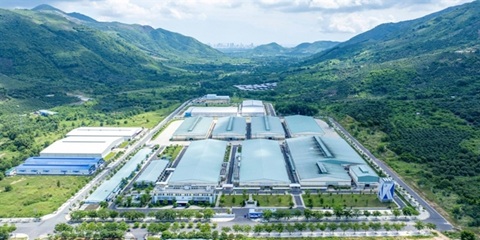
KHÁNH HÒA EYES $15.5 MILLION HI-TECH PLANT
The south-central province of Khánh Hòa has granted an investment certificate for a VNĐ390 billion (US$15.5 million) high-tech plant to produce graphene, biochips and electronic components, as the province seeks to attract investment in advanced materials and biotechnology. The Hememics Vietnam project is backed by US firm Hememics Biotechnologies Inc, Vietnamese investor Viet Khanh JSC and others.
TECHNOLOGY
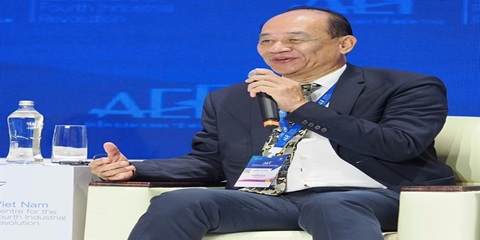
HCM CITY SEEKS NEW GROWTH MODEL IN AI ERA
HCM City is looking to strengthen its economic competitiveness by developing new growth drivers, improving workforce capabilities and enhancing international cooperation amid the rapid transformation of global value chains and the growing influence of artificial intelligence (AI). These priorities were highlighted at a thematic session on global economic transformation and economic restructuring experiences of countries and megacities, held on October 27 as part of the Autumn Economic Forum 2026 in HCM City.
HOSPITALITY / TOURISM / ENTERTAINMENT
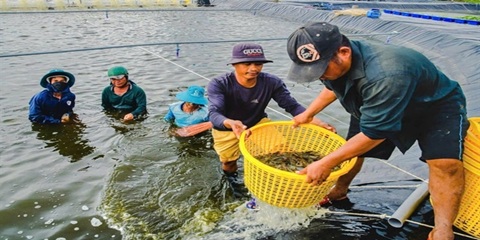
CÀ MAU SHRIMP FESTIVAL EXPECTED TO ATTRACT UP TO 10,000 VISITORS
The second Ca Mau Shrimp Festival, scheduled for November 21-23, is expected to attract 8,000-10,000 visitors, promoting the southernmost province’s shrimp industry, trade and tourism. The event, themed “Cà Mau Shrimp – Reaching Global Markets”, will take place at Phan Ngọc Hiển Square in An Xuyên ward, featuring around 350 booths showcasing achievements in shrimp farming, products under the One Commune, One Product (OCOP) programme, ecological shrimp farming, shrimp-rice farming models and high-tech application.
BANKING / FINANCE / INSURANCE / TAX
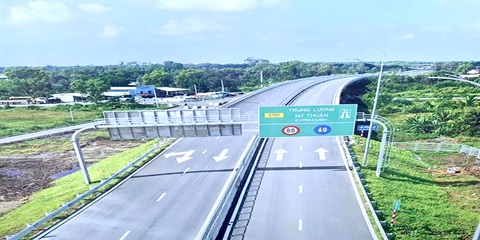
MAJOR INFRASTRUCTURE PROJECTS BECOME MAIN DRIVER FOR BANK PROFITS
The race to finance major infrastructure projects worth hundreds of billions of US dollars is opening up new opportunities for profit growth in the banking sector. According to experts, the banking sector's profit outlook for 2026 reflects not only the recovery of credit demand but also a fundamental shift in the composition of interest-earning assets, with major infrastructure projects emerging as a strategic, long-term pillar of lending and long-term pillar.
Events Sponsors