Want to be in the loop?
subscribe to
our notification
Business News
FOUR PRIORITIES FOR VIETNAM-AUSTRALIA COOPERATION IN DIGITAL TECHNOLOGY AND AI
Deputy Minister of Science and Technology Le Xuan Dinh called for selecting projects based on actual needs, linking research with commercialization, ensuring the effective operation of the V-Bridge platform, and clearly defining responsibilities and implementation timelines. The aim is to turn commitments to cooperate in digital technology, artificial intelligence (AI) and semiconductors into concrete products, projects and investment opportunities.

At the Vietnam-Australia forum on investment and development cooperation in digital technology and AI, held in Hanoi on October 12, Deputy Minister of Science and Technology Le Xuan Dinh outlined measures to promote practical, measurable and sustainable bilateral cooperation.
According to Deputy Minister Le Xuan Dinh, Vietnam sees science, technology, innovation and digital transformation as drivers of productivity, higher-quality growth and competitiveness. Therefore, international cooperation must go beyond connecting experts or signing memorandums of understanding (MoUs). It should help companies strengthen their technological capabilities, develop human resources, create products that meet market demand and participate more deeply in value chains.
4 Priorities for Technology Cooperation
First, select projects based on actual needs, with clear outputs and commercialization prospects
Deputy Minister Le Xuan Dinh called on the Department of Digital Technology and Artificial Intelligence (DDA) to work with relevant agencies to identify needs that partners are ready to address and select priority projects based on data access, testing conditions, implementation capacity, available resources and commercialization prospects.
Importantly, the parties must agree on objectives and evaluation methods from the outset. For projects aimed at improving productivity, baseline data must be available to measure progress. For new product development projects, the intended users, quality requirements and conditions for bringing products to market must be clearly defined.
This approach places investment efficiency and practical applications at the center of cooperation. Companies should not act merely as technology recipients but should help define problems, organize testing and assess whether research results can be applied in production and business operations.
Second, link research and product development with human resource training and clarify how results will be used
Expanding Market Opportunities for Digital Technology Firms
Deputy Minister Le Xuan Dinh called on research institutes, universities and companies to participate from the problem-definition stage to ensure that research aligns with market requirements and that personnel are prepared to develop and operate technologies.
For AI, cooperation programs should focus on data quality, reliability and the ability to control results. In semiconductors, potential areas of cooperation include chip design, design verification, support for pilot production and testing, depending on the capabilities and resources of the parties.
In addition, expert exchanges, engineer training and research mentoring must be tied to specific tasks within each project to build teams capable of continuing the work after the programs end.
Deputy Minister Le Xuan Dinh also called on the parties to agree from the outset on intellectual property rights, data use, testing responsibilities and how results will be used. These arrangements are essential to reducing obstacles, protecting the interests of all parties and facilitating investment in research and technology development.
Third, operate V-Bridge to create concrete opportunities for cooperation and investment
Regarding the V-Bridge platform launched at the forum, the Deputy Minister assigned DDA to work with the Vietnam-Australia Scholars & Experts Association (VASEA) and FPT Corporation to develop an operating plan, designate support contacts and establish performance evaluation criteria.
Accordingly, information on technological capabilities, market needs and cooperation opportunities must be kept up to date and verifiable. After partners are connected, they should continue to receive support with technical, commercial and investment discussions, as well as assistance in resolving implementation difficulties.
The platform's effectiveness must be demonstrated through concrete results, such as partner meetings, project proposals, joint testing activities, contracts and investment opportunities arising from these connections.
Fourth, designate clear focal points and link accountability to implementation timelines and results
Deputy Minister Le Xuan Dinh assigned DDA to serve as the focal point and work with units under the Ministry, VASEA, FPT, research institutes, universities and companies to develop a plan to implement the MoU following the forum.
The plan must clearly identify priority projects, participating partners, each party's responsibilities, expected resources, deliverables and evaluation milestones. DDA is responsible for monitoring progress, identifying obstacles, coordinating solutions within its authority and reporting issues that require the Ministry's direction.
The Ministry of Science and Technology will direct its units to provide policy guidance, mobilize and connect resources, and coordinate efforts to resolve difficulties within their respective areas of responsibility, in accordance with applicable laws and the conditions of each project.
Deputy Minister Le Xuan Dinh called for VASEA and the Vietnamese intellectual and expert community in Australia to play a greater role in connecting the two countries. Their understanding of the research and business landscapes in both countries can help identify suitable partners, connect resources and support projects from planning through implementation.
He also made clear that the success of cooperation would be measured by results after the forum, including launched projects, established research teams, tested products and realized investment opportunities.
Source: VCCI
Related News
VIETNAM ECONOMY INVESTMENT
HCM CITY SEEKS US$19 BILLION IN FOREIGN INVESTMENT IN 2026
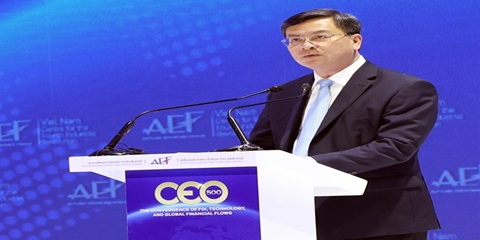
HCM City is prioritising high-quality foreign investment linked to technology, finance and sustainable development as it seeks to strengthen its position as a regional economic hub. More than 500 domestic and international business leaders gathered at the CEO 500 conference on October 26 to discuss investment opportunities and new growth drivers for HCM City amid changing global capital flows and technological advances.
HOSPITALITY / TOURISM / ENTERTAINMENT
CÀ MAU SHRIMP FESTIVAL EXPECTED TO ATTRACT UP TO 10,000 VISITORS
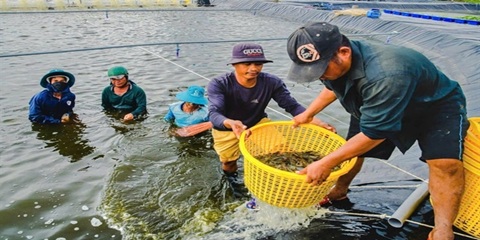
The second Ca Mau Shrimp Festival, scheduled for November 21-23, is expected to attract 8,000-10,000 visitors, promoting the southernmost province’s shrimp industry, trade and tourism. The event, themed “Cà Mau Shrimp – Reaching Global Markets”, will take place at Phan Ngọc Hiển Square in An Xuyên ward, featuring around 350 booths showcasing achievements in shrimp farming, products under the One Commune, One Product (OCOP) programme, ecological shrimp farming, shrimp-rice farming models and high-tech application.
TECHNOLOGY
KHÁNH HÒA EYES $15.5 MILLION HI-TECH PLANT
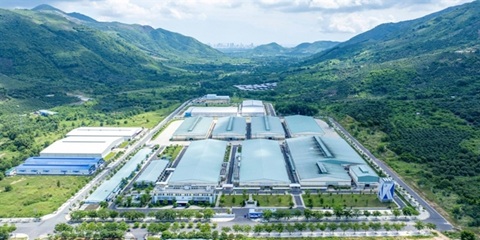
The south-central province of Khánh Hòa has granted an investment certificate for a VNĐ390 billion (US$15.5 million) high-tech plant to produce graphene, biochips and electronic components, as the province seeks to attract investment in advanced materials and biotechnology. The Hememics Vietnam project is backed by US firm Hememics Biotechnologies Inc, Vietnamese investor Viet Khanh JSC and others.
TECHNOLOGY
HCM CITY SEEKS NEW GROWTH MODEL IN AI ERA
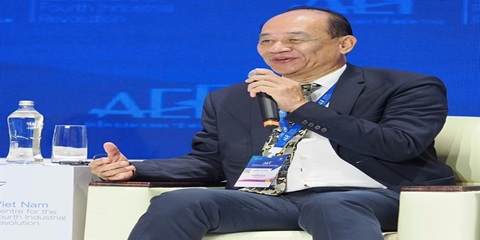
HCM City is looking to strengthen its economic competitiveness by developing new growth drivers, improving workforce capabilities and enhancing international cooperation amid the rapid transformation of global value chains and the growing influence of artificial intelligence (AI). These priorities were highlighted at a thematic session on global economic transformation and economic restructuring experiences of countries and megacities, held on October 27 as part of the Autumn Economic Forum 2026 in HCM City.
GARMENT / TEXTILE
JAPANESE FDI SUPPORTS GREEN TRANSITION IN VIỆT NAM'S MANUFACTURING SECTOR
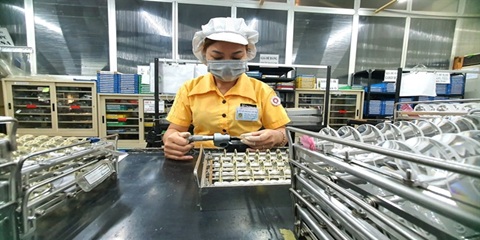
Japanese Foreign Direct Investment (FDI) is strengthening Việt Nam's manufacturing capacity and accelerating the green transition, as more Japanese companies expand production and adopt sustainable industrial solutions. Việt Nam has become an important market and strategic manufacturing base in Southeast Asia for Japanese investors, reflecting their long-term confidence in the country’s economic potential and sustainable growth prospects.
VIETNAM ECONOMY INVESTMENT
FROM SCALE TO VALUE: VIỆT NAM’S AGRO-FORESTRY EXPORTS NEED CONTROL OF THE VALUE CHAIN
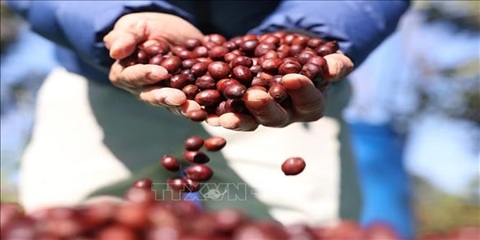
Việt Nam has become a major supplier to global agricultural and forestry markets, but its export strength has yet to translate into matching market power. While the country has improved its production capacity and moved further into processing, the high-value links in many supply chains, such as technology, branding, standards, data and decision-making, remain largely in foreign hands.
Events Sponsors






















