Want to be in the loop?
subscribe to
our notification
Business News
VIỆT NAM’S REAL ESTATE MARKET SEES OPPORTUNITIES FROM THREE KEY SHIFTS
The Government’s decision to merge certain provinces and cities is expected to necessitate adjustments to all existing master plans while streamlining project approval procedures.
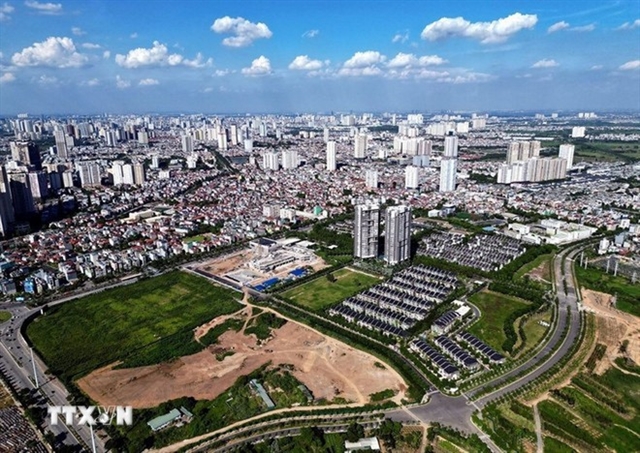
The expansion and connectivity of the national infrastructure network are widening access to labour resources and consumer markets. — VNA/VNS Photo
HÀ NỘI — Việt Nam’s real estate market is undergoing a pivotal transition, shaped by three major structural changes – the administrative boundary mergers, the rollout of large-scale infrastructure projects, and the implementation of the amended Land Law 2025, which will take effect in early next year.
The Government’s decision to merge certain provinces and cities is expected to necessitate adjustments to all existing master plans while streamlining project approval procedures. This is set to reduce administrative barriers, accelerate project timelines, and refresh project promotion strategies.
At the same time, the expansion and connectivity of the national infrastructure network are widening access to labour resources and consumer markets. Reduced transportation time and logistics costs are expected to boost trade flows, especially in emerging secondary markets.
Meanwhile, the enhanced legal framework lays the foundation for a more transparent mechanism in compensation, project approval, licensing, and secondary market transactions.
Among all sectors, industrial real estate is poised for the most significant growth, driven by the global supply chain shift and Việt Nam’s export-oriented economy.
For the segment, in the first nine months of this year, foreign direct investment (FDI) reached over US$28.5 billion, up 15.2 per cent year-on-year. This surge shows increased demand for manufacturing expansion, larger investment scales, and industrial infrastructure development, signaling a strong long-term outlook.
As a result, assets such as ready-built factories, warehouses, cold storage facilities, and sorting centres are drawing heightened investor attention, leading to rising rental prices. Major infrastructure projects located near ring roads, expressways, international airports, and deep-water ports are expected to shorten delivery times, cut logistics costs, and strengthen regional connectivity.
The key challenges in this segment remain land clearance and uneven progress in transport infrastructure.
Improved transport links and revised local planning post-merger are set to spur tourism in new destinations. Expressways, airports, and coastal routes will reduce travel times and make it easier for visitors to explore areas with coastal and highland attractions. Ultimately, the speed of infrastructure development will determine the success of resort and tourism real estate projects.
The retail property segment also holds strong promise. Robust domestic consumption, a growing middle class, and rapid urbanisation are fueling demand for modern shopping facilities.
Future retail supply is expected to expand notably in secondary and tertiary markets such as Tây Ninh, Đồng Tháp, Cần Thơ, Hưng Yên, Hải Phòng, Nghệ An, and Thái Nguyên. Meanwhile, demand for urban shopping experiences and integrated retail spaces remains high, supporting both geographical expansion and financial performance growth across the segment. — VNS
Source: VNS
Related News
INFRASTRUCTURE / CONSTRUCTION / LOGISTIC / PORT
HUNG YEN BUILDS MOMENTUM FOR DOUBLE-DIGIT GROWTH WITH STRONG H1 PERFORMANCE
Strong industrial output, rising investment and robust trade propelled Hung Yen into Vietnam's top five fastest-growing localities in the first half of 2026, reinforcing confidence in the province's double-digit growth outlook. Accordingly, the Northern province posted regional GDP growth of 10.7 per cent in the first half (H1) of 2026, outperforming its growth target and ranking among Vietnam's five fastest-growing localities.

GARMENT / TEXTILE
FOOTWEAR INDUSTRY ACCELERATES GREEN TRANSITION, STRENGTHENS SUPPLY CHAINS
Việt Nam's footwear industry is stepping up efforts to build greener production and strengthen domestic supply chains as it seeks to maintain export growth amid global uncertainties. The sector earned nearly US$12 billion from exports in the first half of 2026. During the period, Việt Nam also overtook China to become the largest footwear supplier to the US market for the first time.
VIETNAM ECONOMY INVESTMENT
GROWTH RACE BEGINS TURNING PROVINCES INTO NEW ECONOMIC ENGINES
A new growth race is taking shape across Việt Nam, but this time it is not just about which province expands the fastest. The latest gross regional domestic product (GRDP) figures reveal a deeper shift in the way the country is managing its economy, with localities increasingly expected to become independent growth engines rather than simply implementing centrally assigned policies.

VIETNAM ECONOMY INVESTMENT
TRADE BUDGET REVENUE NEARS VND265 TRILLION, DRIVEN BY CUSTOMS REFORM
Budget revenue from Vietnam's import-export activities reached VND264.795 trillion (US$10.59 billion) in the first six months of 2026, up 18.6% from the same period last year. The result reflects not only the strong recovery in trade but also progress in institutional reform, administrative simplification, and digital transformation across the customs sector, helping reduce compliance costs, improve competitiveness, and facilitate trade for businesses.

INFRASTRUCTURE / CONSTRUCTION / LOGISTIC / PORT
VIỆT NAM UPGRADES SEAPORT NETWORK TO STRENGTHEN MARITIME COMPETITIVENESS
Hải Phòng City has emerged as one of Việt Nam's key logistics hubs thanks to an integrated transport network combining expressways, an international airport, a planned high-speed railway and a deep-water port capable of handling vessels of more than 200,000 deadweight tonnages (DWT) with direct connections to Europe and the Americas.

INFRASTRUCTURE / CONSTRUCTION / LOGISTIC / PORT
KHÁNH HÒA CALLS FOR INVESTMENT IN PORTS, LOGISTICS
At an investment promotion conference held on July 14, Trương Văn Tiến, director of the provincial Investment, Trade and Tourism Promotion Centre highlighted the strategic advantages of the Vân Phong deep-water port and Cà Ná port, saying the facilities would underpin the development of port services, logistics, shipbuilding, energy and other marine-based industries.
Events Sponsors


