Want to be in the loop?
subscribe to
our notification
Business News
KHÁNH HÒA CALLS FOR INVESTMENT IN PORTS, LOGISTICS
With nearly 500km coastline, a strategic location on the East Sea and expanding transport infrastructure, Khánh Hoà has significant potential to become a regional logistics and international transshipment hub.
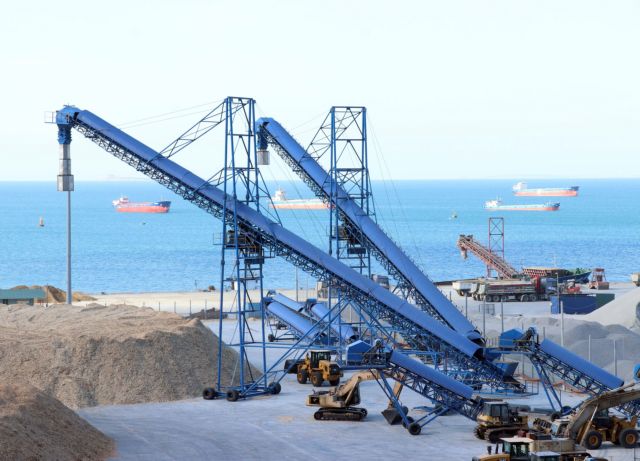
Cà Ná Port. Khánh Hòa Province pledges favourable conditions for companies investing in developing a network of seaports, inland container depots (ICDs) and logistics centres in the province. — VNA/VNS Photo Công Thử
HÀ NỘI — Khánh Hòa Province is calling for investment to develop a network of seaports, inland container depots (ICDs) and logistics centres to strengthen its role as a maritime gateway for south-central and the Central Highlands regions.
At an investment promotion conference held on July 14, Trương Văn Tiến, director of the provincial Investment, Trade and Tourism Promotion Centre highlighted the strategic advantages of the Vân Phong deep-water port and Cà Ná port, saying the facilities would underpin the development of port services, logistics, shipbuilding, energy and other marine-based industries.
With nearly 500km coastline, a strategic location on the East Sea and expanding transport infrastructure, Khánh Hoà has significant potential to become a regional logistics and international transshipment hub, besides favourable conditions to promote the development of high-tech industries, smart cities and marine economy, Tiến said.
The province's revised 2021-30 master plan, with a vision to 2050, identifies seaports, inland ports and logistics centres as the backbone of its marine economy to support industrial production, energy projects, maritime services, trade and regional connectivity.
Khánh Hòa is prioritising investment from domestic and international port operators and shipping lines with strong financial capacity to develop and operate key port terminals, including the planned Bắc Vân Phong International Transshipment Port, container terminals in Nam Vân Phong, and berths in Cam Ranh and Cà Ná.
The province also encourages joint ventures between Vietnamese companies and foreign partners to facilitate the transfer of advanced port management technologies and expand international investment promotion.
Khánh Hòa plans to establish four logistics centres in Vân Phong Economic Zone, Nam Cam Ranh, Cà Ná and Ninh Chử, while also developing four inland container depots in Vân Phong, Cam Ranh, Lợi Hải and Cà Ná.
The province has planned 20 industrial parks covering more than 6,100 ha, with five already operational and another five under construction. It is also calling for investment in four additional industrial parks with a combined area of about 1,300 ha while several industrial park projects have already been proposed.
The expanding network of economic zones, industrial parks, energy projects and transport infrastructure would support Khánh Hòa's ambition to become a major logistics hub for south-central Việt Nam and the Central Highlands, Tiến said.
The province pledged streamlined administrative procedures and maximum investment incentives for investors. Local authorities also committed to speeding up land clearance and infrastructure development around satellite industrial parks to facilitate project implementation.
Nguyễn Thanh Hà, vice chairman of the provincial People's Committee, said that Khánh Hoà would prioritise public investment to complete transport and technical infrastructure serving the ports while speeding up planning approvals and land clearance at nearby industrial parks to ensure projects are ready for investors as quickly as possible.
Under Khánh Hoà’s seaport development plan for 2026-30 period, Bắc Vân Phong will be developed into an international transshipment port while Nam Vân Phong will serve as a general cargo and container port supporting Vân Phong Economic Zone.
Cam Ranh Port will strengthen regional connectivity with the Central Highlands and continue to integrate commercial operations with national defence requirements.
Cà Ná will be developed into a deep-water port complex serving heavy industry and LNG and petroleum imports, while Nha Trang Port will be converted into a tourism port focused on international cruise ships.
The province also plans to build green and smart ports using automated cargo handling systems, Internet of Things-based management and digital customs connectivity to improve logistics efficiency and enable seamless electronic customs clearance. — VNS
Source: VNS
Related News

CHARITY / EXHIBITION / OTHER EVENTS
INVESTMENT OPPORTUNITIES IN CA MAU PROVINCE: 96 PROJECTS AND 20 STRATEGIC PROJECTS
We are pleased to share with you information on investment projects currently seeking investors in Ca Mau Province. Should your esteemed company or association be interested, we kindly invite you to review the project information and complete the registration form via the links provided. The Ho Chi Minh City Investment and Trade Promotion Centre (ITPC) will consolidate the expressions of interest and facilitate connections with the leadership of Ca Mau Province at a meeting tentatively scheduled for 13 November 2026 in Ho Chi Minh City.

MEMBER CORNER / PROMOTIONS
BẰNG KIỀU LIVESHOW - A SYMPHONY OF LOVE UNDER THE GOLDEN GLOW
A masterclass in live music that takes the audience on a soulful journey through immortal love songs, guided by the peerless artistry and emotive storytelling of renowned singer Bằng Kiều. The highlight of the night is his seamless musical chemistry with special guest Triệu Hồng Ngọc, promising passionate and deeply resonant duets inside the magnificent Grand Ballroom.

INFRASTRUCTURE / CONSTRUCTION / LOGISTIC / PORT
ĐÀ NẴNG GREEN-LIGHTS US$105 MILLION THAI DEVELOPMENT DEAL
The central city has approved an investment proposal by Thailand’s WHA Group to develop infrastructure for the 400ha WHA Đà Nẵng Industrial Park project on two communes of Thăng Bình and Đồng Dương, with an investment of more than VNĐ2.7 trillion (US$105 million). The city said it approved WHA Industrial Development International's status as an investor in the project, which is expected to take place between 2027 and 2034.

VIETNAM ECONOMY INVESTMENT
MOBILE PHONE EXPORTS RISE 20% TO $51.8 BILLION IN FIRST NINE MONTHS
Exports of mobile phones and components rose 20 per cent year-on-year to nearly US$51.8 billion in the first nine months of 2026, with China, the US and Republic of Korea accounting for more than half of the total. Shipments to the three markets reached a combined $26.18 billion, or 50.6 per cent of total exports of the product group during the period, according to data from the Vietnam Department of Customs under the Ministry of Finance.

INFRASTRUCTURE / CONSTRUCTION / LOGISTIC / PORT
VIỆT NAM-CAMBODIA TRADE GATHERS PACE TOWARDS $20 BILLION TARGET
Trade between Việt Nam and Cambodia continues to grow, remaining a bright spot and a key pillar of bilateral cooperation as the two countries aim to raise two-way trade to US$20 billion in the coming years. After setting a record of more than $11.3 billion last year, bilateral trade reached about $8.7 billion in the first eight months of this year, up 8.3 per cent year on year.

VIETNAM ECONOMY INVESTMENT
FRUIT AND VEGETABLE EXPORTS POISED TO HIT $10 BILLION IN 2026
Fruit and vegetable exports are on track to reach nearly US$10 billion in 2026, after rising 19.9 per cent year on year to nearly US$7.4 billion in the first nine months, driven by strong seasonal demand and abundant tropical fruit supplies. The Ministry of Agriculture and Environment said the growth reflected stronger international demand for fresh produce and processed agricultural products.
Events Sponsors






















