Want to be in the loop?
subscribe to
our notification
Business News
VIỆT NAM, CHINA EYE CROSS-BORDER ALUMINIUM VALUE CHAIN
The Red River Basin cooperation mechanism is emerging as a platform for deeper economic integration between Việt Nam and China’s Yunnan Province, particularly in the development of the aluminium industry.
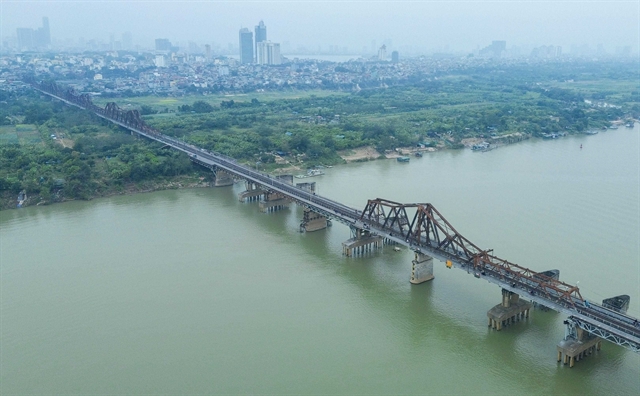
A view of Red River in Hà Nội. There is great potential for economic cooperation in general and the aluminium sector in particular between localities along the Red River Basin. — VNA/VNS Photo
HÀ NỘI — The Red River Basin cooperation mechanism is emerging as a platform for deeper economic integration between Việt Nam and China’s Yunnan Province, particularly in the development of the aluminium industry.
The initiative links seven localities in Yunnan with eight northern provinces of Việt Nam, aiming to streamline trade, logistics and industrial development along a shared economic corridor. Its focus on border economies, aluminium production and high-value agriculture reflects a broader attempt to institutionalise cross-border supply chains.
Officials argue that complementarities are clear. Yunnan brings strengths in machinery, chemicals and processing technologies, while Việt Nam offers abundant bauxite reserves, competitive energy costs and a fast-expanding domestic market.
“Close business linkages will be a direct driver of sustainable trade growth,” said Nguyễn Thị Thu Thuỷ of Việt Nam’s Ministry of Industry and Trade.
Geography reinforces the logic. Yunnan’s proximity to northern Việt Nam, combined with established river systems and multiple border crossings, lowers logistical friction. More importantly, the two sides occupy different but potentially compatible positions within the aluminium value chain.
Highlighting opportunities for cooperation and investment, Huang Li, general director of Yunnan Aluminium Joint Stock Company under Aluminium Corporation of China, one of the largest aluminium producers in Yunnan, said that Việt Nam’s rich bauxite reserves, combined with Yunnan Aluminium’s advanced technology and production capacity, could enable a model for developing a cross-border aluminium industry chain.
According to Huang, the company operates a fully integrated chain from bauxite mining to downstream aluminium processing with annual capacities exceeding 1.4 million tonnes of alumina and more than 3 million tonnes of aluminium.
Its facilities in Lancang, Honghe and Wenshan, clustered near Việt Nam’s Lào Cai and Lai Châu provinces, benefit from multimodal border infrastructure spanning road, rail and waterways. This provides the physical backbone for a cross-border supply chain, Huang said.
“As a large-scale alumina producer in the region, we are well positioned to support Vietnamese enterprises in terms of technology,” he added.
Yet Việt Nam’s aluminium ambitions remain constrained by domestic weaknesses. Despite favourable fundamentals, particularly low electricity costs and large bauxite reserves, the sector is still underdeveloped.
Local firms face persistent shortages of capital, skilled labour and advanced metallurgical technology. High-value output remains limited and domestic companies account for only around a fifth of export value, with foreign-invested enterprises dominating the sector.
Environmental pressures are tightening further. As global supply chains shift towards greener standards, the cost of compliance is rising. Without a rapid technological upgrade, Việt Nam risks being locked into the lower end of the value chain.
Huang suggests that cooperation could extend beyond resource extraction to include technology transfer, workforce training and the development of smart manufacturing systems incorporating data-driven production and advanced controls.
In the long term, the two sides should promote cooperation in high-potential areas, including bauxite exploration and mining, development of alumina and electrolytic aluminium projects, aluminium recycling, circular economy development and the establishment of industry standards.
Experts believe the aluminium market outlook is highly positive in the coming years, with global demand projected to increase by around 25 per cent by 2030.
Domestically, a series of large-scale infrastructure projects is generating strong demand for aluminium, particularly extruded aluminium products.
However, experts emphasise that to capitalise on these opportunities, enterprises cannot rely solely on preferential policies. The decisive factor remains internal capacity, including technological innovation, product quality improvement and the development of a highly skilled workforce.
Li Zhangwu, deputy prefect of Honghe Prefecture in Yunnan, stressed the potential for economic cooperation in general and the aluminium sector in particular between localities along the Red River Basin.
He proposed enhancing infrastructure connectivity, focusing on border gates, upgrading clearance points such as Hekou and Jinshuihe and resolving bottlenecks in cross-border transport.
At the same time, both sides should leverage industrial complementarity and expand cooperation in manufacturing, cross-border e-commerce, agriculture and tourism. As a bridge, Honghe Prefecture is ready to promote cooperation among Red River Basin localities and ensure that agreements are effectively implemented. — VNS
Source: VNS
Related News

BANKING / FINANCE / INSURANCE / TAX
REMITTANCES TO HCM CITY RISE NEARLY 40% IN Q3
Remittances to HCM City reached more than US$2.83 billion in the third quarter of this year, up 39.5 per cent from the previous quarter and 3.6 per cent year-on-year. This was the first quarter showing positive annual growth this year, helping narrow the decline in remittance inflows over the first nine months. According to the State Bank of Vietnam (SBV)’s Regional Branch 2, remittances transferred to HCM City through credit institutions and economic organisations totalled $2.835 billion in Q3, an increase of more than $802 million from the previous quarter.
TECHNOLOGY
TECH SECTOR GROWTH OPENS UP OPPORTUNITIES FOR VIỆT NAM TO GO GLOBAL
The growth of the electronics, semiconductor and high-tech sectors worldwide is opening up a variety of opportunities for Vietnamese enterprises to integrate more deeply into the global supply chain. However, to become suppliers for these corporations, domestic enterprises must meet rigorous standards regarding quality, technology, productivity and order fulfilment capabilities.
VIETNAM ECONOMY INVESTMENT
FOREIGN INVESTORS SEEKING A SYNCHRONISED MANUFACTURING ECOSYSTEM
Instead of focusing only on land costs and incentives as usual, foreign investors are seeking a synchronised manufacturing ecosystem, from stable power supply and logistics to shared infrastructure and the convenience of completing residence procedures for experts to serve their long-term investment in the country.
MEMBER CORNER / PROMOTIONS
SENTRYSAFE FHW40200 – PROTECT YOUR VALUABLES, ENJOY PEACE OF MIND!
Looking for a reliable solution to protect your important documents, cash, and valuables from fire and water damage? Genuine SENTRYSAFE - Reliable protection for your valuables and peace of mind! Contact Sen Wai Vietnam for more information and personalized product recommendations.
PROPERTY / INDUSTRIAL ZONE
HCM CITY ATTRACTS US$5.7 BILLION INTO EXPORT PROCESSING AND INDUSTRIAL ZONES
HCM City attracted US$5.7 billion in domestic and foreign investment into its export processing and industrial zones during the first nine months of 2026. The figure exceeded the city's full-year target by 31 per cent, highlighting strong momentum in high-quality industrial investment under Resolution No.10-NQ/TW. Total investment reached 131 per cent of the 2026 target of $4.25 billion and represented a 29 per cent increase compared with the same period in 2025, according to the city's Export Processing and Industrial Zones Authority (HEPZA).
INFRASTRUCTURE / CONSTRUCTION / LOGISTIC / PORT
DONG THAP PROVINCE STEPS UP INDUSTRIAL EXPANSION AND INFRASTRUCTURE CONNECTIVITY
Accelerating public investment, strengthening inter-regional connectivity, and expanding industrial land are helping Dong Thap efficiently bolster competitiveness and drive economic growth. Following the 2025 merger of the former Dong Thap and Tien Giang provinces, the expanded Dong Thap province in the Mekong Delta faces mounting pressure to accelerate infrastructure development and strengthen connectivity among local economic zones, urban areas, industrial parks (IPs), and production centres.
Events Sponsors






















