Want to be in the loop?
subscribe to
our notification
Business News
TRANSPORT MINISTRY LOOSENS RESTRICTIONS ON PUBLIC TRANSPORT
Restrictions on public transport have been loosened since April 23 as Viet Nam moves to gradually ease social distancing rules, according to an announcement of the Ministry of Transport.
Airlines are allowed to conduct as many as 20 return flights per day between Ha Noi and Ho Chi Minh City.
For Ha Noi/Ho Chi Minh City-Da nang route, airlines are allowed to conduct 6 return flights daily.
Each airline is only allowed to carry out one return flight/day departing from Ha Noi and Ho Chi Minh City to other localities.
Regarding road transport, Chairmen of provincial People’s Committees shall issue specific instruction for passenger road transport in their own localities.
Inter-provincial coaches are allowed to operate up to 30% of capacity and 50% in localities categorized as having risk and low risk of COVID-19 transmission, respectively.
Regarding railway transportation, Viet Nam Railways is permitted to daily exploit three couples of trains on the north-south network and one couple a day for other routes.
Passengers are requested to refrain from talking and eating and wear face masks on public vehicles.
Source: VGP
Related News
GARMENT / TEXTILE
JAPANESE FDI SUPPORTS GREEN TRANSITION IN VIỆT NAM'S MANUFACTURING SECTOR
Japanese Foreign Direct Investment (FDI) is strengthening Việt Nam's manufacturing capacity and accelerating the green transition, as more Japanese companies expand production and adopt sustainable industrial solutions. Việt Nam has become an important market and strategic manufacturing base in Southeast Asia for Japanese investors, reflecting their long-term confidence in the country’s economic potential and sustainable growth prospects.

TECHNOLOGY
FOUR PRIORITIES FOR VIETNAM-AUSTRALIA COOPERATION IN DIGITAL TECHNOLOGY AND AI
Deputy Minister of Science and Technology Le Xuan Dinh called for selecting projects based on actual needs, linking research with commercialization, ensuring the effective operation of the V-Bridge platform, and clearly defining responsibilities and implementation timelines. The aim is to turn commitments to cooperate in digital technology, artificial intelligence (AI) and semiconductors into concrete products, projects and investment opportunities.
TECHNOLOGY
KHÁNH HÒA EYES $15.5 MILLION HI-TECH PLANT
The south-central province of Khánh Hòa has granted an investment certificate for a VNĐ390 billion (US$15.5 million) high-tech plant to produce graphene, biochips and electronic components, as the province seeks to attract investment in advanced materials and biotechnology. The Hememics Vietnam project is backed by US firm Hememics Biotechnologies Inc, Vietnamese investor Viet Khanh JSC and others.
TECHNOLOGY
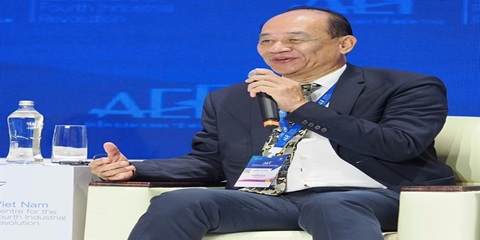
HCM CITY SEEKS NEW GROWTH MODEL IN AI ERA
HCM City is looking to strengthen its economic competitiveness by developing new growth drivers, improving workforce capabilities and enhancing international cooperation amid the rapid transformation of global value chains and the growing influence of artificial intelligence (AI). These priorities were highlighted at a thematic session on global economic transformation and economic restructuring experiences of countries and megacities, held on October 27 as part of the Autumn Economic Forum 2026 in HCM City.
VIETNAM ECONOMY INVESTMENT
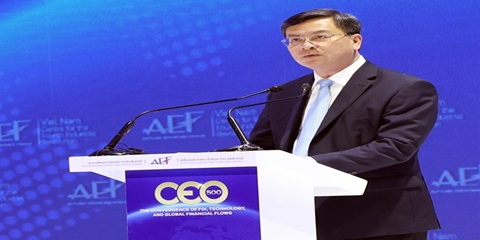
HCM CITY SEEKS US$19 BILLION IN FOREIGN INVESTMENT IN 2026
HCM City is prioritising high-quality foreign investment linked to technology, finance and sustainable development as it seeks to strengthen its position as a regional economic hub. More than 500 domestic and international business leaders gathered at the CEO 500 conference on October 26 to discuss investment opportunities and new growth drivers for HCM City amid changing global capital flows and technological advances.
VIETNAM ECONOMY INVESTMENT
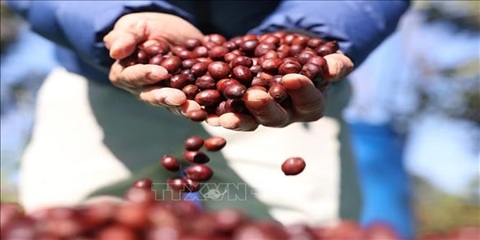
FROM SCALE TO VALUE: VIỆT NAM’S AGRO-FORESTRY EXPORTS NEED CONTROL OF THE VALUE CHAIN
Việt Nam has become a major supplier to global agricultural and forestry markets, but its export strength has yet to translate into matching market power. While the country has improved its production capacity and moved further into processing, the high-value links in many supply chains, such as technology, branding, standards, data and decision-making, remain largely in foreign hands.
Events Sponsors