Want to be in the loop?
subscribe to
our notification
Business News
HOW POST-PANDEMIC REAL ESTATE LIKELY TO FARE?
After the COVID-19 pandemic, real estate in the vicinity of Ho Chi Minh City and projects invested by reputable investors are forecast to attract buyers.
The COVID-19 pandemic outbreak in the past three months has almost frozen the property market in many provinces and cities and largely halted secondary property deals. Particularly, online orders are allowed in suburban apartment projects.
High demand, unchanged prices
Reports by property market research companies show that real estate prices in the suburbs of Ho Chi Minh City have not declined, even increasing sharply during the outbreak of the COVID-19 pandemic. According to DKRA Vietnam, the suburban residential land market continues to take the lead as supplies are short in Ho Chi Minh City for four consecutive quarters. Dong Nai province continues to lead new supplies and new deals in the whole market.
New townhouse and villa supplies in Ho Chi Minh City and neighboring provinces suddenly increased by 78% as compared to the previous quarter but the supplies primarily rolled out in the first and second quarters of 2021. However, sales dropped around 23% over the same period in 2020 due to mandatory social distancing to prevent COVID-19 contagion.
A report from CBRE Vietnam also shows that, from the beginning of 2021, the cash flow into real estate has increased very quickly, especially early in the year. Many provinces even witnessed land frenzies. According to surveys, 75% of respondents wanted to invest in real estate and 35% planned to invest in the stock market before the COVID-19 outbreak.
However, in the last three months, mandatory social distancing to fight the pandemic resulted in a sharp redirection of cash flows into the stock market. There is no sign of property selloffs, especially in localities adjacent to Ho Chi Minh City. This shows that many investors are placing their money in property and waiting for the opportunity to buy real more after the pandemic.
Mr. Vo Huynh Tuan Kiet, Deputy Director, Housing Marketing Head of CBRE Vietnam, said, despite economic difficulty caused by the COVID-19 pandemic, the demand for housing is always high. The more the pandemic spreads, the more strongly people want to own a safe private accommodation.
Besides, for professional investors or high-income earners, when the pandemic occurs, their money cannot flow into manufacturing and consumption channels and they therefore tend to pour money into real estate, which is always considered a safe and sustainable choice in the long run.
Inevitable trend
Associate Professor Nguyen Minh Hoa, Vice Chairman of Ho Chi Minh City Planning and Development Association, said that high-rise buildings and separate houses better prevent COVID-19 infections than densely populated areas with deep narrow alleys at the heart of the city during the social distancing time.
In particular, when the pandemic contagion is becoming more complicated, many people return to their native land outside of Ho Chi Minh City to have a more peaceful and healthy life with their extended families. This will drive up property demands after the pandemic. Let alone, many areas in Ho Chi Minh City no longer have land funds for the time being. In neighboring localities like Dong Nai and Binh Duong, the land fund is still very abundant and the traffic is also increasingly convenient.
Dr. Hoa added, in order to adapt to climate change and sea level rise, Ho Chi Minh City intended to develop the main urban space to the East and North-Northwest. Only these areas have large enough land for investors to carry out creative planning, design large affordable projects to attract more buyers. Then, projects in neighboring localities like Tay Ninh, Dong Nai, Binh Duong and Ba Ria - Vung Tau will draw investors.
Importantly, consumers now tend to prefer spacious residences open to nature to small residences in the downtown, said Mr. Tran Khanh Quang, General Director of Viet An Hoa Real Estate Company, adding that the magnet of downtown property will weaken as a result.
More importantly, primary investors tend to develop large projects to build high-class residences with various added values and high profit margins. Therefore, they will actively direct buyers to such projects.
According to experts, the profit margin of projects in Ho Chi Minh City is currently only about 15%, relative to 30%-40% in other provinces. This explains why many real estate giants in Ho Chi Minh City and other countries are moving away from downtown.
“In my opinion, well-located residences where climate is pleasant, giant projects that are 60-100 km from Ho Chi Minh City invested by reputable investors will entice buyers, even a mild post-COVID-19 frenzy anticipated for a while. Especially, more interests will be placed on products to be delivered in 2023 and applied with flexible payment policies, he added.
Remarking on the appeal of real estate in the vicinity of Ho Chi Minh City, Mr. Vo Huynh Tuan Kiet said that real estate there has never been saturated to date. It may be quicker or slower, depending on drives generated by leading projects. He cited that real estate in Bien Hoa City, Dong Nai province is quite hot when many big developers such as Novaland, Nam Long and Hung Thinh all focus on deploying large urban areas and catch the attention of primary investors and end-buyers to place orders online.
Source: VCCI
Related News
GARMENT / TEXTILE
JAPANESE FDI SUPPORTS GREEN TRANSITION IN VIỆT NAM'S MANUFACTURING SECTOR
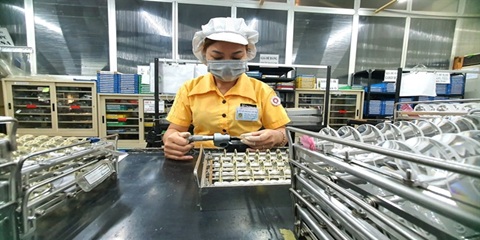
Japanese Foreign Direct Investment (FDI) is strengthening Việt Nam's manufacturing capacity and accelerating the green transition, as more Japanese companies expand production and adopt sustainable industrial solutions. Việt Nam has become an important market and strategic manufacturing base in Southeast Asia for Japanese investors, reflecting their long-term confidence in the country’s economic potential and sustainable growth prospects.

TECHNOLOGY
FOUR PRIORITIES FOR VIETNAM-AUSTRALIA COOPERATION IN DIGITAL TECHNOLOGY AND AI
Deputy Minister of Science and Technology Le Xuan Dinh called for selecting projects based on actual needs, linking research with commercialization, ensuring the effective operation of the V-Bridge platform, and clearly defining responsibilities and implementation timelines. The aim is to turn commitments to cooperate in digital technology, artificial intelligence (AI) and semiconductors into concrete products, projects and investment opportunities.
TECHNOLOGY
KHÁNH HÒA EYES $15.5 MILLION HI-TECH PLANT
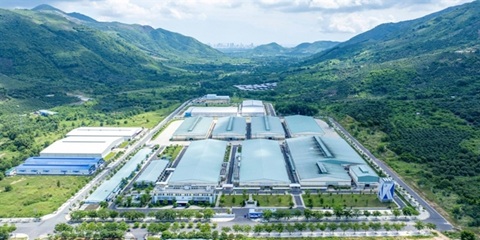
The south-central province of Khánh Hòa has granted an investment certificate for a VNĐ390 billion (US$15.5 million) high-tech plant to produce graphene, biochips and electronic components, as the province seeks to attract investment in advanced materials and biotechnology. The Hememics Vietnam project is backed by US firm Hememics Biotechnologies Inc, Vietnamese investor Viet Khanh JSC and others.

TECHNOLOGY
HCM CITY SEEKS NEW GROWTH MODEL IN AI ERA
HCM City is looking to strengthen its economic competitiveness by developing new growth drivers, improving workforce capabilities and enhancing international cooperation amid the rapid transformation of global value chains and the growing influence of artificial intelligence (AI). These priorities were highlighted at a thematic session on global economic transformation and economic restructuring experiences of countries and megacities, held on October 27 as part of the Autumn Economic Forum 2026 in HCM City.

VIETNAM ECONOMY INVESTMENT
HCM CITY SEEKS US$19 BILLION IN FOREIGN INVESTMENT IN 2026
HCM City is prioritising high-quality foreign investment linked to technology, finance and sustainable development as it seeks to strengthen its position as a regional economic hub. More than 500 domestic and international business leaders gathered at the CEO 500 conference on October 26 to discuss investment opportunities and new growth drivers for HCM City amid changing global capital flows and technological advances.
VIETNAM ECONOMY INVESTMENT
FROM SCALE TO VALUE: VIỆT NAM’S AGRO-FORESTRY EXPORTS NEED CONTROL OF THE VALUE CHAIN
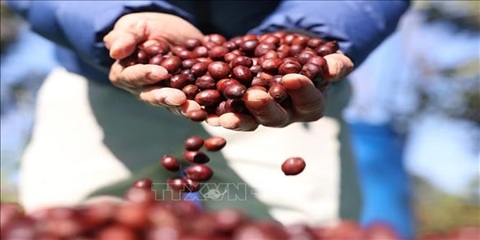
Việt Nam has become a major supplier to global agricultural and forestry markets, but its export strength has yet to translate into matching market power. While the country has improved its production capacity and moved further into processing, the high-value links in many supply chains, such as technology, branding, standards, data and decision-making, remain largely in foreign hands.
Events Sponsors






















