Want to be in the loop?
subscribe to
our notification
Business News
CONSTRUCTION MATERIALS INDUSTRY'S REVENUE TO REACH $47 BILLION
Despite significant domestic demand due to low housing rates and incomplete infrastructure, Việt Nam's construction materials industry faces challenges, according to insiders.
During a recent seminar on the development of Việt Nam’s modern and sustainable construction materials sector on November 9, Lê Trung Thành, head of the Department of Building Materials at the Ministry of Construction, revealed that the industry generated around US$47 billion annually, contributing 11 per cent to the national GDP.
According to Thành, the domestic demand for construction materials remains substantial due to low housing areas nationwide, with the urbanisation rate at around 43 per cent and incomplete infrastructure in transportation and energy sectors. These factors provide a significant room for development in the construction materials industry.
However, in recent years, the Vietnamese construction materials industry has encountered numerous challenges.
Both consumption and revenue have decreased, posing risks of production stagnation and business disruptions for enterprises, potentially leading to job losses and impacting socio-economic development.
Nguyễn Quang Hiệp, director of the Institute of Building Materials, pointed out that many production sectors primarily invested in small to medium scales, particularly in areas such as brick and tile manufacturing, fired clay, unfired bricks, stone extraction and construction sand.
Consequently, the application of science and technology in production faced significant challenges.
The production of materials in Việt Nam relied heavily on input factors like mineral resources, technology, energy and capital. The balance between supply and demand for various product types was inadequate, resulting in overstocking and underutilisation of business production capacity, he added.
However, the utilisation of alternative raw materials, promoting economic circularity in construction material production, had not received sufficient attention and appropriate investment.
Hiệp highlighted the importance of the government and enterprises continuing to enhance management, apply science and technology and focus on developing new environmentally friendly high-performance construction materials.
Quách Hữu Thuận, deputy general director of Viglacera, said that the integration of technology, innovation and creativity remained the consistent guiding principle.
This approach is the key to Viglacera's successful and powerful brand, according to Thuận.
Viglacera is currently seen as a pioneering domestic enterprise in innovation and creativity in the field of construction material production. By consistently investing in cutting-edge global technologies and focusing on green technologies and products, it aims to become a top choice when penetrating demanding markets like Europe, North America and the Middle East.
However, in the current fiercely competitive landscape, Thuận believes that the government and relevant ministries need to establish robust policies to support consumption and encourage the use of new high-tech products.
This includes setting up technical barriers for imports and ensuring fair treatment similar to other countries. Additionally, updating technical regulations, standards, and timely price notifications for new product lines are essential to facilitate usage in national projects.
Meanwhile, Thành also sees the current challenges in the construction materials industry as an opportunity to assess the capabilities and efficiency of enterprises and products.
To enhance productivity, quality, and competitiveness in both domestic and international markets, it requires efforts in technology application, marketing, and environmental protection from all stakeholders.
Source: VNS
Related News
MEMBER CORNER / PROMOTIONS
HOW TO REPLACE THE BATTERY IN YOUR SENTRYSafe SAFE - SIMPLE & EASY!
Electronic locks need proper battery maintenance to ensure reliable operation.SENTRYSAFE - Protecting What Matters Most.Contact Sen Wai Vietnam for expert advice on genuine SentrySafe safes.
TECHNOLOGY
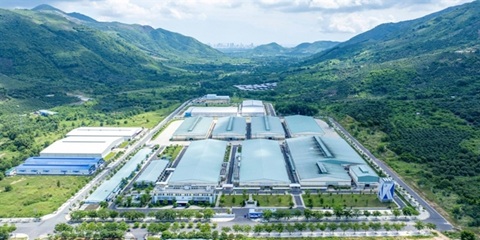
KHÁNH HÒA EYES $15.5 MILLION HI-TECH PLANT
The south-central province of Khánh Hòa has granted an investment certificate for a VNĐ390 billion (US$15.5 million) high-tech plant to produce graphene, biochips and electronic components, as the province seeks to attract investment in advanced materials and biotechnology. The Hememics Vietnam project is backed by US firm Hememics Biotechnologies Inc, Vietnamese investor Viet Khanh JSC and others.
MEMBER CORNER / PROMOTIONS
HO CHI MINH CITY RING ROAD 4 BREAKS GROUND – A MAJOR INFRASTRUCTURE BOOST, ENHANCING COSMOPARK’S INVESTMENT APPEAL
The Ho Chi Minh City Ring Road 4 project, with an investment of over VND 43 trillion for the section passing through Tay Ninh Province, officially broke ground on October 15, 2026, marking a significant milestone in the development of regional transportation infrastructure. The project is expected to enhance connectivity between industrial hubs, seaports, and airports, while creating new growth opportunities for industrial zones in Tay Ninh Province, including COSMOPARK.
HOSPITALITY / TOURISM / ENTERTAINMENT
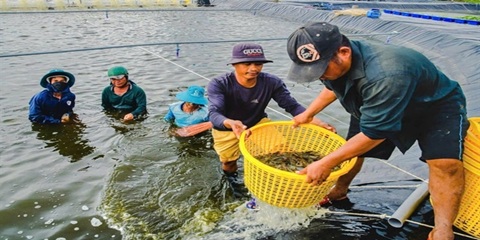
CÀ MAU SHRIMP FESTIVAL EXPECTED TO ATTRACT UP TO 10,000 VISITORS
The second Ca Mau Shrimp Festival, scheduled for November 21-23, is expected to attract 8,000-10,000 visitors, promoting the southernmost province’s shrimp industry, trade and tourism. The event, themed “Cà Mau Shrimp – Reaching Global Markets”, will take place at Phan Ngọc Hiển Square in An Xuyên ward, featuring around 350 booths showcasing achievements in shrimp farming, products under the One Commune, One Product (OCOP) programme, ecological shrimp farming, shrimp-rice farming models and high-tech application.

TECHNOLOGY
FOUR PRIORITIES FOR VIETNAM-AUSTRALIA COOPERATION IN DIGITAL TECHNOLOGY AND AI
Deputy Minister of Science and Technology Le Xuan Dinh called for selecting projects based on actual needs, linking research with commercialization, ensuring the effective operation of the V-Bridge platform, and clearly defining responsibilities and implementation timelines. The aim is to turn commitments to cooperate in digital technology, artificial intelligence (AI) and semiconductors into concrete products, projects and investment opportunities.
GARMENT / TEXTILE
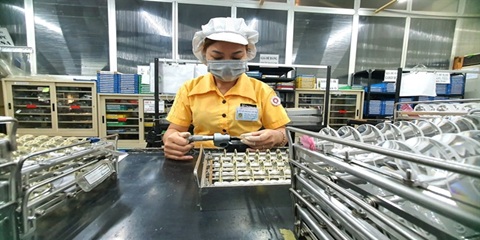
JAPANESE FDI SUPPORTS GREEN TRANSITION IN VIỆT NAM'S MANUFACTURING SECTOR
Japanese Foreign Direct Investment (FDI) is strengthening Việt Nam's manufacturing capacity and accelerating the green transition, as more Japanese companies expand production and adopt sustainable industrial solutions. Việt Nam has become an important market and strategic manufacturing base in Southeast Asia for Japanese investors, reflecting their long-term confidence in the country’s economic potential and sustainable growth prospects.
Events Sponsors