Want to be in the loop?
subscribe to
our notification
Business News
CLEARING BOTTLENECKS TO ATTRACT FUNDS INTO REAL ESTATE MARKET
The real estate market is falling short of funding when banks and corporate bonds are simultaneously tightened, leaving companies unable to respond to sudden changes that result in a halt to a lot of projects. Clearing this "bottleneck" is a big concern of authorities, investors and people because this is a key market that plays an important role in attracting resources and developing many other industries and fields.
Businesses are distressed with capital shortage
The real estate market entered the year 2022 with high hopes of a strong recovery. However, COVID-19 epidemic impacts and tight monetary policies are "bottlenecks" that are constituting obstacles to the economy, including the real estate sector, in the second half of the year.
Mr. Nguyen Van Khoi, Chairman of the Vietnam Real Estate Association (VNREA), said: The property market in 2022 encountered many problems. The property industry struggled with capital shortages. Being hit hard, many companies were unable to develop new products and were forced to lay off a lot of employees.
According to Ms. Nguyen Thuy Dung, President of Phu Hung Property, the government-backed tightening of credit for the real estate made it very difficult for customers and investors to access capital. The recent bond crisis in the market undermined investor confidence. Many businesses had to scale down and accept to cut 50-60% of staff and operating costs.
Mr. Le Viet Hai, President of the Board of Directors of Hoa Binh Construction Group Joint Stock Company, said that one of main reasons for hardships against the real estate market came from vacation property spoiled by a prolonged epidemic. No business can afford to repay loans with maturity terms of only 3 - 5 years while projects cannot be operated. This is no longer a market correction but an unforeseen problem to the market.
Impetus for market recovery in 2023
On November 17, 2022, the Prime Minister issued Decision 1435/QD-TTg on establishment of a working group of the
Prime Minister in charge of reviewing, urging and guiding removal of difficulties and obstacles in real estate project development.
In response to the Prime Minister's directions, the Ministry of Construction is actively coordinating with relevant ministries and agencies to urgently research and assess the real estate market, inadequacies and causes; and forecast situations, influencing factors and development trends, thus identifying goals and requirements and proposing mechanisms, policies and solutions for strong, effective and sustainable market development, said Deputy Minister Nguyen Tuong Van.
In addition, the ministry proposed many solutions to improve the legal system, remove difficulties and obstacles, create a legal framework to increase supply, especially develop social housing, worker housing and affordable housing. The ministry promptly launched solutions to stabilize the market when necessary, control and restructure real estate credit to ensure proper use and avoid risks.
At the same time, the ministry continued to facilitate lending to the real estate sector; prioritize lending to commercial housing, social housing, worker housing projects licensed and constructed to supply the market; strictly control bond issuance and fundraising by property firms in the market; and guide bond issuance and fundraising on the stock market.
Dr. Ho Sy Hung, Vice Chairman of the Commission for the Management of State Capital at Enterprises (CMSC), said that shortcomings on land, financial and real estate markets have been figured out and prepared to be removed. With these advantages, the opportunity to open up the market in the coming year is huge. However, in addition to getting rid of the above difficulties, the business community itself also needs to actively overcome hardships and take advantage of opportunities for change.
According to Mr. Le Viet Hai, real estate firms are in dire need of governmental support to enable them to make continued contributions to national economic development and solve social security matters.
“Currently, the market is witnessing an imbalance in supply and demand. Therefore, the government needs to create an official website for public and transparent data on planning, real estate transactions, licensed projects and considered projects for investors to make more appropriate decisions when they launch products and make the construction market in general and real estate in particular work more effectively,” he said.
“It is necessary to stabilize the macro-economy, develop safe real estate and social security with a focus on three stakeholders: authorities, businesses and people," said Mr. Nguyen Van Khoi, President of VNREA. The Prime Minister's working group on real estate and local governments need to identify and report project difficulties and obstacles, he said, adding that reports should be promptly sent to the Government and the National Assembly for quick solutions. Additionally, for projects to be quickly put into operation, such factors as ground and infrastructure need to be focused on and monitored by authorities. Procedures also need to be streamlined to facilitate business development. Local authorities should consider adjusting land use planning and spatial planning, and develop housing development and management programs, including affordable housing for low-income earners and factory workers.
The real estate market may continue to face difficulties in 2023. However, investors expect policy changes to unlock the credit valve for the market to revive and stabilize.
Source: VCCI
Related News
GARMENT / TEXTILE
JAPANESE FDI SUPPORTS GREEN TRANSITION IN VIỆT NAM'S MANUFACTURING SECTOR
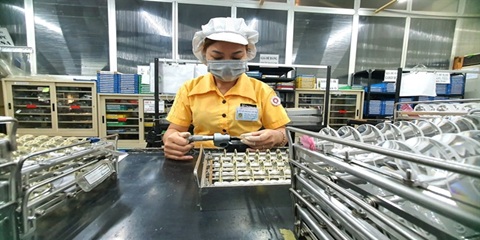
Japanese Foreign Direct Investment (FDI) is strengthening Việt Nam's manufacturing capacity and accelerating the green transition, as more Japanese companies expand production and adopt sustainable industrial solutions. Việt Nam has become an important market and strategic manufacturing base in Southeast Asia for Japanese investors, reflecting their long-term confidence in the country’s economic potential and sustainable growth prospects.

TECHNOLOGY
FOUR PRIORITIES FOR VIETNAM-AUSTRALIA COOPERATION IN DIGITAL TECHNOLOGY AND AI
Deputy Minister of Science and Technology Le Xuan Dinh called for selecting projects based on actual needs, linking research with commercialization, ensuring the effective operation of the V-Bridge platform, and clearly defining responsibilities and implementation timelines. The aim is to turn commitments to cooperate in digital technology, artificial intelligence (AI) and semiconductors into concrete products, projects and investment opportunities.
TECHNOLOGY
KHÁNH HÒA EYES $15.5 MILLION HI-TECH PLANT
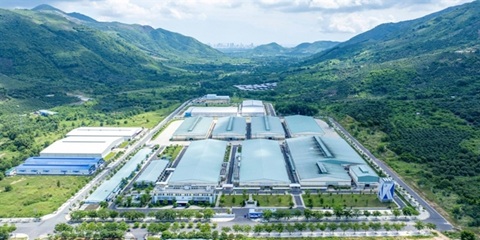
The south-central province of Khánh Hòa has granted an investment certificate for a VNĐ390 billion (US$15.5 million) high-tech plant to produce graphene, biochips and electronic components, as the province seeks to attract investment in advanced materials and biotechnology. The Hememics Vietnam project is backed by US firm Hememics Biotechnologies Inc, Vietnamese investor Viet Khanh JSC and others.

TECHNOLOGY
HCM CITY SEEKS NEW GROWTH MODEL IN AI ERA
HCM City is looking to strengthen its economic competitiveness by developing new growth drivers, improving workforce capabilities and enhancing international cooperation amid the rapid transformation of global value chains and the growing influence of artificial intelligence (AI). These priorities were highlighted at a thematic session on global economic transformation and economic restructuring experiences of countries and megacities, held on October 27 as part of the Autumn Economic Forum 2026 in HCM City.

VIETNAM ECONOMY INVESTMENT
HCM CITY SEEKS US$19 BILLION IN FOREIGN INVESTMENT IN 2026
HCM City is prioritising high-quality foreign investment linked to technology, finance and sustainable development as it seeks to strengthen its position as a regional economic hub. More than 500 domestic and international business leaders gathered at the CEO 500 conference on October 26 to discuss investment opportunities and new growth drivers for HCM City amid changing global capital flows and technological advances.

VIETNAM ECONOMY INVESTMENT
FROM SCALE TO VALUE: VIỆT NAM’S AGRO-FORESTRY EXPORTS NEED CONTROL OF THE VALUE CHAIN
Việt Nam has become a major supplier to global agricultural and forestry markets, but its export strength has yet to translate into matching market power. While the country has improved its production capacity and moved further into processing, the high-value links in many supply chains, such as technology, branding, standards, data and decision-making, remain largely in foreign hands.
Events Sponsors






















