Want to be in the loop?
subscribe to
our notification
Business News
SOCIAL DISTANCING ORDER TO EXPIRE IN HÀ NỘI AT MIDNIGHT
With agreement from the Government, Hà Nội’s administration announced that strict social distancing measures in place to curb the coronavirus would expire at midnight on Wednesday.
With the restrictions lifted, many non-essential businesses in Hà Nội will be allowed to resume as long as they ensure proper hygiene practices for customers and workers, while schools are slated to re-open in early to mid-May.
Nguyễn Đức Chung, chairman of Hà Nội's People’s Committee, made the announcement on Wednesday afternoon following a Government meeting to discuss whether to extend Prime Minister Nguyễn Xuân Phúc’s Directive 16 on nationwide social distancing, which took effect on April 1 and was due to end on April 22.
The capital city has reported 112 COVID-19 cases out of the national tally of 268, with 81 already recovered while 31 remain in treatment.
Hà Nội was initially deemed to be in the high-risk group, and the National Steering Committee for Preventing and Fighting COVID-19 on Wednesday morning still recommended that the city should comply with Directive 16 for at least another week (until April 30) just to be on the safe side.
Hà Nội’s leaders however asked the Government for a downgrade to a medium-risk classification in order to reactivate its economy and life, while pledging full-force preventive measures to contain the spread of the virus under the motto “quick detection, identification of outbreak areas and suppressing the outbreak, while preventing community widespread transmission”.
The Vietnamese Government leader agreed with Hà Nội’s request, on the basis of the achievements and outcomes the city’s authorities had made in dealing with detected outbreaks in its jurisdiction.
The Hà Nội leader said he had assigned relevant agencies to develop detailed plans to ease social distancing measures in the city, which would be released soon.
Directive 16 measures will remain in effect in two outlying districts of the city – Thường Tín and Mê Linh – identified as high-risk areas.
According to Nguyễn Đức Chung, the city had already made plans for students to return to school. Secondary high school students and above would start back at school on May 4, while primary schools and kindergartens would start to re-open on May 11.
However, religious gatherings, celebrations and all sporting and cultural activities are still banned. Bars, karaoke venues and massage parlours are still not allowed to operate yet.
The city will not be receiving foreign tourists for the time being.
Sidewalk economic activities – with iced tea and lemon tea shops set up alongside busy pavements cited as examples – which make up part of the charm of Hà Nội, will also be forbidden.
People are told to maintain a safe distance of 2m in the open and those who fail to wear face masks in public will be fined.
Restaurants, food stalls, malls and supermarkets can re-open, as long as the safe distance is adhered to. These venues must also set up hand washing stations and visitors and customers must have their temperatures checked.
"[Restaurants and food shops] should follow other countries' examples, setting up glass, nilon or plastic barriers to minimise risks of infection for the customers sitting opposite each other," Chung said.
Transport businesses are also allowed to resume but with reduced capacity, about 20-30 per cent.
Manufacturers, companies and agencies must carry out proper prevention measures for their employees – obligatory mask wearing and a full supply of hand sanitiser.
From April 16 to April 22, the city didn’t record any new cases.
Source: VNS
Related News
GARMENT / TEXTILE
JAPANESE FDI SUPPORTS GREEN TRANSITION IN VIỆT NAM'S MANUFACTURING SECTOR
Japanese Foreign Direct Investment (FDI) is strengthening Việt Nam's manufacturing capacity and accelerating the green transition, as more Japanese companies expand production and adopt sustainable industrial solutions. Việt Nam has become an important market and strategic manufacturing base in Southeast Asia for Japanese investors, reflecting their long-term confidence in the country’s economic potential and sustainable growth prospects.
TECHNOLOGY
KHÁNH HÒA EYES $15.5 MILLION HI-TECH PLANT
The south-central province of Khánh Hòa has granted an investment certificate for a VNĐ390 billion (US$15.5 million) high-tech plant to produce graphene, biochips and electronic components, as the province seeks to attract investment in advanced materials and biotechnology. The Hememics Vietnam project is backed by US firm Hememics Biotechnologies Inc, Vietnamese investor Viet Khanh JSC and others.

TECHNOLOGY
HCM CITY SEEKS NEW GROWTH MODEL IN AI ERA
HCM City is looking to strengthen its economic competitiveness by developing new growth drivers, improving workforce capabilities and enhancing international cooperation amid the rapid transformation of global value chains and the growing influence of artificial intelligence (AI). These priorities were highlighted at a thematic session on global economic transformation and economic restructuring experiences of countries and megacities, held on October 27 as part of the Autumn Economic Forum 2026 in HCM City.
VIETNAM ECONOMY INVESTMENT
HCM CITY SEEKS US$19 BILLION IN FOREIGN INVESTMENT IN 2026
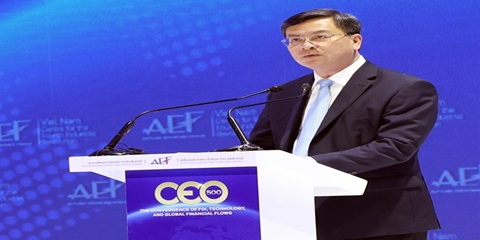
HCM City is prioritising high-quality foreign investment linked to technology, finance and sustainable development as it seeks to strengthen its position as a regional economic hub. More than 500 domestic and international business leaders gathered at the CEO 500 conference on October 26 to discuss investment opportunities and new growth drivers for HCM City amid changing global capital flows and technological advances.
VIETNAM ECONOMY INVESTMENT
FROM SCALE TO VALUE: VIỆT NAM’S AGRO-FORESTRY EXPORTS NEED CONTROL OF THE VALUE CHAIN
Việt Nam has become a major supplier to global agricultural and forestry markets, but its export strength has yet to translate into matching market power. While the country has improved its production capacity and moved further into processing, the high-value links in many supply chains, such as technology, branding, standards, data and decision-making, remain largely in foreign hands.
BANKING / FINANCE / INSURANCE / TAX
MAJOR INFRASTRUCTURE PROJECTS BECOME MAIN DRIVER FOR BANK PROFITS
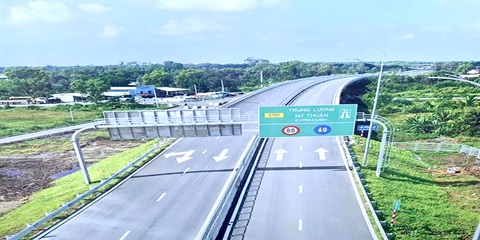
The race to finance major infrastructure projects worth hundreds of billions of US dollars is opening up new opportunities for profit growth in the banking sector. According to experts, the banking sector's profit outlook for 2026 reflects not only the recovery of credit demand but also a fundamental shift in the composition of interest-earning assets, with major infrastructure projects emerging as a strategic, long-term pillar of lending and long-term pillar.
Events Sponsors