Want to be in the loop?
subscribe to
our notification
Business News
MINISTRIES PROTEST SPECIAL CONSUMPTION TAX ON SOFT DRINKS
Numerous ministries and associations protested against the Ministry of Finance (MoF)’s proposal to apply a special consumption tax (SCT) of 10-20 per cent on soft drinks.
According to newswire Vnexpress, in a document sent to MoF to contribute an opinion related the adjustment and addition of the SCT, the Ministry of Industry and Trade (MoIT) stated that citing soft drinks’ impact on health is not convincing enough to apply the SCT.
Besides, mentioning tea and coffee products that contain no added sugar in the soft-drink group makes MoF’s definition inconsistent. Thus, MoIT asked MoF to clarify the reasons for the application of SCT on soft drinks as well as the reason for issuing a quota on these products.
The Ministry of Agriculture and Rural Development (MARD) also disagreed with MoF’s proposal. The ministry stated that there has yet to be an official study showing that sugar drinks, including instant tea and coffee, causs obesity and diabetes in Vietnam, especially among children.
As Vietnam is stimulating the development of the agricultural product processing industry, MARD also asked MoF to clarify the definition of soft drinks, and simultaneously proposed to remove instant tea and coffee from the subjects to the SCT.
The Ministry of Planning and Investment proposed MoF to study the impact of this policy on the beverage sector, the state budget, and other factors, including jobs and production facilities.
According to the Association of Tea of Vietnam, mentioning instant tea on the list will impact the operation of tea manufacturing firms as well as tea growing households.
Associate Prof. and PhD Ngo Tri Long proposed that the calculation of the SCT needs to be based on the percentage of sugar content in each soft drink product.
Responding to the above opinions, MoF quoted a report from WHO, which shows that consuming too many drinks containing added sugar will have a negative impact on health.
WHO also stated that 40 countries currently apply SCT on soft drinks. Besides, three countries in the ASEAN, namely Myanmar, the Philippines, and Indonesia, are also considering applying SCT on soft drinks.
According to the calculations of MoF, applying the SCT of 10 per cent on soft drinks from 2019 will contribute over VND5 trillion ($220.2 million) to the state budget per year.
This is not the first time that MoF’s proposal has received objections. In February 2014, government agencies and beverage companies, and most notably, foreign beverage producers in Vietnam showed pronounced opposition to MoF’s proposal from the moment it made headlines.
Finally, in August 2014, MoF decided to withdraw its proposal.
Source: VIR
Related News
MEMBER CORNER / PROMOTIONS
HOW TO REPLACE THE BATTERY IN YOUR SENTRYSafe SAFE - SIMPLE & EASY!
Electronic locks need proper battery maintenance to ensure reliable operation.SENTRYSAFE - Protecting What Matters Most.Contact Sen Wai Vietnam for expert advice on genuine SentrySafe safes.
VIETNAM ECONOMY INVESTMENT
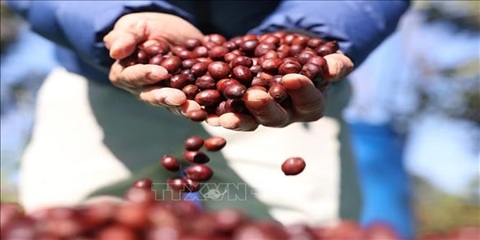
FROM SCALE TO VALUE: VIỆT NAM’S AGRO-FORESTRY EXPORTS NEED CONTROL OF THE VALUE CHAIN
Việt Nam has become a major supplier to global agricultural and forestry markets, but its export strength has yet to translate into matching market power. While the country has improved its production capacity and moved further into processing, the high-value links in many supply chains, such as technology, branding, standards, data and decision-making, remain largely in foreign hands.
TECHNOLOGY
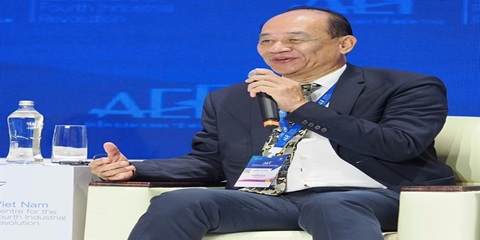
HCM CITY SEEKS NEW GROWTH MODEL IN AI ERA
HCM City is looking to strengthen its economic competitiveness by developing new growth drivers, improving workforce capabilities and enhancing international cooperation amid the rapid transformation of global value chains and the growing influence of artificial intelligence (AI). These priorities were highlighted at a thematic session on global economic transformation and economic restructuring experiences of countries and megacities, held on October 27 as part of the Autumn Economic Forum 2026 in HCM City.
GARMENT / TEXTILE
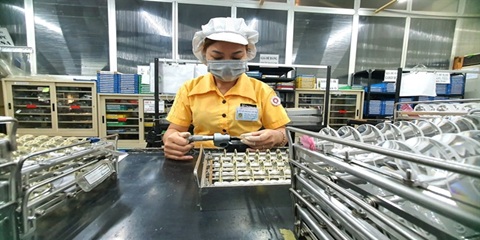
JAPANESE FDI SUPPORTS GREEN TRANSITION IN VIỆT NAM'S MANUFACTURING SECTOR
Japanese Foreign Direct Investment (FDI) is strengthening Việt Nam's manufacturing capacity and accelerating the green transition, as more Japanese companies expand production and adopt sustainable industrial solutions. Việt Nam has become an important market and strategic manufacturing base in Southeast Asia for Japanese investors, reflecting their long-term confidence in the country’s economic potential and sustainable growth prospects.
TECHNOLOGY
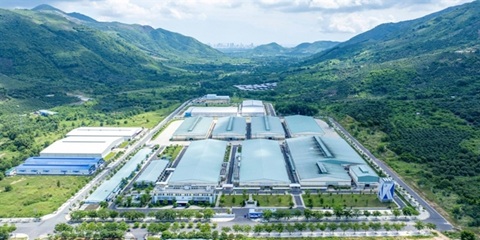
KHÁNH HÒA EYES $15.5 MILLION HI-TECH PLANT
The south-central province of Khánh Hòa has granted an investment certificate for a VNĐ390 billion (US$15.5 million) high-tech plant to produce graphene, biochips and electronic components, as the province seeks to attract investment in advanced materials and biotechnology. The Hememics Vietnam project is backed by US firm Hememics Biotechnologies Inc, Vietnamese investor Viet Khanh JSC and others.
BANKING / FINANCE / INSURANCE / TAX
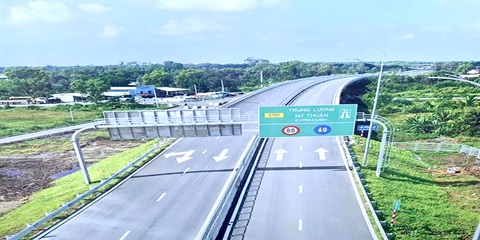
MAJOR INFRASTRUCTURE PROJECTS BECOME MAIN DRIVER FOR BANK PROFITS
The race to finance major infrastructure projects worth hundreds of billions of US dollars is opening up new opportunities for profit growth in the banking sector. According to experts, the banking sector's profit outlook for 2026 reflects not only the recovery of credit demand but also a fundamental shift in the composition of interest-earning assets, with major infrastructure projects emerging as a strategic, long-term pillar of lending and long-term pillar.
Events Sponsors






















