Want to be in the loop?
subscribe to
our notification
Business News
LABOR CONFEDERATION INSISTS ON 16.8% WAGE RISE
Speaking at a meeting on wages, incomes and living standards of employees in 2015 in Hanoi on August 13, Le Trong Sang, National Assembly deputy and head of labor relations at the confederation, said the agency had gathered sufficient evidence to defend its minimum wage rise proposal.
Sang said the confederation wants the highest rise of VND550,000 for region one, VND450,000 for region two, VND400,000 for region three and VND350,000 for region four.
“We are determined to defend our proposal,” Sang said after referring to results of the survey.
The confederation surveyed 1,600 workers at 60 enterprises, mainly in the sectors of textile, garment, footwear, construction, transport, mechanical engineering, electronics and processing. Those enterprises are located in Hanoi, Yen Bai, Nam Dinh, Vinh Phuc, Hai Duong, Thua Thien-Hue, Danang, HCMC, Can Tho and Ben Tre.
The survey found the average wage of workers is VND3.817 million per month, with VND4.369 million in region one, VND3.86 million in region two, VND3.811 million in region three and VND3.225 million in region four. These wages are 10-14% higher the figures shown in the labor contracts signed between them and their employers.
In addition, laborers get overtime pay, bonuses for good performance and other allowances.
Non-wage incomes account for 20-25% of the total, meaning that minimum wages make up 75-80% of a worker’s total incomes, according to Mai Duc Chinh, vice president of the labor confederation.
“Therefore, laborers will earn less and face difficulties in the months they do not work overtime,” Chinh said.
Despite low incomes, workers spend a lot on their basic needs. According to the survey, their monthly expenditures for their children average VND4.247 million, a 3.6% rise against last year. In specifics, the figure is VND4.91 million for region one, VND4.29 million for region two, VND3.95 million for region three and VND3.51 million for region four.
According to Chinh, in regions one and two where there are industrial parks, workers have to pay house rental with a minimum of VND700,000 per month for a small apartment for three persons, VND50,000 (15kW/person) for electricity, VND100,000 for water (eight cubic meters/person), and VND1.5 million for monthly childcare expenses.
“Workers said their lives are tough when incomes and expenses are taken into account. Nearly 20% of them said their incomes are not enough, over 30% spend money very economically, over 40% earn barely sufficient incomes and only 8% save some money,” Chinh said.
Sang said defending the proposed minimum wage raise of 16.8%, the labor confederation would keep asking the Government for a road map to increase wages to ensure workers could use their incomes to cover their expenses.
Le Nho Thuong, vice chairman of the textile-garment labor union, agreed on increasing regional minimum wages but insisted minimum wage increases should be made in a way that benefit the nation, the employer and the employee.
As estimated by apparel enterprises, if the minimum wage goes up by 15%, a business with 10,000 laborers would have to pay additional operating costs of around VND80 billion.
Source: The Saigon Times
Related News

MEMBER CORNER / PROMOTIONS
HOW TO REPLACE THE BATTERY IN YOUR SENTRYSafe SAFE - SIMPLE & EASY!
Electronic locks need proper battery maintenance to ensure reliable operation.SENTRYSAFE - Protecting What Matters Most.Contact Sen Wai Vietnam for expert advice on genuine SentrySafe safes.

VIETNAM ECONOMY INVESTMENT
FROM SCALE TO VALUE: VIỆT NAM’S AGRO-FORESTRY EXPORTS NEED CONTROL OF THE VALUE CHAIN
Việt Nam has become a major supplier to global agricultural and forestry markets, but its export strength has yet to translate into matching market power. While the country has improved its production capacity and moved further into processing, the high-value links in many supply chains, such as technology, branding, standards, data and decision-making, remain largely in foreign hands.

TECHNOLOGY
HCM CITY SEEKS NEW GROWTH MODEL IN AI ERA
HCM City is looking to strengthen its economic competitiveness by developing new growth drivers, improving workforce capabilities and enhancing international cooperation amid the rapid transformation of global value chains and the growing influence of artificial intelligence (AI). These priorities were highlighted at a thematic session on global economic transformation and economic restructuring experiences of countries and megacities, held on October 27 as part of the Autumn Economic Forum 2026 in HCM City.
GARMENT / TEXTILE
JAPANESE FDI SUPPORTS GREEN TRANSITION IN VIỆT NAM'S MANUFACTURING SECTOR
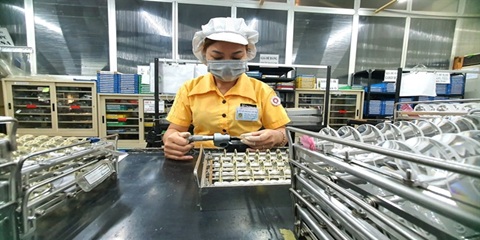
Japanese Foreign Direct Investment (FDI) is strengthening Việt Nam's manufacturing capacity and accelerating the green transition, as more Japanese companies expand production and adopt sustainable industrial solutions. Việt Nam has become an important market and strategic manufacturing base in Southeast Asia for Japanese investors, reflecting their long-term confidence in the country’s economic potential and sustainable growth prospects.
TECHNOLOGY
KHÁNH HÒA EYES $15.5 MILLION HI-TECH PLANT
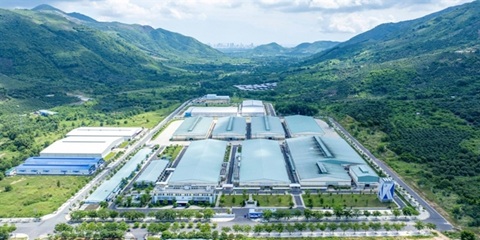
The south-central province of Khánh Hòa has granted an investment certificate for a VNĐ390 billion (US$15.5 million) high-tech plant to produce graphene, biochips and electronic components, as the province seeks to attract investment in advanced materials and biotechnology. The Hememics Vietnam project is backed by US firm Hememics Biotechnologies Inc, Vietnamese investor Viet Khanh JSC and others.
BANKING / FINANCE / INSURANCE / TAX
MAJOR INFRASTRUCTURE PROJECTS BECOME MAIN DRIVER FOR BANK PROFITS
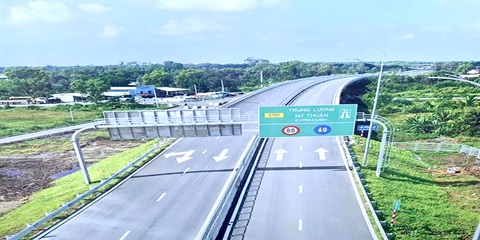
The race to finance major infrastructure projects worth hundreds of billions of US dollars is opening up new opportunities for profit growth in the banking sector. According to experts, the banking sector's profit outlook for 2026 reflects not only the recovery of credit demand but also a fundamental shift in the composition of interest-earning assets, with major infrastructure projects emerging as a strategic, long-term pillar of lending and long-term pillar.
Events Sponsors






















