Want to be in the loop?
subscribe to
our notification
Business News
FOOTWEAR GIANTS A STEP AHEAD IN PRODUCTION RESTART
Foreign footwear producers are maintaining their commitment to sourcing products from Vietnam as factories enjoy resumption of production following heavy delays and restrictions.
Around 200 Nike subcontractors in Vietnam have finally resumed production after the Delta variant caused temporary factory closures this summer. The sportswear giant intends to ramp up its production even further in Vietnam, according to chief sustainability officer Noel Kinder.
Nguyen Chi Trung, vice chairman of the Vietnam Leather and Footwear Association (LEFASO), said that groups like Nike continue to believe in Vietnam as one of the best places to provide quality footwear products to meet the needs of their customers. Having placed trust in Vietnam’s strategy to fight against the pandemic, according to Trung, major footwear groups are signing contracts with Vietnamese partners rather than moving orders out of the country.
Trung added that about 70-80 per cent of workers have returned to work at factories in Vietnam’s southern industrial zones in provinces such as Binh Duong, Dong Nai, and Long An. However, the lack of human resources will hinder factories from achieving full capacity. “There is also the risk of potential outbreaks as factories revive operations, and anxiety among workers about the pandemic will likely affect the quality of products,” Trung warned.
Vietnam’s footwear industry is labour-intensive, so many companies were forced to temporarily halt operations because they failed to accommodate large amounts of workers under stay-at-work models. The supply chain was disrupted for four months during social distancing measures, ultimately causing delays in product delivery and dampening buyers’ trust in Vietnamese market.
Le Quoc Thanh is general director of Feng Tay Group, which boasts five factories in Dong Nai with over 64,000 workers. After one month of resuming production in October, after all its factories were forced to close, Thanh noted that 80 per cent of workers had returned. “We don’t lack year-end orders from foreign brands but our challenge now is to recruit enough workforce to achieve 100 per cent capacity,” Thanh said.
In the same vein, a representative of Gia Dinh Footwear said that the company has reopened five factories in southern Vietnam to supply products to overseas buyers like Mango, Clarks, and Polo. The company, which employs 5,000 people, was able to produce up to half a million pairs of shoes per month for export before the pandemic emerged. However, it can only currently fulfil 70 per cent of its orders.
Meanwhile, 70 per cent of the workforce has so far returned to Pou Chen Corporation, a major Nike manufacturing partner. Pou Chen closed its factory in Ho Chi Minh City in July because of rising infections among its workers, and the company could not comply with stay-at-work methods due to the huge number of workers at its disposal.
Many factory owners have said they only expect to fully resume operations from the second half of 2022. At the moment, they are striving to fulfil a moderate number of orders for the Christmas and New Year seasons in overseas markets.
Trung from LEFASO stated that the main challenges for Vietnam’s footwear industry when reopening is to maintain orders and retain foreign buyers. “The country must keep the supply chain undisrupted in upcoming outbreaks,” he said. “If Vietnam can contain the pandemic and ensure safe living with COVID-19, foreign brands will be here to stay with Vietnam rather than moving orders to China, India, or Bangladesh.”
Trung noted that, for example, Ho Chi Minh City Department of Health announced guidance to separate F0 coronavirus cases at factories so that production activities can be continued – which reflects the efforts of the government and health ministry to avoid further supply chain disruption and offers up a positive outlook. “Indeed, we have seen positive signs for Vietnam’s footwear industry. Exports should recover by year-end thanks to rising orders. In 2022, the industry is expected to rebound strongly from the pandemic brought by a wide range of free trade agreements Vietnam has signed,” Trung added.
Source: VIR
Related News
MEMBER CORNER / PROMOTIONS
HOW TO REPLACE THE BATTERY IN YOUR SENTRYSafe SAFE - SIMPLE & EASY!
Electronic locks need proper battery maintenance to ensure reliable operation.SENTRYSAFE - Protecting What Matters Most.Contact Sen Wai Vietnam for expert advice on genuine SentrySafe safes.
VIETNAM ECONOMY INVESTMENT
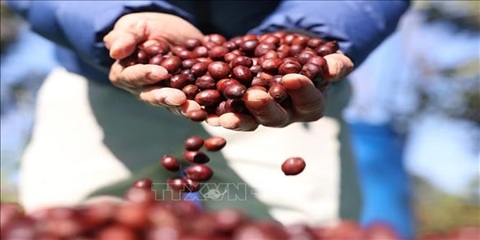
FROM SCALE TO VALUE: VIỆT NAM’S AGRO-FORESTRY EXPORTS NEED CONTROL OF THE VALUE CHAIN
Việt Nam has become a major supplier to global agricultural and forestry markets, but its export strength has yet to translate into matching market power. While the country has improved its production capacity and moved further into processing, the high-value links in many supply chains, such as technology, branding, standards, data and decision-making, remain largely in foreign hands.

TECHNOLOGY
HCM CITY SEEKS NEW GROWTH MODEL IN AI ERA
HCM City is looking to strengthen its economic competitiveness by developing new growth drivers, improving workforce capabilities and enhancing international cooperation amid the rapid transformation of global value chains and the growing influence of artificial intelligence (AI). These priorities were highlighted at a thematic session on global economic transformation and economic restructuring experiences of countries and megacities, held on October 27 as part of the Autumn Economic Forum 2026 in HCM City.
GARMENT / TEXTILE
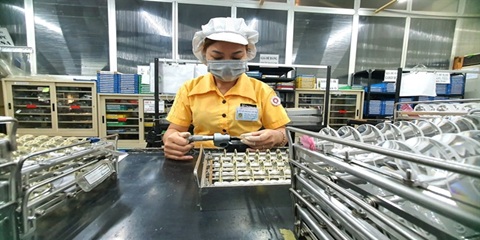
JAPANESE FDI SUPPORTS GREEN TRANSITION IN VIỆT NAM'S MANUFACTURING SECTOR
Japanese Foreign Direct Investment (FDI) is strengthening Việt Nam's manufacturing capacity and accelerating the green transition, as more Japanese companies expand production and adopt sustainable industrial solutions. Việt Nam has become an important market and strategic manufacturing base in Southeast Asia for Japanese investors, reflecting their long-term confidence in the country’s economic potential and sustainable growth prospects.
TECHNOLOGY
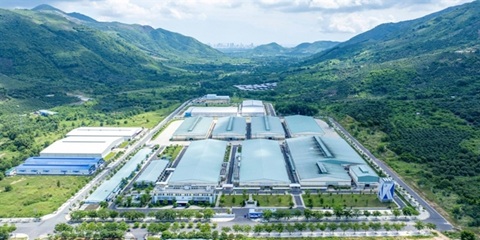
KHÁNH HÒA EYES $15.5 MILLION HI-TECH PLANT
The south-central province of Khánh Hòa has granted an investment certificate for a VNĐ390 billion (US$15.5 million) high-tech plant to produce graphene, biochips and electronic components, as the province seeks to attract investment in advanced materials and biotechnology. The Hememics Vietnam project is backed by US firm Hememics Biotechnologies Inc, Vietnamese investor Viet Khanh JSC and others.
BANKING / FINANCE / INSURANCE / TAX
MAJOR INFRASTRUCTURE PROJECTS BECOME MAIN DRIVER FOR BANK PROFITS
The race to finance major infrastructure projects worth hundreds of billions of US dollars is opening up new opportunities for profit growth in the banking sector. According to experts, the banking sector's profit outlook for 2026 reflects not only the recovery of credit demand but also a fundamental shift in the composition of interest-earning assets, with major infrastructure projects emerging as a strategic, long-term pillar of lending and long-term pillar.
Events Sponsors