Want to be in the loop?
subscribe to
our notification
Business News
CENTRAL BANK EXTENDS FOREX LOAN POLICY
The State Bank of Việt Nam (SBV) has officially extended a policy allowing exporters to take loans in foreign currencies for another year instead of stopping it on December 31 as planned.
According to Circular 18/2017/TT-NHNN issued on Wednesday, which will take effect from January 1 to December 31, 2018, commercial banks can provide short-term loans in foreign currencies to export firms that need funds for production and have turnovers in foreign currencies. After receiving such loans, the exporters must immediately sell the amount of foreign currency borrowed to the lending institutions, using the spot forex trading method, except in cases where the foreign currency will be used to make payments.
According to the central bank, it decided to extend the policy to help local exporters increase their competitiveness and boost exports since their businesses and production still face difficulties. This is also among the Government’s incentive policies aimed at supporting and developing local enterprises until 2020, which was approved in Decree 35/NQ-CP, issued in May 2016.
Thanks to this policy, exporters have the opportunity to borrow foreign currencies at low interest rates. Currently, lending interest rates for short-term US dollar loans are roughly 2.5-4 per cent, while the rate for short-term đồng loans is some 7-9 per cent.
Previously, experts and enterprises had requested the central bank to extend the policy.
Financial and banking expert Nguyễn Trí Hiếu said the extension is necessary to avoid the country’s exports operating at a disadvantage. He believes that the extension will not affect the Government’s anti-dollarisation policy as the nation’s foreign exchange is relatively stable. Moreover, the banks’ disbursement of foreign currency loans is in đồng, not the greenback.
Echoing Hiếu, expert Cấn Văn Lực said the Government should pursue the anti-dollarisation policy but should not do so at all costs. It should fight against dollarisation but should still create favourable conditions to support firms, especially exporters, he added.
SBV deputy governor Đào Minh Tú said it is only a short-term policy. In the long run, the central bank will discontinue the policy, and firms must gradually shift from borrowing to buying and selling foreign currencies.
He said although some exporters should be given priority so they can take advantage of the policy, others whose turnover in foreign currencies is modest should not continue to enjoy it as this has proven to be unfair.
To avoid having unqualified firms take advantage of the policy, Hiếu suggested that the central bank fine-tune the regulation. For example, only firms with at least 50 per cent turnover in a foreign currency could be permitted to seek foreign-currency loans.
Source: VNS
Related News

MEMBER CORNER / PROMOTIONS
HOW TO REPLACE THE BATTERY IN YOUR SENTRYSafe SAFE - SIMPLE & EASY!
Electronic locks need proper battery maintenance to ensure reliable operation.SENTRYSAFE - Protecting What Matters Most.Contact Sen Wai Vietnam for expert advice on genuine SentrySafe safes.

VIETNAM ECONOMY INVESTMENT
FROM SCALE TO VALUE: VIỆT NAM’S AGRO-FORESTRY EXPORTS NEED CONTROL OF THE VALUE CHAIN
Việt Nam has become a major supplier to global agricultural and forestry markets, but its export strength has yet to translate into matching market power. While the country has improved its production capacity and moved further into processing, the high-value links in many supply chains, such as technology, branding, standards, data and decision-making, remain largely in foreign hands.

TECHNOLOGY
HCM CITY SEEKS NEW GROWTH MODEL IN AI ERA
HCM City is looking to strengthen its economic competitiveness by developing new growth drivers, improving workforce capabilities and enhancing international cooperation amid the rapid transformation of global value chains and the growing influence of artificial intelligence (AI). These priorities were highlighted at a thematic session on global economic transformation and economic restructuring experiences of countries and megacities, held on October 27 as part of the Autumn Economic Forum 2026 in HCM City.
GARMENT / TEXTILE
JAPANESE FDI SUPPORTS GREEN TRANSITION IN VIỆT NAM'S MANUFACTURING SECTOR
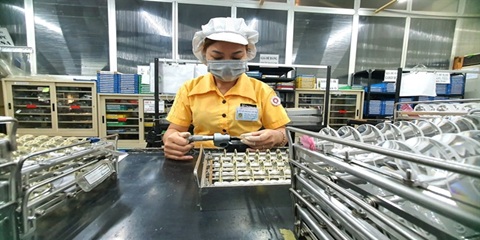
Japanese Foreign Direct Investment (FDI) is strengthening Việt Nam's manufacturing capacity and accelerating the green transition, as more Japanese companies expand production and adopt sustainable industrial solutions. Việt Nam has become an important market and strategic manufacturing base in Southeast Asia for Japanese investors, reflecting their long-term confidence in the country’s economic potential and sustainable growth prospects.
TECHNOLOGY
KHÁNH HÒA EYES $15.5 MILLION HI-TECH PLANT
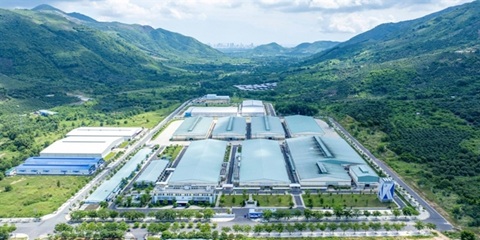
The south-central province of Khánh Hòa has granted an investment certificate for a VNĐ390 billion (US$15.5 million) high-tech plant to produce graphene, biochips and electronic components, as the province seeks to attract investment in advanced materials and biotechnology. The Hememics Vietnam project is backed by US firm Hememics Biotechnologies Inc, Vietnamese investor Viet Khanh JSC and others.

BANKING / FINANCE / INSURANCE / TAX
MAJOR INFRASTRUCTURE PROJECTS BECOME MAIN DRIVER FOR BANK PROFITS
The race to finance major infrastructure projects worth hundreds of billions of US dollars is opening up new opportunities for profit growth in the banking sector. According to experts, the banking sector's profit outlook for 2026 reflects not only the recovery of credit demand but also a fundamental shift in the composition of interest-earning assets, with major infrastructure projects emerging as a strategic, long-term pillar of lending and long-term pillar.
Events Sponsors






















