Want to be in the loop?
subscribe to
our notification
Business News
WORKSHOP DISCUSSES FUTURE OF VIETNAMESE LABOUR MARKET
Experts discussed the future of the Vietnamese labour market at an online workshop hosted by Nhân Dân (The People) newspaper on Friday.
It aimed to collect feedback from experts on two draft projects of the Ministry of Labour, Invalids and Social Affairs (MOLISA) on supporting the development of the labour market until 2030 and improving labour supply-demand forecasting capacity.
Vũ Trọng Bình, head of MOLISA’s Department of Employment said over the past 10 years, Việt Nam's labour market has grown strongly. Markets in the southeastern region and Red River Delta in the north have connected with international labour markets.
“Specialised labour markets such as the Mekong River Delta and the Central Highlands have strongly linked to global value chains, especially in agriculture and fishery sectors. In mountainous areas, we must have our own market. The two projects must address those fundamental points,” he said.
Dr Bùi Sỹ Lợi, vice chairman of the National Assembly’s Committee of Social Affairs, said one of the biggest changes of the labour market was labour movement from informal sectors to formal sectors.
Among 56 million labourers in Việt Nam now, only 20 million are in the formal sector. Those employees have more stable jobs, higher incomes and are better protected with health insurance and social security schemes, according to Lợi.
The labour movement from informal to formal sectors is a market principle, and there must be long-term solutions for this process.
Dr Ngô Quỳnh An, deputy head of Economic and Human Resource Management Faculty of the National Economics University, recommended improving the quality of informal sectors so employees are encouraged to move to formal sectors.
She noted that moving out of the agricultural sector did not mean moving out of rural areas. If rural labourers move to urban areas, there will be more employees working in informal sectors in the cities.
Dr Bùi Sỹ Lợi warned that Việt Nam would be stuck in the low-middle income trap if the country cannot improve labour productivity.
The Government and the MOLISA had made huge progress in connecting the labour market but we should not be complacent with the achievements as the market kept changing, he said.
Source: VNS
Related News
VIETNAM ECONOMY INVESTMENT
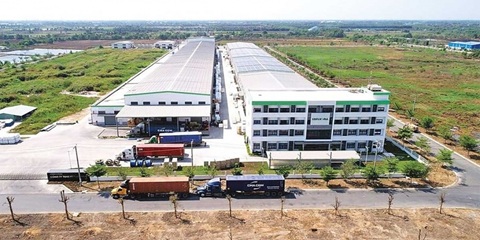
FOREIGN INVESTORS SEEKING A SYNCHRONISED MANUFACTURING ECOSYSTEM
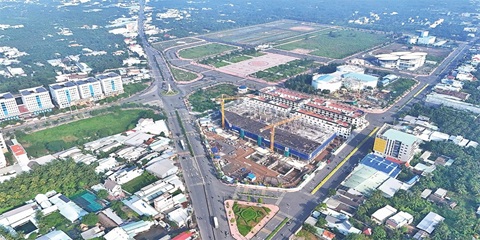
Instead of focusing only on land costs and incentives as usual, foreign investors are seeking a synchronised manufacturing ecosystem, from stable power supply and logistics to shared infrastructure and the convenience of completing residence procedures for experts to serve their long-term investment in the country.
INFRASTRUCTURE / CONSTRUCTION / LOGISTIC / PORT
DONG THAP PROVINCE STEPS UP INDUSTRIAL EXPANSION AND INFRASTRUCTURE CONNECTIVITY
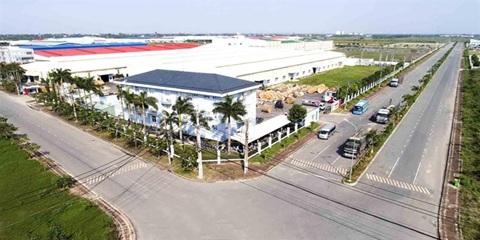
Accelerating public investment, strengthening inter-regional connectivity, and expanding industrial land are helping Dong Thap efficiently bolster competitiveness and drive economic growth. Following the 2025 merger of the former Dong Thap and Tien Giang provinces, the expanded Dong Thap province in the Mekong Delta faces mounting pressure to accelerate infrastructure development and strengthen connectivity among local economic zones, urban areas, industrial parks (IPs), and production centres.
PROPERTY / INDUSTRIAL ZONE
HCM CITY ATTRACTS US$5.7 BILLION INTO EXPORT PROCESSING AND INDUSTRIAL ZONES
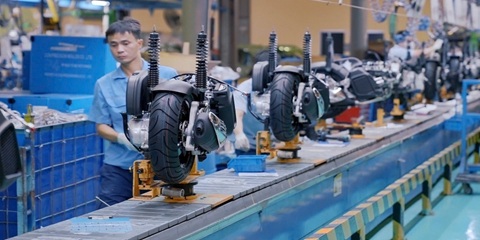
HCM City attracted US$5.7 billion in domestic and foreign investment into its export processing and industrial zones during the first nine months of 2026. The figure exceeded the city's full-year target by 31 per cent, highlighting strong momentum in high-quality industrial investment under Resolution No.10-NQ/TW. Total investment reached 131 per cent of the 2026 target of $4.25 billion and represented a 29 per cent increase compared with the same period in 2025, according to the city's Export Processing and Industrial Zones Authority (HEPZA).

BANKING / FINANCE / INSURANCE / TAX
REMITTANCES TO HCM CITY RISE NEARLY 40% IN Q3
Remittances to HCM City reached more than US$2.83 billion in the third quarter of this year, up 39.5 per cent from the previous quarter and 3.6 per cent year-on-year. This was the first quarter showing positive annual growth this year, helping narrow the decline in remittance inflows over the first nine months. According to the State Bank of Vietnam (SBV)’s Regional Branch 2, remittances transferred to HCM City through credit institutions and economic organisations totalled $2.835 billion in Q3, an increase of more than $802 million from the previous quarter.
VIETNAM ECONOMY INVESTMENT
LOCALITIES REPORT BREAKTHROUGH RESULTS IN FDI IN FIRST NINE MONTHS
In Ho Chi Minh City, total registered capital reached $17.2 billion in the first nine months, up 4.2 times from the same period last year. The figure included more than $9.35 billion in newly registered capital and over $4.9 billion in additional capital for existing projects. Foreign investors also registered more than $2.9 billion through capital contributions and share purchases.

TECHNOLOGY
TECH SECTOR GROWTH OPENS UP OPPORTUNITIES FOR VIỆT NAM TO GO GLOBAL
The growth of the electronics, semiconductor and high-tech sectors worldwide is opening up a variety of opportunities for Vietnamese enterprises to integrate more deeply into the global supply chain. However, to become suppliers for these corporations, domestic enterprises must meet rigorous standards regarding quality, technology, productivity and order fulfilment capabilities.
Events Sponsors