Want to be in the loop?
subscribe to
our notification
Business News
VITAS WANTS APPAREL SECTOR ZONING PLAN REVISED
According to the master zoning plan for textile and garment industry development until 2020 with a vision toward 2030, the sector would post export revenue of US$20 billion. However, the industry’s shipments amounted to US$27.5 billion last year and are expected to soar to US$31 billion this year.
The sector has attained annual export revenue growth of 15% in the 2010-2015 period.
Deputy Minister of Industry and Trade Ho Thi Kim Thoa was quoted by the Vietnam News Agency as saying that apparel importers are shifting orders to markets with abundant low-cost labor. Vietnam’s textile and garment sector is projected to grow strongly in the next decade owing to more bilateral and multilateral trade agreements the country has signed, especially the Trans-Pacific Partnership (TPP).
Therefore, it is necessary to adjust the master zoning plan for textile and garment industry development until 2020 with a vision toward 2030, Thoa said.
VITAS chairman Vu Duc Giang said there is a big gap between the master zoning plan and reality, so the association has called for the Government and relevant ministries and agencies to review and revise it.
Giang said the textile and garment industry is in a good position to grow stronger and that the Government needs to have a long-term strategy to develop the industry and enable it to bank on opportunities from the country’s deeper international integration.
Vitas proposed the ministries of industry-trade and planning-investment work out viable plans to develop central industrial parks (IPs) for textile and garment firms to better manage wastewater treatment and ensure sustainable growth for the industry.
The industry needs large-scale IPs for domestic and foreign-invested producers of fiber and cloth and dyeing enterprises.
Some such IPs have gone up in Hung Yen, Thai Binh, Nam Dinh, Dong Nai and Binh Duong provinces but they are smaller than required, such as Pho Noi B covering only 121.8 hectares in the northern province of Hung Yen and Nguyen Duc Canh having an area of 102 hectares in the northern province of Thai Binh.
Vitas requested the Government to consider establishing industrial parks measuring 500-1,000 hectares for textile and garment enterprises and providing loan interest support for enterprises to invest in integrated wastewater treatment facilities.
The association wanted improved waterway and road connectivity between large-scale IPs for apparel firms and ports and logistics centers to help enterprises in the sector lower costs.
Giang pointed out large-scale IPs, better traffic infrastructure, effective management of wastewater treatment and environmental issues, and stable policies for taxes, fees and wages, and streamlined customs procedures as important factors for sustainable development of the industry.
Than Duc Viet, deputy general director of Garment Corporation No. 10, said the Government should finance construction of textile and garment IPs and wastewater treatment facilities to help enterprises reduce costs as most of the firms in the industry are small and medium and have limited finances.
IPs with good wastewater treatment facilities will help attract fiber, textile and dyeing firms, especially foreign-invested ones, producing more materials for the industry.
Source: The Saigon Times
Related News
VIETNAM ECONOMY INVESTMENT
FOREIGN INVESTORS SEEKING A SYNCHRONISED MANUFACTURING ECOSYSTEM
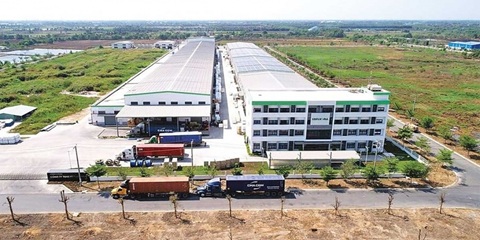
Instead of focusing only on land costs and incentives as usual, foreign investors are seeking a synchronised manufacturing ecosystem, from stable power supply and logistics to shared infrastructure and the convenience of completing residence procedures for experts to serve their long-term investment in the country.
INFRASTRUCTURE / CONSTRUCTION / LOGISTIC / PORT
DONG THAP PROVINCE STEPS UP INDUSTRIAL EXPANSION AND INFRASTRUCTURE CONNECTIVITY
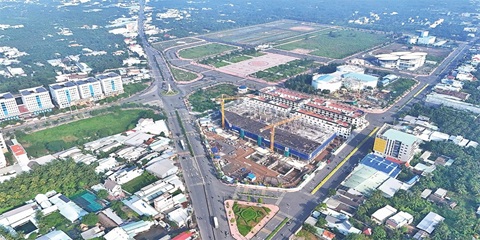
Accelerating public investment, strengthening inter-regional connectivity, and expanding industrial land are helping Dong Thap efficiently bolster competitiveness and drive economic growth. Following the 2025 merger of the former Dong Thap and Tien Giang provinces, the expanded Dong Thap province in the Mekong Delta faces mounting pressure to accelerate infrastructure development and strengthen connectivity among local economic zones, urban areas, industrial parks (IPs), and production centres.
PROPERTY / INDUSTRIAL ZONE
HCM CITY ATTRACTS US$5.7 BILLION INTO EXPORT PROCESSING AND INDUSTRIAL ZONES
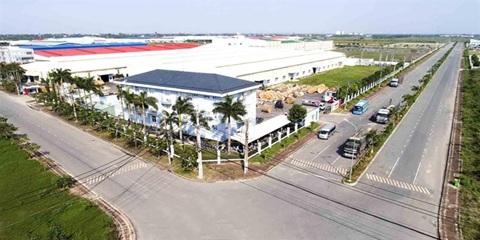
HCM City attracted US$5.7 billion in domestic and foreign investment into its export processing and industrial zones during the first nine months of 2026. The figure exceeded the city's full-year target by 31 per cent, highlighting strong momentum in high-quality industrial investment under Resolution No.10-NQ/TW. Total investment reached 131 per cent of the 2026 target of $4.25 billion and represented a 29 per cent increase compared with the same period in 2025, according to the city's Export Processing and Industrial Zones Authority (HEPZA).

BANKING / FINANCE / INSURANCE / TAX
REMITTANCES TO HCM CITY RISE NEARLY 40% IN Q3
Remittances to HCM City reached more than US$2.83 billion in the third quarter of this year, up 39.5 per cent from the previous quarter and 3.6 per cent year-on-year. This was the first quarter showing positive annual growth this year, helping narrow the decline in remittance inflows over the first nine months. According to the State Bank of Vietnam (SBV)’s Regional Branch 2, remittances transferred to HCM City through credit institutions and economic organisations totalled $2.835 billion in Q3, an increase of more than $802 million from the previous quarter.

VIETNAM ECONOMY INVESTMENT
LOCALITIES REPORT BREAKTHROUGH RESULTS IN FDI IN FIRST NINE MONTHS
In Ho Chi Minh City, total registered capital reached $17.2 billion in the first nine months, up 4.2 times from the same period last year. The figure included more than $9.35 billion in newly registered capital and over $4.9 billion in additional capital for existing projects. Foreign investors also registered more than $2.9 billion through capital contributions and share purchases.

TECHNOLOGY
TECH SECTOR GROWTH OPENS UP OPPORTUNITIES FOR VIỆT NAM TO GO GLOBAL
The growth of the electronics, semiconductor and high-tech sectors worldwide is opening up a variety of opportunities for Vietnamese enterprises to integrate more deeply into the global supply chain. However, to become suppliers for these corporations, domestic enterprises must meet rigorous standards regarding quality, technology, productivity and order fulfilment capabilities.
Events Sponsors






















