Want to be in the loop?
subscribe to
our notification
Business News
VINH LONG PROVINCE TURNS ITS DIGITAL TRANSFORMATION INTO NEW GROWTH ENGINE
Vinh Long is turning sci-tech, innovation, and digital transformation into powerful drivers of better governance and stronger economic growth.
The province, part of the Mekong Delta region, has completed 57 of the 61 tasks set out under Resolution No.57-NQ/TW. It has also completed 163 of the 165 tasks assigned by the Central Steering Committee.
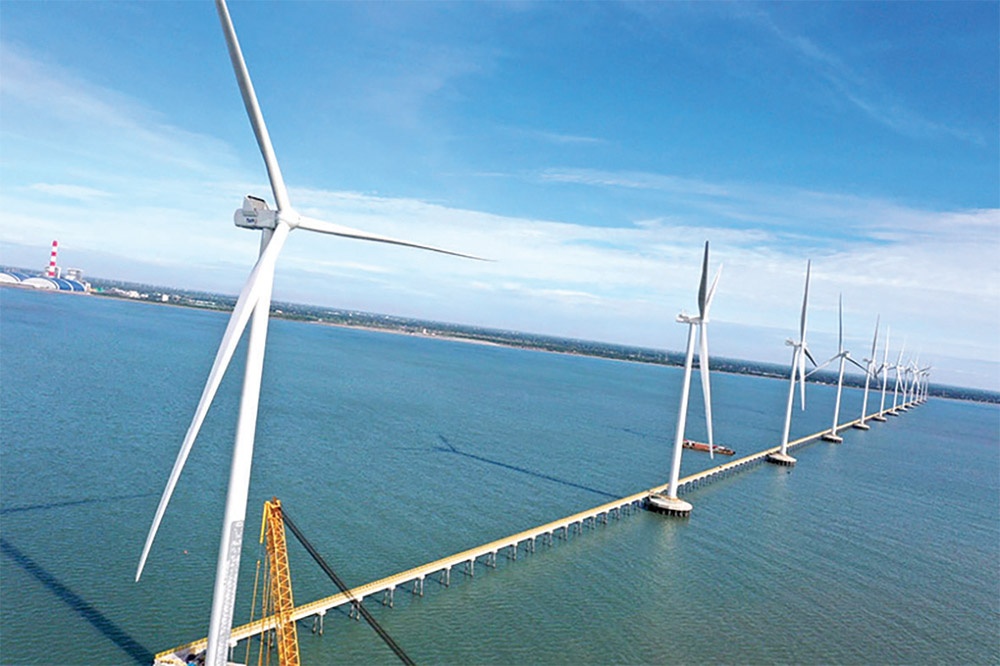
Along with digital capabilities, Vinh Long is also focused on developing clean energy
In the past 18 months since Resolution 57 was enacted, Vinh Long has made a strong shift from awareness to action, and from implementing individual tasks to adopting a comprehensive approach, making science and technology, innovation, and digital transformation new drivers of the province’s development.
The province has also made concerted efforts in order to swiftly translate central government policies into plans suited to local conditions.
In terms of the results under the assessment of the quality of services provided to individuals and businesses in administrative procedures and public services, Vinh Long ranks first among 34 provinces and centrally governed cities.
Chairman of Vinh Long People’s Committee Tran Tri Quang noted that building on the results achieved thus far, the province will strive to complete data cleansing and standardisation, ensuring that all specialised systems are connected and capable of sharing data through the province’s integration platform.
“The province will make a strong shift from technology application to digital governance with all directives and administrative documents processed online,” he said.
By 2030, Vinh Long aims for the digital economy to contribute about 10 per cent of local regional GDP, all of the population to be covered by internet and mobile networks, all businesses to apply digital tech, 80 per cent of residents to use online public services, and 60 per cent to make cashless payments. By 2045, the digital economy is targeted to account for about 25 per cent of the province’s regional GDP.
Chairman Quang called for the establishment of a provincial shared database; completion of the integration of population, civil status, insurance, and land data; and pilot applications of big data analytics to support land management, social welfare, and economic development forecasting.
The province also aims to make eligible administrative procedures available as fully online services, while significantly increasing cashless payments in healthcare, education, and rural areas.
Digital infrastructure continues to receive inclusive investment, with all communes covered by broadband internet and the specialised data transmission network connected to all provincial- and commune-level agencies.
Vinh Long continues to maintain the operation of nearly 350 community digital technology teams and roll out the ‘Digital Literacy for All’ movement, contributing to improved digital skills among residents.
Speaking at a conference in late July to review implementation of Resolution 57, Tran Van Lau, Secretary of Vinh Long Party Committee and head of the provincial steering committee on implementation of the resolution, acknowledged the results the province has attained.
“Although these are new tasks with a broad scope and involving many stakeholders, thanks to the high determination of the entire political system, Resolution 57 has gradually been translated into reality and achieved positive results, creating an important impetus to drive the province’s socioeconomic development,” he said.
The provincial leader asked local Party committees and steering committees at all levels, as well as heads of agencies and units to continue thoroughly disseminating relevant plans of the central government and the province; and to mobilise the participation of the entire political system, the business community and local people in the development of sci-tech, innovation, and digital transformation.
Vinh Long is also focused on developing the marine economy and clean energy as drivers of the green economy, developing key coastal economic sectors and the circular economy in association with ecological conservation and climate change adaptation.
By 2030, Vinh Long aims to become a centre for the marine economy and renewable energy production for the Mekong Delta region.
Source: VIR
Related News

MEMBER CORNER / PROMOTIONS
REAL TEST - NOT JUST WORDS
A truly fireproof bag must prove itself through action. SentrySafe FBWLZ0 was put to the test under flames reaching 1,300-2,000°C. Constructed with 4 layers of high-quality materials — not just for marketing, but for real protection. When risks happen, what you need is reliable protection. SentrySafe FBWLZ0 – safeguarding what matters most, even in extreme conditions.

MEMBER CORNER / PROMOTIONS
EXCLUSIVE HKBAV MEMBER OFFER DISCOUNT: 15% OFF
Eligibility: HKBAV membersPromotion: Special offer for the 2026 Mid-Autumn FestivalHow to enjoy the discount: Please mention that you are an HKBAV member when placing your order.
PROPERTY / INDUSTRIAL ZONE
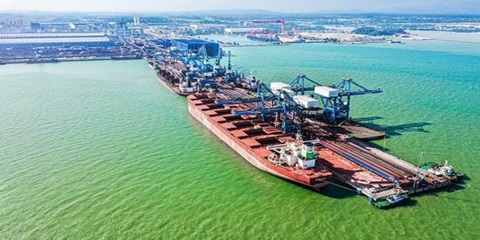
DUNG QUẤT EZ, QUẢNG NGÃI IPS DRAW NEARLY US$19.4 BLN
The Dung Quất Economic Zone and Quảng Ngãi industrial parks have so far attracted 441 projects worth around US$19.4 billion, according to the Dung Quất Economic Zone and Quảng Ngãi Industrial Parks Authority (DEZA). The DEZA now has 350 projects run by 293 companies, employing nearly 81,700 workers, while about 20,000 additional experts, engineers and workers are building mega projects, according to data presented at a workshop marking the authority’s 30th anniversary recently.
INFRASTRUCTURE / CONSTRUCTION / LOGISTIC / PORT
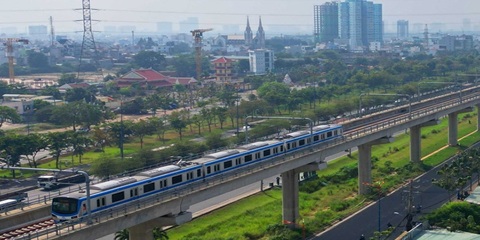
HO CHI MINH CITY OUTLINES PLANS TO START FOUR MORE METRO LINES
Ho Chi Minh City People’s Committee plans to begin construction on four metro lines by the end of 2026, which is part of the plan to complete 255km of metro lines by 2030. The first line, which connects Binh Duong New City with Suoi Tien, covers a length of over 32km, with an estimated investment of $2.18 billion. The line will pass through seven wards.
PROPERTY / INDUSTRIAL ZONE
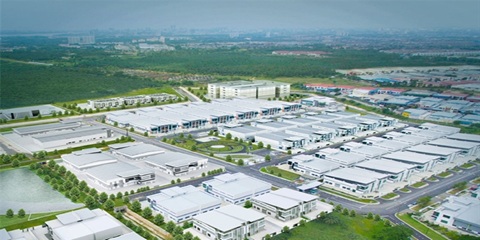
VIỆT NAM'S INDUSTRIAL REAL ESTATE MARKET MAINTAINS STRONG MOMENTUM
Industry experts have forecast that Việt Nam's industrial real estate market will continue its positive trend over the next 12–24 months, with solid support from high-quality foreign direct investment (FDI), regional production shifts, and significant nationwide infrastructure projects currently underway. In the first six months of the year, the industrial real estate sector in Việt Nam saw robust growth driven by a substantial influx of FDI.

VIETNAM ECONOMY INVESTMENT
VIỆT NAM SEAFOOD EXPORTS COULD TOP $12 BILLION DESPITE GATHERING HEADWINDS
Seafood exports are expected to top US$12 billion this year, but, according to the Vietnam Association of Seafood Exporters and Producers, the industry will have to contend with four major challenges: higher tariffs, stricter traceability requirements, rising input costs, and intensifying competition in key markets. VASEP said seafood exports in the first seven months of the year were up 11.5 per cent year-on-year at $6.78 billion.
Events Sponsors


