Want to be in the loop?
subscribe to
our notification
Business News
VIETNAMESE BANKS SET FOR GROWTH ON MAJOR POLICY SHIFT
Experts believe that if managed properly, lifting credit room restrictions will enhance lending flexibility, allowing for a more natural adjustment of capital supply and demand, thereby facilitating investment and production needs in the economy.

A Sacombank transaction office. — Photo courtesy of the bank
HÀ NỘI — The remarkable rise in bank stock prices reflects significant changes in Việt Nam's financial landscape, driven by the Government's commitment to removing administrative barriers in credit operations and the legalisation of Resolution 42 concerning bad debt management.
Several bank stocks have seen impressive gains since the beginning of the year. Notably, National Citizen Commercial Joint Stock Bank (NVB) has surged by 73 per cent, followed by Vietnam - Asia Commercial Joint Stock Bank (VAB) at 63 per cent, while both KienLongBank (KLB) and Sahabank (SHB) have increased by over 57 per cent.
Techcombank (TCB) has experienced a 43.2 per cent rise and has set records 17 times this year, while Sacombank (STB) and MBBank (MBB) have also reached new highs 23 times, highlighting ongoing upward momentum.
Analysts expect continued double-digit profit growth for these banks, benefitting from the Government's determination to achieve 8 per cent GDP growth and promote private economic development.
As companies report their second quarter earnings, many banks are expected to showcase strong profit growth.
In a recent directive, Prime Minister Phạm Minh Chính instructed the State Bank of Vietnam (SBV) to draft a proposal for the removal of the credit limit mechanism (credit room) by 2026. Previously, this mechanism helped control credit growth, which reached as high as 54 per cent in certain years, risking systemic instability.
While the SBV has begun to lift credit room restrictions for foreign banks and non-bank credit institutions, it remains in place for commercial banks. Investor interest in bank stocks has surged as discussions about these changes unfold.
Experts believe that if managed properly, lifting credit room restrictions will enhance lending flexibility, allowing for a more natural adjustment of capital supply and demand, thereby facilitating investment and production needs in the economy.
With expanded credit, banks will need to improve their risk assessment and management capabilities to control non-performing loans. The removal of credit limits should be complemented by new risk management regulations, such as those outlined in Basel III, to ensure system safety.
According to SSI Research, this move represents a positive step forward in the long term, provided that safety ratio regulations, particularly concerning capital adequacy ratios, are updated to maintain system stability and avoid overheating.
On June 27, the National Assembly approved amendments to the Law on Credit Institutions, which restores the right for financial institutions to seize collateral for bad debt resolution. This legal framework is expected to expedite the management of non-performing loans, freeing up business capital and enhancing capital efficiency.
SHS Research said that the original Resolution 42 contributed to improved debt resolution efficiency and reduced legal risks. By granting banks the authority to seize collateral, the lengthy litigation processes can be avoided, shortening recovery times and improving cash flow.
The assets most likely to benefit from this legislative change are real estate and consumer loans, which comprise 80-90 per cent of collateralised assets.
The current recovery rate from bad debt management among 29 listed banks represents only 16 per cent of total bad debt, indicating room for improvement.
Banks with high levels of bad debt, such as BIDV, VPBank, Vietinbank, VCB and MBB, as well as those with significant retail portfolios like Vietnam International Commercial Joint Stock Bank (VIB), Asia Commercial Joint Stock Bank (ACB) and STB, are expected to benefit the most from these policies.
Head of analysis at Maybank Investment Bank Quản Trọng Thành emphasises that legalising Resolution 42 is essential for the banking sector, allowing banks to proactively manage collateral and improve their operations.
The current state of banking bad debt is manageable and is expected to improve alongside the overall economic recovery.
Historically, bad debt resolution has been hampered by lengthy legal processes, forcing banks to set aside provisions and stop recognising interest income, significantly impacting their balance sheets.
SSI Research warns that this challenge is particularly acute for banks with high retail lending proportions, where small, geographically dispersed bad debts increase operational costs and limit credit expansion or the ability to reduce lending rates. — BIZHUB/VNS
Source: VNS
Related News

VIETNAM ECONOMY INVESTMENT
MOF'S FIRMS REPORT STRONG GROWTH IN NINE-MONTH
State-owned groups and corporations represented by the Ministry of Finance (MoF) recorded combined revenue of more than VNĐ2 quadrillion (US$79.5 billion) in the first nine months of 2026, up 28.7 per cent year-on-year, while consolidated profit before tax reached nearly VNĐ160 trillion, equivalent to 140.3 per cent of the full-year target.

TECHNOLOGY
TECH SECTOR GROWTH OPENS UP OPPORTUNITIES FOR VIỆT NAM TO GO GLOBAL
The growth of the electronics, semiconductor and high-tech sectors worldwide is opening up a variety of opportunities for Vietnamese enterprises to integrate more deeply into the global supply chain. However, to become suppliers for these corporations, domestic enterprises must meet rigorous standards regarding quality, technology, productivity and order fulfilment capabilities.

VIETNAM ECONOMY INVESTMENT
SME REVENUE THRESHOLD PROPOSED TO BE RAISED TO $15.2 MILLION
The government has proposed raising the annual revenue threshold for classifying small- and medium-sized enterprises (SMEs) to VNĐ400 billion (US$15.2 million), from currently VNĐ300 billion, as part of a draft law on the development of SMEs. Minister of Finance Ngô Văn Tuấn presented the draft law, which is intended to replace the Law on Supporting SMEs 2017, to the National Assembly at a meeting late last week.

BANKING / FINANCE / INSURANCE / TAX
REMITTANCES TO HCM CITY RISE NEARLY 40% IN Q3
Remittances to HCM City reached more than US$2.83 billion in the third quarter of this year, up 39.5 per cent from the previous quarter and 3.6 per cent year-on-year. This was the first quarter showing positive annual growth this year, helping narrow the decline in remittance inflows over the first nine months. According to the State Bank of Vietnam (SBV)’s Regional Branch 2, remittances transferred to HCM City through credit institutions and economic organisations totalled $2.835 billion in Q3, an increase of more than $802 million from the previous quarter.
PROPERTY / INDUSTRIAL ZONE
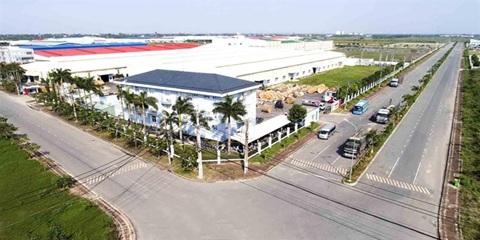
HCM CITY ATTRACTS US$5.7 BILLION INTO EXPORT PROCESSING AND INDUSTRIAL ZONES
HCM City attracted US$5.7 billion in domestic and foreign investment into its export processing and industrial zones during the first nine months of 2026. The figure exceeded the city's full-year target by 31 per cent, highlighting strong momentum in high-quality industrial investment under Resolution No.10-NQ/TW. Total investment reached 131 per cent of the 2026 target of $4.25 billion and represented a 29 per cent increase compared with the same period in 2025, according to the city's Export Processing and Industrial Zones Authority (HEPZA).

CHARITY / EXHIBITION / OTHER EVENTS
INVESTMENT OPPORTUNITIES IN CA MAU PROVINCE: 96 PROJECTS AND 20 STRATEGIC PROJECTS
We are pleased to share with you information on investment projects currently seeking investors in Ca Mau Province. Should your esteemed company or association be interested, we kindly invite you to review the project information and complete the registration form via the links provided. The Ho Chi Minh City Investment and Trade Promotion Centre (ITPC) will consolidate the expressions of interest and facilitate connections with the leadership of Ca Mau Province at a meeting tentatively scheduled for 13 November 2026 in Ho Chi Minh City.
Events Sponsors