Want to be in the loop?
subscribe to
our notification
Business News
VIETNAM TO REQUIRE HEALTH DECLARATIONS FOR ALL CROSS-BORDER TRAVELERS FROM JULY 1
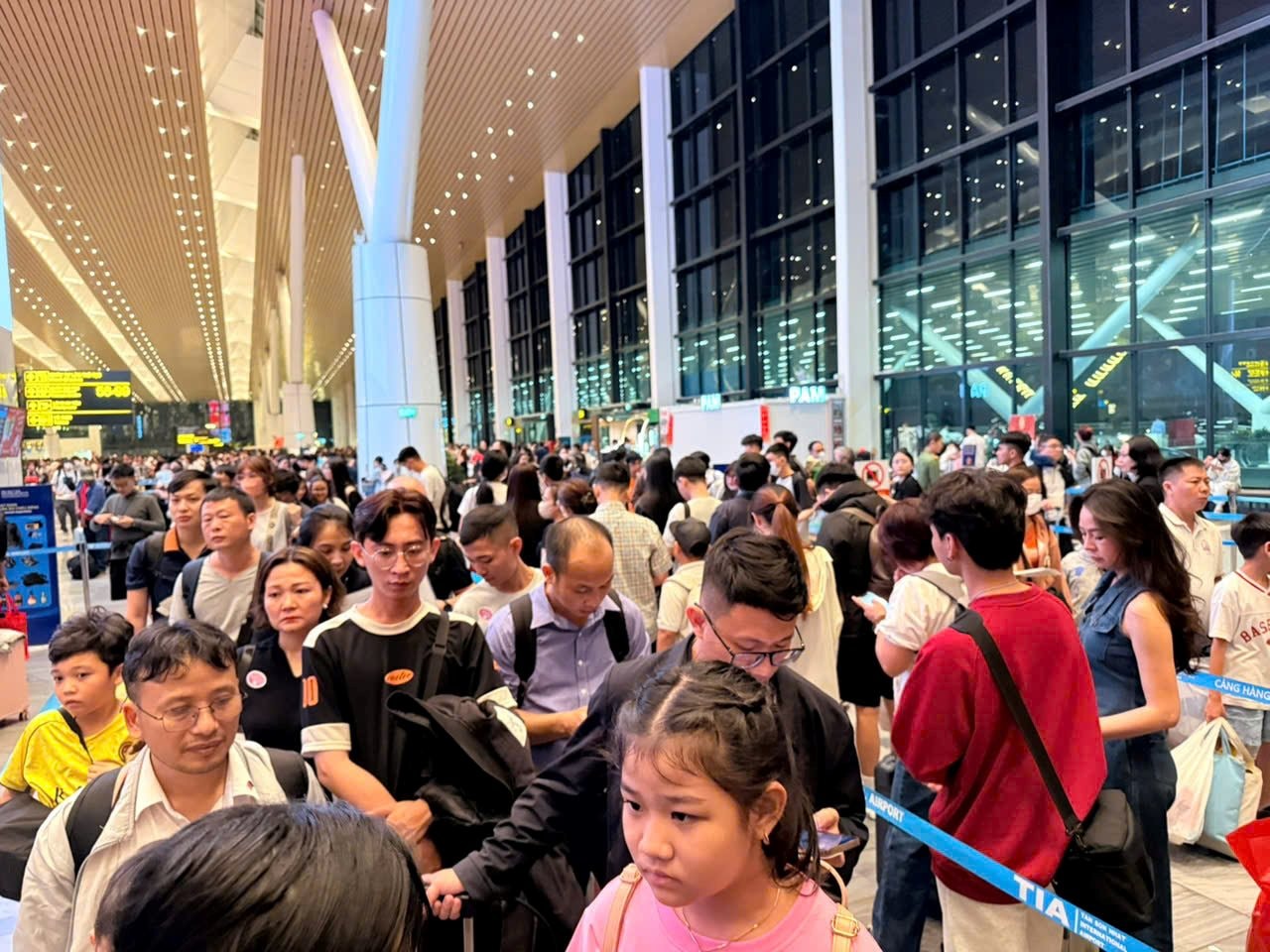
People entering, leaving or transiting through Vietnamese border gates will be required to submit health declarations from July 1 - PHOTO: ARCHIVES
HCMC – People entering, leaving or transiting through Vietnamese border gates will be required to submit health declarations under Government Decree No. 165/2026/ND-CP, which will take effect on July 1, 2026.
The decree was issued to provide detailed regulations and guidance for the implementation of several provisions of the Law on Disease Prevention, including health quarantine requirements for inbound, outbound and transit travelers, the Vietnam News Agency reported.
Under the regulation, inbound, outbound and transit travelers must complete health declarations either electronically or on paper using forms issued by the Ministry of Health.
Those making health declarations must provide proof of vaccination and evidence of preventive measures taken when requested by the Ministry of Health.
Health declarations will be available in both Vietnamese and English. Depending on the global disease situation, additional languages may also be used at border gates.
The decree states that health declarations must be completed within seven days before entry, exit or transit through Vietnamese border gates.
The minister of health will issue guidance on the subjects and duration of health declaration requirements at border gates for each infectious disease, based on the global disease situation and the risk of transmission into Vietnam at different times.
Regarding quarantine procedures, health quarantine officers will conduct direct and indirect observation and monitor travelers’ health conditions and body temperature using medical surveillance equipment to detect suspected infectious disease cases.
When a suspected case is identified, quarantine officers will carry out on-site inspections, including interviews, collection of epidemiological information, review of preventive measures already taken, and checks for signs and symptoms of infectious diseases.
If a person is found to require medical measures under the Law on Disease Prevention, health quarantine officers will carry out the necessary medical procedures.
Under the decree, the maximum time allowed to complete an on-site inspection for one individual is two hours.
Vietnam’s Law on Disease Prevention will take effect on July 1, 2026. Under Article 20 of the law, subjects subject to health quarantine include inbound, outbound and transit travelers, means of transport, goods, corpses, remains, ashes, biological specimens, tissues and human body parts transported across Vietnam’s borders.
Source: The Saigon Times
Related News

INFRASTRUCTURE / CONSTRUCTION / LOGISTIC / PORT
HÀ NỘI'S BUSINESSES URGE ACTION ON CAPITAL, LOGISTICS BOTTLENECKS TO BOOST EXPORTS
Business associations and enterprises in Hà Nội have urged the city to tackle bottlenecks in financing, logistics, infrastructure and regulations to improve competitiveness, expand production and support export growth, as the capital seeks to sustain double-digit economic expansion. Mạc Quốc Anh, vice chairman and secretary general of the Hanoi Association of Small and Medium Enterprises (Hanoisme), said exports were not simply about selling goods overseas but also reflected a company's production capacity, management, ability to meet international standards and reputation.

INFRASTRUCTURE / CONSTRUCTION / LOGISTIC / PORT
PORT THROUGHPUT IN HẢI PHÒNG EXCEEDS EIGHT-MONTH TARGET
Ports in the northern city of Hải Phòng handled an estimated 134.34 million tonnes of goods in the first eight months of 2026, exceeding the eight-month target of 115 million tonnes by 16.8 per cent and rising 11.74 per cent year on year, equivalent to 56.2 per cent of the full-year plan. The strong performance followed a series of measures to optimise port capacity and improve the competitiveness of the city’s seaport system, with a focus on maximising the efficiency of the Lạch Huyện international gateway port as new berths came into operation.

INFRASTRUCTURE / CONSTRUCTION / LOGISTIC / PORT
LÂM ĐỒNG BUILDS TRANSPORT INFRASTRUCTURE AS FOUNDATION FOR GROWTH
With its mountains, highlands and long coastline brought together under one administrative roof, the enlarged Lâm Đồng is now Việt Nam’s largest province by area – and a place where stronger transport links could help turn its diverse economic strengths into a more integrated engine of growth. Against this backdrop, the province is prioritising an integrated transport network to strengthen regional connectivity, expand development space and lay the foundation for sustainable socio-economic growth.
INFRASTRUCTURE / CONSTRUCTION / LOGISTIC / PORT
VIETNAM LOGISTICS COSTS ACCOUNT FOR 16 PER CENT OF GDP
Speaking at a logistics conference on August 26, Ho Thi Quyen, deputy director of the Ho Chi Minh City Investment and Trade Promotion Centre, said that Vietnam is now home to more than 34,000 logistics companies, with the sector contributing around 4.5-5 per cent of GDP. However, logistics costs remain high at approximately 16 per cent of GDP.

INFRASTRUCTURE / CONSTRUCTION / LOGISTIC / PORT
DOMESTIC DEMAND DRIVES STEEL GROWTH AS CONSTRUCTION GATHERS PACE
The steel industry recorded double-digit growth in both production and sales in the first seven months of 2026, while export remained more subdued, highlighting the increasing importance of domestic demand as public investment and construction activity expand. According to the World Steel Association, Việt Nam produced around 15.2 million tonnes of crude steel in the first half of 2026, up 26.9 per cent year-on-year, keeping the country among the world's 10 largest steel producers.

VIETNAM MONTHLY STATISTICAL DATA
INFOGRAPHIC SOCIAL-ECONOMIC PERFORMANCE IN AUGUST OF 2026
The monthly statistical data presents current economic and social statistics on a variety of subjects illustrating crucial economic trends and developments, including production of agriculture, forestry and fishery, business registration situation, investment, government revenues and expenditures, trade, prices, transport and tourism and so on.
Events Sponsors


