Want to be in the loop?
subscribe to
our notification
Business News
VIETNAM SHIFTING TO A STRONGER FDI ECOSYSTEM
Vietnam is moving towards a new approach to foreign investment, with the focus shifting from attracting capital and individual projects to developing a foreign-invested economic sector that is more deeply integrated with the domestic economy.
At a seminar at the headquarters of Vietnam Government Portal, Bui Thu Thuy, deputy director general of the Foreign Investment Agency (FIA), said Resolution No.10-NQ/TW represents several major shifts in development thinking.
The resolution, issued in June, outlines Vietnam's updated strategy for developing the foreign-invested economic sector, placing greater emphasis on the quality and effectiveness of capital flows, their contribution to domestic businesses, and their ability to generate technology, knowledge, and productivity gains across the economy.
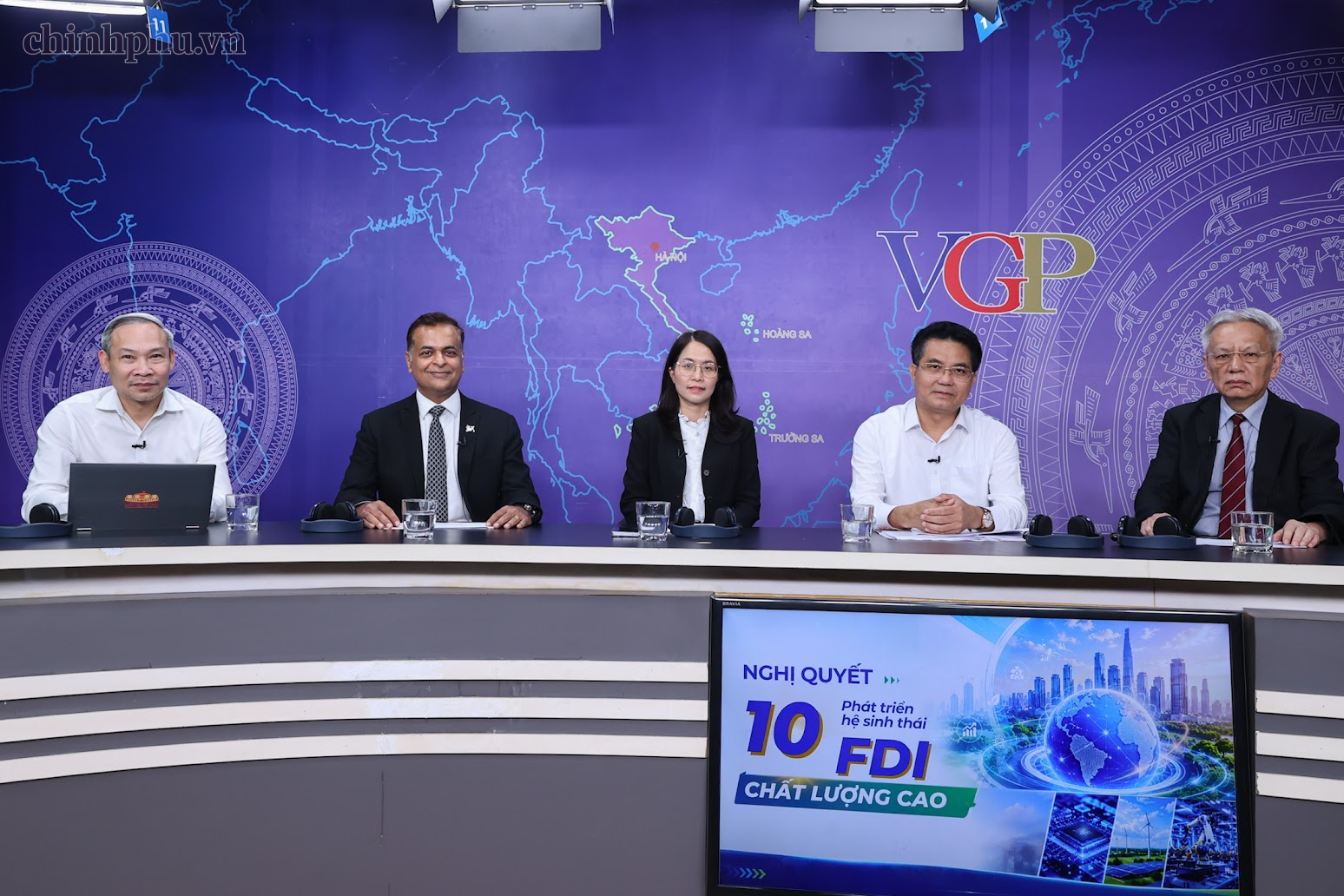
Photo: chinhphu.vn
“What matters more now is how investment capital creates spillover effects in the domestic economy, what results it brings to domestic businesses and how it contributes to the economy as a whole,” Thuy said. "Incentives in the new period, for example, need to be linked to measurable outcomes and the actual contribution of investment projects to the economy."
Such contributions could include technology transfer, the use of advanced technologies, links with domestic businesses and the development of local capabilities. The approach is designed to prevent a situation in which foreign capital enters Vietnam but operates largely in isolation from domestic enterprises. Thuy described the challenge as avoiding the emergence of “two economies within one economy”, a foreign direct investment (FDI) sector and a domestic sector developing separately with limited interaction.
Other major shifts outlined by Thuy included building an integrated ecosystem connected with international capital flows; moving from simply managing investment towards creating a full investment and business environment; and addressing competition among localities that can result in a “race to the bottom” in investment attraction.
"Instead, capital flows need to be coordinated at the national level and directed towards sectors and regions where investment is genuinely needed, helping ensure more balanced development," Thuy said.
New ecosystem
Phan Duc Hieu, standing member of the National Assembly’s Economic and Financial Committee, said Resolution 10 introduces important new elements.
“The approach is more systematic, while the thinking has become deeper and more practical,” Hieu said. "The resolution places emphasis on developing an ecosystem capable of supporting FDI throughout the entire life cycle of a project. It needs to encompass the living and working environment, human resources, hard and soft infrastructure, and the wider conditions required for businesses to operate effectively."
At the same time, he identified a fundamental condition for improving the quality of FDI: Vietnam’s ability to absorb it. “The most important factor in improving the quality of FDI is to strengthen the economy’s absorptive capacity. Good FDI will not automatically generate spillovers if the economy lacks the capacity to absorb them,” Hieu said.
This places domestic enterprises at the centre of the new FDI strategy. Vietnamese companies need stronger technological, managerial, and financial capabilities so that they are ready to become suppliers and partners of multinational corporations.
The experience of Nestlé Vietnam illustrates how such links can develop. Binu Jacob, CEO of Nestlé Vietnam, said the traditional concept of investing in a country purely to generate profits is increasingly outdated.
"High-quality FDI comes with a long-term commitment and should create value across the wider ecosystem, including government, communities and domestic businesses," he said.
He cited Nestlé’s cooperation with Tuan Manh Logistics, a Vietnamese logistics company established in 2005 by a group of former transport university students. When Nestlé opened its Bong Sen factory in Hung Yen, it worked with local companies in packaging, distribution and logistics. Tuan Manh was among the domestic partners that grew alongside the foreign-invested company.
Between 2013 and 2025, Tuan Manh increased its truck fleet 10-fold. Working with Nestlé also helped the company strengthen its safety standards and compliance practices, areas that are critical in selecting logistics partners for foreign-invested businesses.
“They learned safety rules from us, which are one of the most important factors for an foreign-invested company,” Jacob said. The company subsequently developed a stronger culture of safe driving and expanded its customer base to other FDI businesses.
Technology and operational practices also changed the company’s business model. Tuan Manh adopted automated pallet loading and moved from its traditional role as a North-South long-haul transport company toward specialised distribution logistics. Today, it is one of Nestlé’s key transport partners, serving around 60 per cent of Nestlé’s customers in northern Vietnam.
"This demonstrates how FDI-domestic links can generate mutual benefits when foreign-invested companies are committed to developing local partners. This is a win-win story,” he said, describing the relationship as part of Nestlé’s long-term commitment to the province and Vietnam.
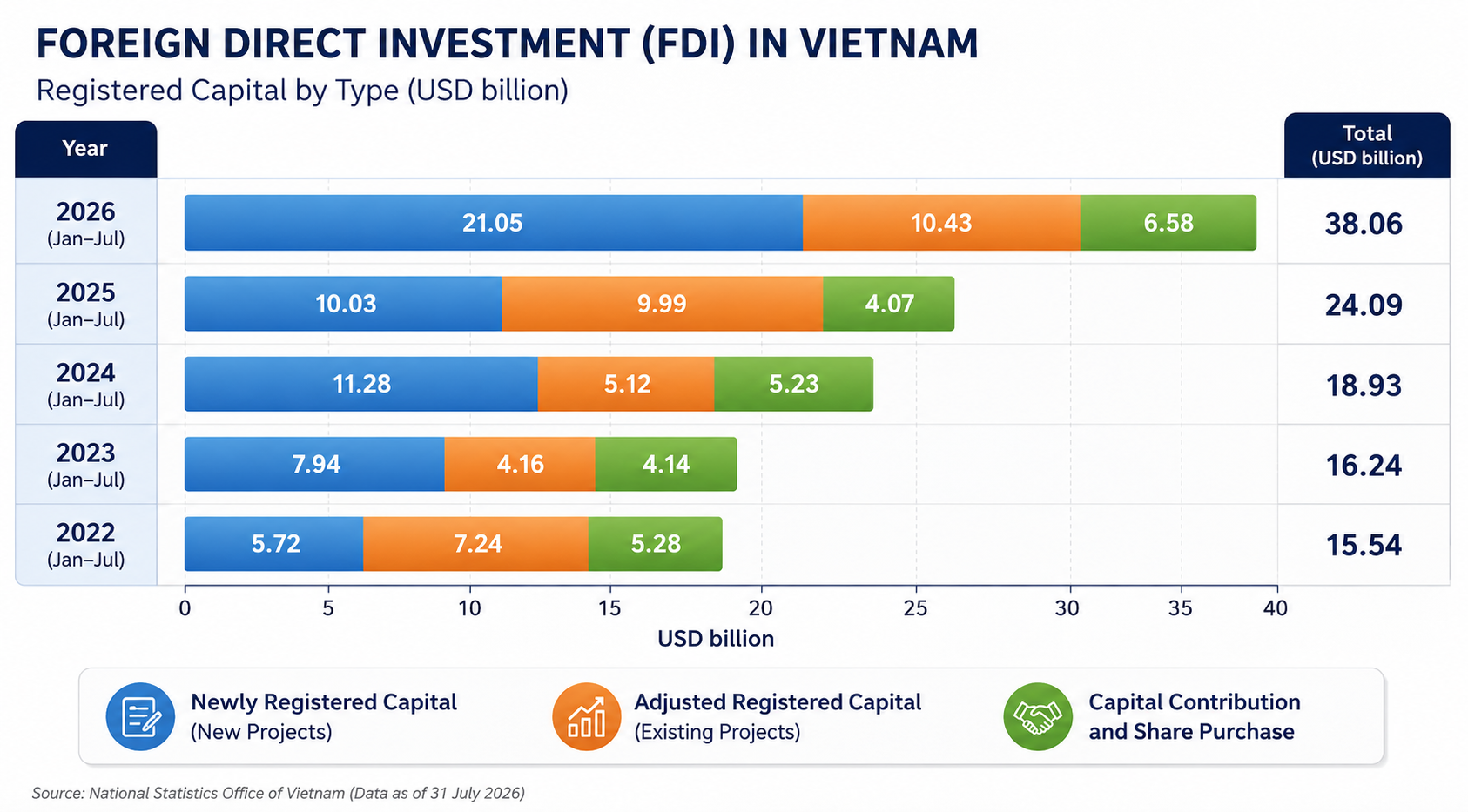
Vietnam's registered FDI jumps 58 per cent to $38 billion in first seven months. Photo: National Statistics Office
A two-way commitment
The Ministry of Finance is preparing to institutionalise the new policy thinking through amendments to the Investment Law and other related measures, according to Thuy of the FIA. The proposed measures include tax incentives, direct budget support, and incentives for costs incurred by foreign-led companies in areas such as research and development and training for domestic businesses.
"One proposed mechanism would encourage foreign-invested companies to train Vietnamese suppliers within their own supply chains. The state could reimburse part of the training costs or allow such expenses to qualify for tax deductions," she said. "For example, 30-50 per cent of the training cost may be reimbursed, allow the expense to be included in tax incentives, or apply other appropriate mechanisms to compensate the company for its investment in developing domestic suppliers,” she added.
Key goals and targets of Resolution 10 are to make Vietnam a top ASEAN business and investment destination by 2030; attract between $200-300 billion in registered FDI for the 2026-2030 period; and prioritise high-tech manufacturing, digital economy, green industries, and semiconductors.
Major policy shifts are to move from traditional input-based incentives to performance-based support that rewards research, development, and tech absorption; enhance domestic supplier capabilities so that local firms can integrate deeper into global supply chains; and support local Vietnamese businesses in joint ventures, mergers, and acquisitions with foreign enterprises.
Source: VIR
Related News

CHARITY / EXHIBITION / OTHER EVENTS
INVESTMENT OPPORTUNITIES IN CA MAU PROVINCE: 96 PROJECTS AND 20 STRATEGIC PROJECTS
We are pleased to share with you information on investment projects currently seeking investors in Ca Mau Province. Should your esteemed company or association be interested, we kindly invite you to review the project information and complete the registration form via the links provided. The Ho Chi Minh City Investment and Trade Promotion Centre (ITPC) will consolidate the expressions of interest and facilitate connections with the leadership of Ca Mau Province at a meeting tentatively scheduled for 13 November 2026 in Ho Chi Minh City.
MEMBER CORNER / PROMOTIONS
BẰNG KIỀU LIVESHOW - A SYMPHONY OF LOVE UNDER THE GOLDEN GLOW
A masterclass in live music that takes the audience on a soulful journey through immortal love songs, guided by the peerless artistry and emotive storytelling of renowned singer Bằng Kiều. The highlight of the night is his seamless musical chemistry with special guest Triệu Hồng Ngọc, promising passionate and deeply resonant duets inside the magnificent Grand Ballroom.
INFRASTRUCTURE / CONSTRUCTION / LOGISTIC / PORT
ĐÀ NẴNG GREEN-LIGHTS US$105 MILLION THAI DEVELOPMENT DEAL
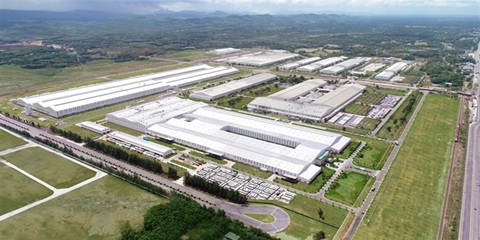
The central city has approved an investment proposal by Thailand’s WHA Group to develop infrastructure for the 400ha WHA Đà Nẵng Industrial Park project on two communes of Thăng Bình and Đồng Dương, with an investment of more than VNĐ2.7 trillion (US$105 million). The city said it approved WHA Industrial Development International's status as an investor in the project, which is expected to take place between 2027 and 2034.
VIETNAM ECONOMY INVESTMENT
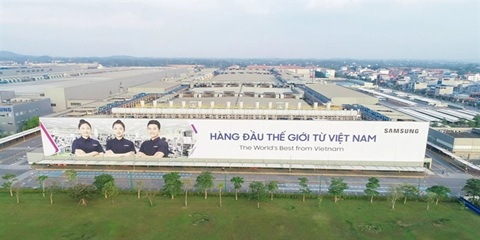
MOBILE PHONE EXPORTS RISE 20% TO $51.8 BILLION IN FIRST NINE MONTHS
Exports of mobile phones and components rose 20 per cent year-on-year to nearly US$51.8 billion in the first nine months of 2026, with China, the US and Republic of Korea accounting for more than half of the total. Shipments to the three markets reached a combined $26.18 billion, or 50.6 per cent of total exports of the product group during the period, according to data from the Vietnam Department of Customs under the Ministry of Finance.
INFRASTRUCTURE / CONSTRUCTION / LOGISTIC / PORT
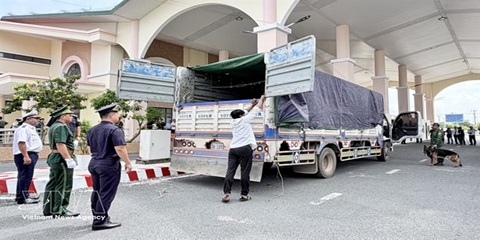
VIỆT NAM-CAMBODIA TRADE GATHERS PACE TOWARDS $20 BILLION TARGET
Trade between Việt Nam and Cambodia continues to grow, remaining a bright spot and a key pillar of bilateral cooperation as the two countries aim to raise two-way trade to US$20 billion in the coming years. After setting a record of more than $11.3 billion last year, bilateral trade reached about $8.7 billion in the first eight months of this year, up 8.3 per cent year on year.
VIETNAM ECONOMY INVESTMENT
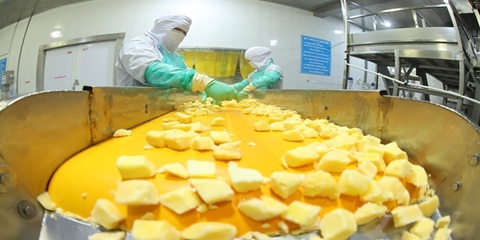
FRUIT AND VEGETABLE EXPORTS POISED TO HIT $10 BILLION IN 2026
Fruit and vegetable exports are on track to reach nearly US$10 billion in 2026, after rising 19.9 per cent year on year to nearly US$7.4 billion in the first nine months, driven by strong seasonal demand and abundant tropical fruit supplies. The Ministry of Agriculture and Environment said the growth reflected stronger international demand for fresh produce and processed agricultural products.
Events Sponsors






















