Want to be in the loop?
subscribe to
our notification
Business News
VIETNAM’S INFRASTRUCTURE EXPANSION ACCELERATES ON BOND MARKET INNOVATION
Vietnam’s infrastructure ambitions, which are estimated to cost $245 billion through 2030, depend on unlocking long-term private capital.
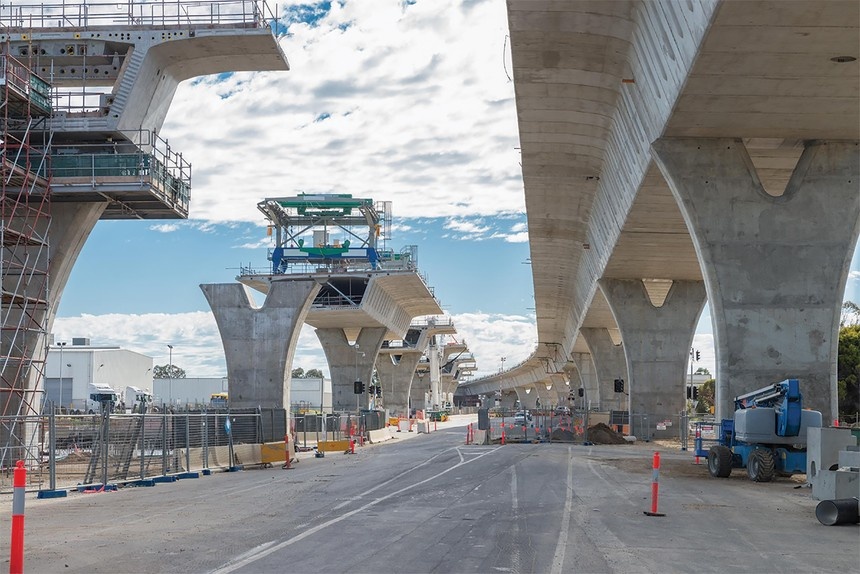
Photo: Istock
According to a report by VIS Rating and Credit Guarantee & Investment Facility (CGIF) on July 24, with public funding falling short and bank lending constrained, Vietnam’s infrastructure ambitions hinge on mobilising private capital through the corporate bond market. Between 2025 and 2030, the country will need an estimated $245 billion for expressways, high-speed rail, and power projects, yet public funding can only cover 70 per cent. Private investment has already become a key driver, accounting for over half of registered fixed asset investment.
As bank lending tightens, due to regulatory limits on using short-term deposits for long-term loans, the role of the bond market becomes even more critical. Bank credit to toll road projects, for instance, has declined by 6 per cent annually since 2020. To close the infrastructure financing gap, Vietnam must deepen its corporate bond market and attract long-term private capital.
Indeed, Vietnam’s bond market is gaining traction as a key channel for infrastructure financing. Recent regulatory reforms are paving the way for companies to issue bonds more flexibly, such as through private placements without historical financials under the amended Public-Private Partnership Law. The state is also stepping in with higher equity contributions to ease debt burdens and improve credit quality.
A forthcoming decree is expected to further unlock the market by allowing public offerings and immediate listings of infrastructure bonds. While issuance conditions will be eased, post-issuance controls, such as trustee oversight, escrow accounts, and regulated disbursements, will tighten, creating a more robust legal framework.
Meanwhile, new requirements on disclosure, issuance standards, and mandatory credit ratings are boosting transparency and investor confidence. Together, these reforms position corporate bonds as a more viable, long-term funding tool for Vietnam’s infrastructure ambitions.
The report also indicates that credit guarantees and credit ratings are crucial tools for unlocking private capital for infrastructure development. Infrastructure projects often carry weaker credit profiles due to high leverage, single revenue streams, and exposure to construction risks. Limited track records and restricted access to project agreements further complicate investor assessments. Long tenors, often 15 to 20 years, also heighten liquidity risk.
Credit guarantees provide support to project bond issuers, thereby enhancing credit quality and reducing bondholders’ exposure to project-related risks. CGIF’s regional portfolio, including several infrastructure projects in Vietnam, demonstrates how credit guarantees can support project owners in broadening their investor base and facilitating access to capital markets.
Recent regulatory reforms, along with stronger disclosure, credit ratings, and guarantees, are laying the groundwork for deeper investor participation.
Source: VIR
Related News

BANKING / FINANCE / INSURANCE / TAX
REMITTANCES TO HCM CITY RISE NEARLY 40% IN Q3
Remittances to HCM City reached more than US$2.83 billion in the third quarter of this year, up 39.5 per cent from the previous quarter and 3.6 per cent year-on-year. This was the first quarter showing positive annual growth this year, helping narrow the decline in remittance inflows over the first nine months. According to the State Bank of Vietnam (SBV)’s Regional Branch 2, remittances transferred to HCM City through credit institutions and economic organisations totalled $2.835 billion in Q3, an increase of more than $802 million from the previous quarter.

TECHNOLOGY
TECH SECTOR GROWTH OPENS UP OPPORTUNITIES FOR VIỆT NAM TO GO GLOBAL
The growth of the electronics, semiconductor and high-tech sectors worldwide is opening up a variety of opportunities for Vietnamese enterprises to integrate more deeply into the global supply chain. However, to become suppliers for these corporations, domestic enterprises must meet rigorous standards regarding quality, technology, productivity and order fulfilment capabilities.
VIETNAM ECONOMY INVESTMENT
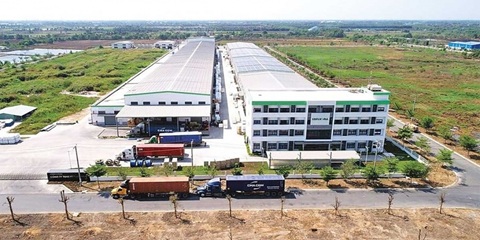
FOREIGN INVESTORS SEEKING A SYNCHRONISED MANUFACTURING ECOSYSTEM
Instead of focusing only on land costs and incentives as usual, foreign investors are seeking a synchronised manufacturing ecosystem, from stable power supply and logistics to shared infrastructure and the convenience of completing residence procedures for experts to serve their long-term investment in the country.
MEMBER CORNER / PROMOTIONS
SENTRYSAFE FHW40200 – PROTECT YOUR VALUABLES, ENJOY PEACE OF MIND!
Looking for a reliable solution to protect your important documents, cash, and valuables from fire and water damage? Genuine SENTRYSAFE - Reliable protection for your valuables and peace of mind! Contact Sen Wai Vietnam for more information and personalized product recommendations.
PROPERTY / INDUSTRIAL ZONE
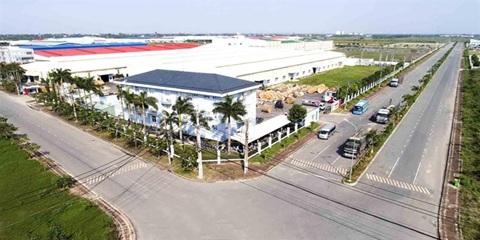
HCM CITY ATTRACTS US$5.7 BILLION INTO EXPORT PROCESSING AND INDUSTRIAL ZONES
HCM City attracted US$5.7 billion in domestic and foreign investment into its export processing and industrial zones during the first nine months of 2026. The figure exceeded the city's full-year target by 31 per cent, highlighting strong momentum in high-quality industrial investment under Resolution No.10-NQ/TW. Total investment reached 131 per cent of the 2026 target of $4.25 billion and represented a 29 per cent increase compared with the same period in 2025, according to the city's Export Processing and Industrial Zones Authority (HEPZA).
INFRASTRUCTURE / CONSTRUCTION / LOGISTIC / PORT
DONG THAP PROVINCE STEPS UP INDUSTRIAL EXPANSION AND INFRASTRUCTURE CONNECTIVITY
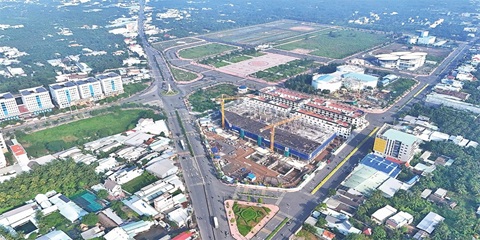
Accelerating public investment, strengthening inter-regional connectivity, and expanding industrial land are helping Dong Thap efficiently bolster competitiveness and drive economic growth. Following the 2025 merger of the former Dong Thap and Tien Giang provinces, the expanded Dong Thap province in the Mekong Delta faces mounting pressure to accelerate infrastructure development and strengthen connectivity among local economic zones, urban areas, industrial parks (IPs), and production centres.
Events Sponsors