Want to be in the loop?
subscribe to
our notification
Business News
VIETNAM'S AUTO MARKET HITS TURNING POINT AS ELECTRIC VEHICLES RESHAPE SECTOR
The latest sales figures released by VinFast and the Vietnam Automobile Manufacturers' Association point to a defining moment for Vietnam's automotive industry, where competition is increasingly being shaped by the rapid rise of electric vehicles rather than traditional internal combustion models.
On July 10, VinFast announced that it had delivered 17,955 electric vehicles (EVs) to customers in Vietnam in June, bringing its total sales in the first six months of 2026 to 115,916 units, up 72 per cent compared to the same period in 2025. It also marked the first time a carmaker in Vietnam has surpassed the milestone of 100,000 vehicles sold within the first half of a calendar year.
The announcement came as Vietnam Automobile Manufacturers' Association (VAMA) released its June sales report, highlighting notable shifts in the domestic automotive market.
According to VAMA, its member companies sold 31,104 vehicles in June, up 4 per cent from the previous month but down 2.7 per cent on-year. In the first six months of the year, total sales reached 149,761 units, representing a 15 per cent increase compared to the same period of 2025, reflecting the continued recovery of Vietnam's automotive market.
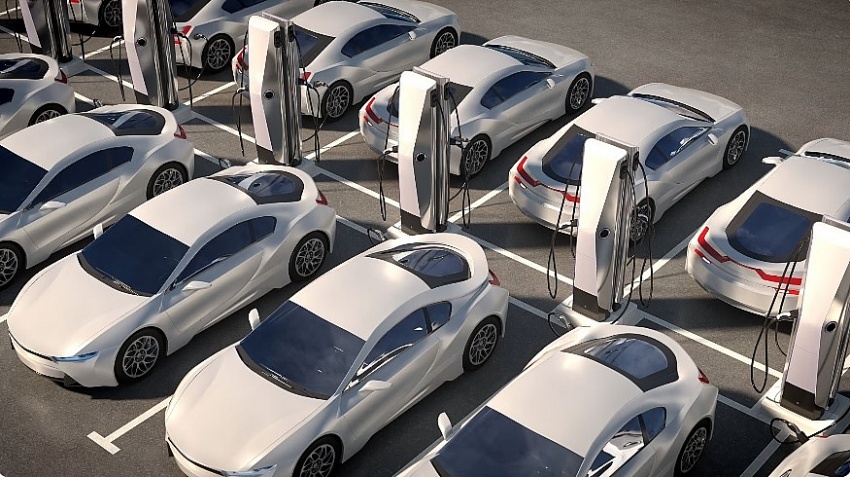
Against this backdrop, VinFast's growth significantly outpaced the broader market. The company's first-half sales alone were equivalent to approximately 77 per cent of the combined sales volume of all VAMA members during the same period, underscoring the rapidly expanding scale of Vietnam's domestic EV manufacturer in the local market.
The momentum is also becoming increasingly evident in the passenger car segment, traditionally the most competitive area of the market. VAMA members recorded passenger vehicle sales of 100,321 units in the first six months, driven primarily by multipurpose vehicles and sport utility vehicles.
Meanwhile, VinFast's growth has been supported by a broad product portfolio spanning multiple market segments. The VF3 led the lineup with 3,550 deliveries in June and cumulative sales of 23,781 units in the first half. The VF5 followed with 3,364 units delivered in June and 20,167 units sold during the first six months. The VF 6 and VF 7 also posted cumulative sales of 14,045 units and 6,849 units, respectively, further expanding the presence of EVs across mainstream market segments.
Against this backdrop, competition in Vietnam's automotive market is expected to intensify further in the second half of the year. VinFast is preparing to launch the VF2 at the beginning of the third quarter with a starting price of approximately $7,200, while accepting early reservations from July 15-17 and continuing to offer direct price incentives. These moves are expected to increase competitive pressure on conventional internal combustion engine vehicles.
Nevertheless, the market's transition towards electrification continues to face concerns among consumers, particularly regarding charging infrastructure, battery technology, inspection standards, as well as testing procedures and vehicle safety assurance.
Kazuhiro Takezawa, general director of Hioki Electric Vietnam said that since EVs and charging infrastructure began expanding rapidly, regulations and requirements related to battery safety and charging systems have received increasing attention in many countries, not only in Vietnam. This has become an important topic of close discussion between governments and businesses as part of the broader effort towards sustainable transportation and carbon neutrality.
Takezawa asserted that the Vietnamese market is moving fast, with the national charging network has expanded to more than 150,000 ports for cars and motorbikes across all 34 provinces. At the same time, draft national technical regulations, expected to come into effect this year, aim to enforce safety and interoperability in line with international standards.
“Although standards and regulations are still being further developed, inspection and maintenance activities for EVs and EV batteries have already been widely implemented in many advanced markets. Hioki’s EV maintenance and lithium-ion battery testing solutions are also being adopted across several leading EV and battery markets worldwide,” Takezawa said.
“Our solutions, including battery testers, power analysers, and insulation resistance testers, enable manufacturers, service centres, and fleet operators to assess battery health non-destructively, detect degradation early, and verify the power efficiency of charging systems before issues escalate into failures. Ultimately, the value of testing equipment lies in its ability to identify problems before they become incidents.”
According to Takezawa, as EVs become increasingly common and gradually evolve into a primary mode of transportation in major cities such as Hanoi and Ho Chi Minh City, demand for safety inspection, battery condition assessment, and system maintenance will continue to grow significantly.
“A battery failure event, whether during charging, discharge, or storage, carries safety risks but also serious reputational consequences for manufacturers, operators, and the broader EV ecosystem. As the regulatory environment becomes stricter, the need for certified, accurate testing equipment becomes even more critical. We see the tightening of standards in Vietnam not as a compliance burden, but as a positive development, one that raises the bar for the entire market and rewards those who invest in proper measurement and verification,” he said. “This will be a key factor in strengthening market confidence and accelerating the adoption of clean energy vehicles in the years ahead.”
Hioki Electric Vietnam believes Vietnam has strong potential to become one of the region’s key manufacturing hubs for batteries and electrification equipment, particularly as its industrial infrastructure, supply chain ecosystem, and technical capabilities continue to evolve in the coming years.
“Vietnam also holds reserves of manganese, rare earths, and aluminium, key inputs in battery cell production, which could, over time, support a more integrated domestic supply chain rather than one that relies predominantly on imported materials,” said Takezawa. “Vietnam’s trajectory as an electrification hub directly expands the relevance and demand for our battery testing and measurement solutions. Whether it is a cell manufacturer validating production quality, a charging infrastructure operator verifying safety compliance, or a renewable energy project integrating battery storage, each of these growth scenarios creates a clear and measurable need for what we do. We are not observing this trend from the outside, we are actively positioning our technical capabilities in Vietnam to grow alongside it.”
Source: VIR
Related News

CHARITY / EXHIBITION / OTHER EVENTS
INVESTMENT OPPORTUNITIES IN CA MAU PROVINCE: 96 PROJECTS AND 20 STRATEGIC PROJECTS
We are pleased to share with you information on investment projects currently seeking investors in Ca Mau Province. Should your esteemed company or association be interested, we kindly invite you to review the project information and complete the registration form via the links provided. The Ho Chi Minh City Investment and Trade Promotion Centre (ITPC) will consolidate the expressions of interest and facilitate connections with the leadership of Ca Mau Province at a meeting tentatively scheduled for 13 November 2026 in Ho Chi Minh City.

MEMBER CORNER / PROMOTIONS
BẰNG KIỀU LIVESHOW - A SYMPHONY OF LOVE UNDER THE GOLDEN GLOW
A masterclass in live music that takes the audience on a soulful journey through immortal love songs, guided by the peerless artistry and emotive storytelling of renowned singer Bằng Kiều. The highlight of the night is his seamless musical chemistry with special guest Triệu Hồng Ngọc, promising passionate and deeply resonant duets inside the magnificent Grand Ballroom.
INFRASTRUCTURE / CONSTRUCTION / LOGISTIC / PORT
ĐÀ NẴNG GREEN-LIGHTS US$105 MILLION THAI DEVELOPMENT DEAL
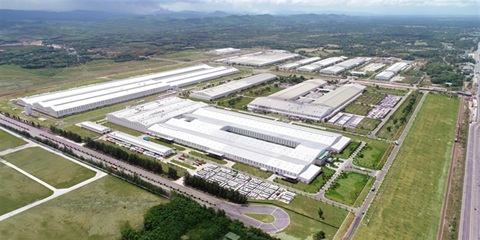
The central city has approved an investment proposal by Thailand’s WHA Group to develop infrastructure for the 400ha WHA Đà Nẵng Industrial Park project on two communes of Thăng Bình and Đồng Dương, with an investment of more than VNĐ2.7 trillion (US$105 million). The city said it approved WHA Industrial Development International's status as an investor in the project, which is expected to take place between 2027 and 2034.
VIETNAM ECONOMY INVESTMENT
MOBILE PHONE EXPORTS RISE 20% TO $51.8 BILLION IN FIRST NINE MONTHS
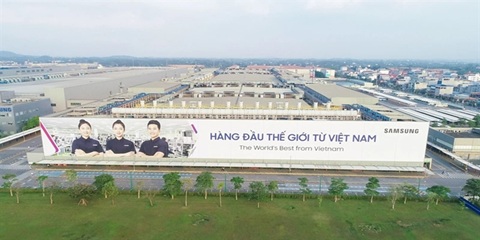
Exports of mobile phones and components rose 20 per cent year-on-year to nearly US$51.8 billion in the first nine months of 2026, with China, the US and Republic of Korea accounting for more than half of the total. Shipments to the three markets reached a combined $26.18 billion, or 50.6 per cent of total exports of the product group during the period, according to data from the Vietnam Department of Customs under the Ministry of Finance.
INFRASTRUCTURE / CONSTRUCTION / LOGISTIC / PORT
VIỆT NAM-CAMBODIA TRADE GATHERS PACE TOWARDS $20 BILLION TARGET
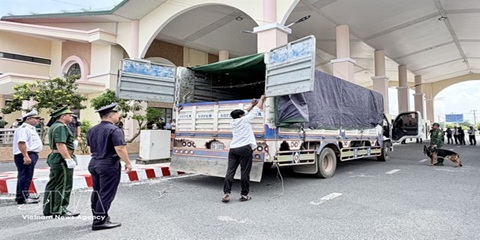
Trade between Việt Nam and Cambodia continues to grow, remaining a bright spot and a key pillar of bilateral cooperation as the two countries aim to raise two-way trade to US$20 billion in the coming years. After setting a record of more than $11.3 billion last year, bilateral trade reached about $8.7 billion in the first eight months of this year, up 8.3 per cent year on year.
VIETNAM ECONOMY INVESTMENT
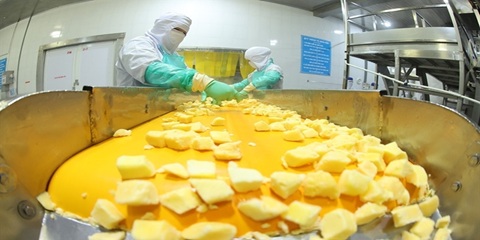
FRUIT AND VEGETABLE EXPORTS POISED TO HIT $10 BILLION IN 2026
Fruit and vegetable exports are on track to reach nearly US$10 billion in 2026, after rising 19.9 per cent year on year to nearly US$7.4 billion in the first nine months, driven by strong seasonal demand and abundant tropical fruit supplies. The Ministry of Agriculture and Environment said the growth reflected stronger international demand for fresh produce and processed agricultural products.
Events Sponsors






















