Want to be in the loop?
subscribe to
our notification
Business News
VIETNAM POSTS SECOND-HIGHEST AI ADOPTION IN SOUTHEAST ASIA
Vietnam has the second-highest AI adoption rate in Southeast Asia at 26.5 per cent, according to a recent Microsoft report.

Photo: Shutterstock
The Global AI Diffusion Report, published on June 15, also found that global AI usage among the working-age population rose from 16.3 per cent to 17.8 per cent in the first quarter of 2026
Microsoft noted that AI adoption in Vietnam has increased stably from 21.2 per cent in the first half of 2025 to 26.5 per cent in the first quarter of 2026. In Southeast Asia, Vietnam trails behind Singapore at 63.4 per cent. Meanwhile, Vietnam outperformed most Southeast Asian peers in AI adoption, including Malaysia (21.8 per cent), the Philippines (20.1 per cent), and Thailand (12.4 per cent).
During the first quarter, Vietnam’s AI adoption increased by three percentage points, marking the highest in the region. With the ongoing acceleration of AI adoption nationwide, Vietnam has been positioned as one of the fastest-growing economies since June 2025.
“Vietnam is entering an important phase in the AI era. We see a strong momentum among businesses, the developer community, the education sector, and the public sector in exploring how AI can drive productivity, innovation, and competitiveness,” said Dhanawat Suthumpun, managing director for Microsoft's Emerging Markets.
“The latest Global AI Diffusion Report shows the global adoption of AI is rising quickly. Against the backdrop, Vietnam is well-positioned to turn this momentum into long-term growth. As AI becomes the defining technology of the next decade, I believe Vietnam has the potential to become one of the most dynamic AI-driven economies in Southeast Asia,” added Suthumpun.
According to the report, intensity of use among economies with the highest rates of AI diffusion has increased, with 26 economies now exceeding 30 per cent of the working age population using AI. The UAE continued to lead global AI diffusion at 70.1 per cent. The US finally started to move up the national rankings, albeit only from 24th to 21st, based on a 31.3 per cent usage rate by the working age population.
Asia is experiencing a broader growth wave. 12 of the 15 fastest-growing economies since June 2025 are in Asia, and each has at least 25 per cent more AI users than in June last year. Growth has been led by South Korea (up 43 per cent), Thailand (up 36 per cent), and Japan (up 34 per cent), with Fastest growing economies since June 2025 similarly strong gains in Mongolia, Iran, Laos, and Turkey (all 30 per cent). The pattern spans both advanced and emerging economies, including Kazakhstan, Kyrgyzstan, Uzbekistan, Vietnam, and Cambodia.
To track all these trends, Microsoft continues to measure AI diffusion as the share of people worldwide between the ages of 15 and 64 who have used a generative AI product during the reported period. This measure is derived from aggregated and anonymised Microsoft telemetry and adjusted to reflect differences in OS and device-market share, internet penetration, and country population.
Source: VIR
Related News
VIETNAM ECONOMY INVESTMENT
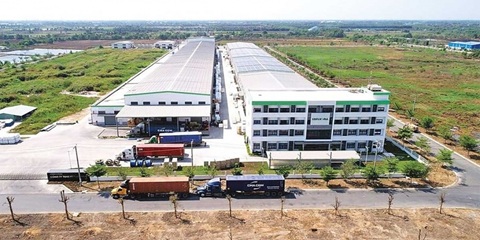
FOREIGN INVESTORS SEEKING A SYNCHRONISED MANUFACTURING ECOSYSTEM
Instead of focusing only on land costs and incentives as usual, foreign investors are seeking a synchronised manufacturing ecosystem, from stable power supply and logistics to shared infrastructure and the convenience of completing residence procedures for experts to serve their long-term investment in the country.
INFRASTRUCTURE / CONSTRUCTION / LOGISTIC / PORT
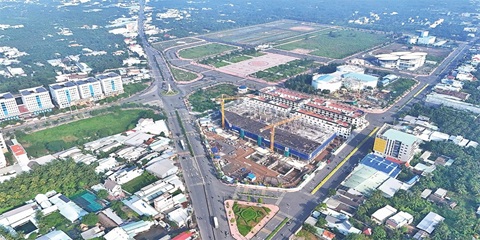
DONG THAP PROVINCE STEPS UP INDUSTRIAL EXPANSION AND INFRASTRUCTURE CONNECTIVITY
Accelerating public investment, strengthening inter-regional connectivity, and expanding industrial land are helping Dong Thap efficiently bolster competitiveness and drive economic growth. Following the 2025 merger of the former Dong Thap and Tien Giang provinces, the expanded Dong Thap province in the Mekong Delta faces mounting pressure to accelerate infrastructure development and strengthen connectivity among local economic zones, urban areas, industrial parks (IPs), and production centres.
PROPERTY / INDUSTRIAL ZONE
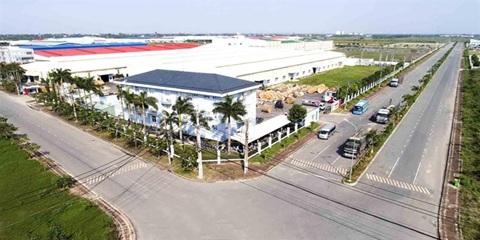
HCM CITY ATTRACTS US$5.7 BILLION INTO EXPORT PROCESSING AND INDUSTRIAL ZONES
HCM City attracted US$5.7 billion in domestic and foreign investment into its export processing and industrial zones during the first nine months of 2026. The figure exceeded the city's full-year target by 31 per cent, highlighting strong momentum in high-quality industrial investment under Resolution No.10-NQ/TW. Total investment reached 131 per cent of the 2026 target of $4.25 billion and represented a 29 per cent increase compared with the same period in 2025, according to the city's Export Processing and Industrial Zones Authority (HEPZA).

BANKING / FINANCE / INSURANCE / TAX
REMITTANCES TO HCM CITY RISE NEARLY 40% IN Q3
Remittances to HCM City reached more than US$2.83 billion in the third quarter of this year, up 39.5 per cent from the previous quarter and 3.6 per cent year-on-year. This was the first quarter showing positive annual growth this year, helping narrow the decline in remittance inflows over the first nine months. According to the State Bank of Vietnam (SBV)’s Regional Branch 2, remittances transferred to HCM City through credit institutions and economic organisations totalled $2.835 billion in Q3, an increase of more than $802 million from the previous quarter.
VIETNAM ECONOMY INVESTMENT
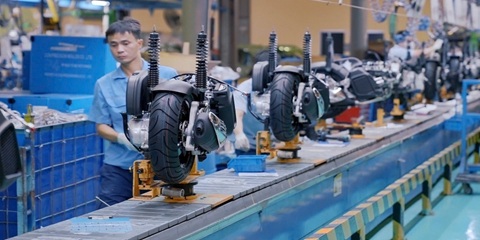
LOCALITIES REPORT BREAKTHROUGH RESULTS IN FDI IN FIRST NINE MONTHS
In Ho Chi Minh City, total registered capital reached $17.2 billion in the first nine months, up 4.2 times from the same period last year. The figure included more than $9.35 billion in newly registered capital and over $4.9 billion in additional capital for existing projects. Foreign investors also registered more than $2.9 billion through capital contributions and share purchases.
TECHNOLOGY
TECH SECTOR GROWTH OPENS UP OPPORTUNITIES FOR VIỆT NAM TO GO GLOBAL
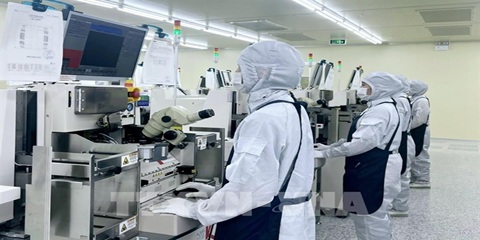
The growth of the electronics, semiconductor and high-tech sectors worldwide is opening up a variety of opportunities for Vietnamese enterprises to integrate more deeply into the global supply chain. However, to become suppliers for these corporations, domestic enterprises must meet rigorous standards regarding quality, technology, productivity and order fulfilment capabilities.
Events Sponsors