Want to be in the loop?
subscribe to
our notification
Business News
VIETNAM CHARTS NEW COURSE FOR MARITIME INDUSTRIAL ECOSYSTEM
Vietnam is moving to develop a fully integrated maritime industrial ecosystem under a new strategic direction that elevates shipbuilding beyond manufacturing into a broader driver of economic and national development.
The conclusion of Party General Secretary and State President To Lam, set out in Notice No.125-TB/VPTW dated July 18, marks a new approach to the development of Vietnam’s maritime industry, with the aim of building a comprehensive maritime industrial ecosystem, strengthening national self-reliance, and supporting the country’s ambition to become a strong maritime nation.
“We have just received instructions from the Ministry of Construction (MoC) to study the implementation of Party General Secretary and State President To Lam’s conclusion on the development of the national maritime industry. This can be regarded as a turning point, opening a new phase of development for Vietnam’s maritime industry,” said Le Do Muoi, director general of the Vietnam Maritime and Waterway Administration.
In addition to overseeing the maritime sector, Muoi has spent many years researching transport development strategies, having previously served as director of the Institute of Transport Strategy and Development.
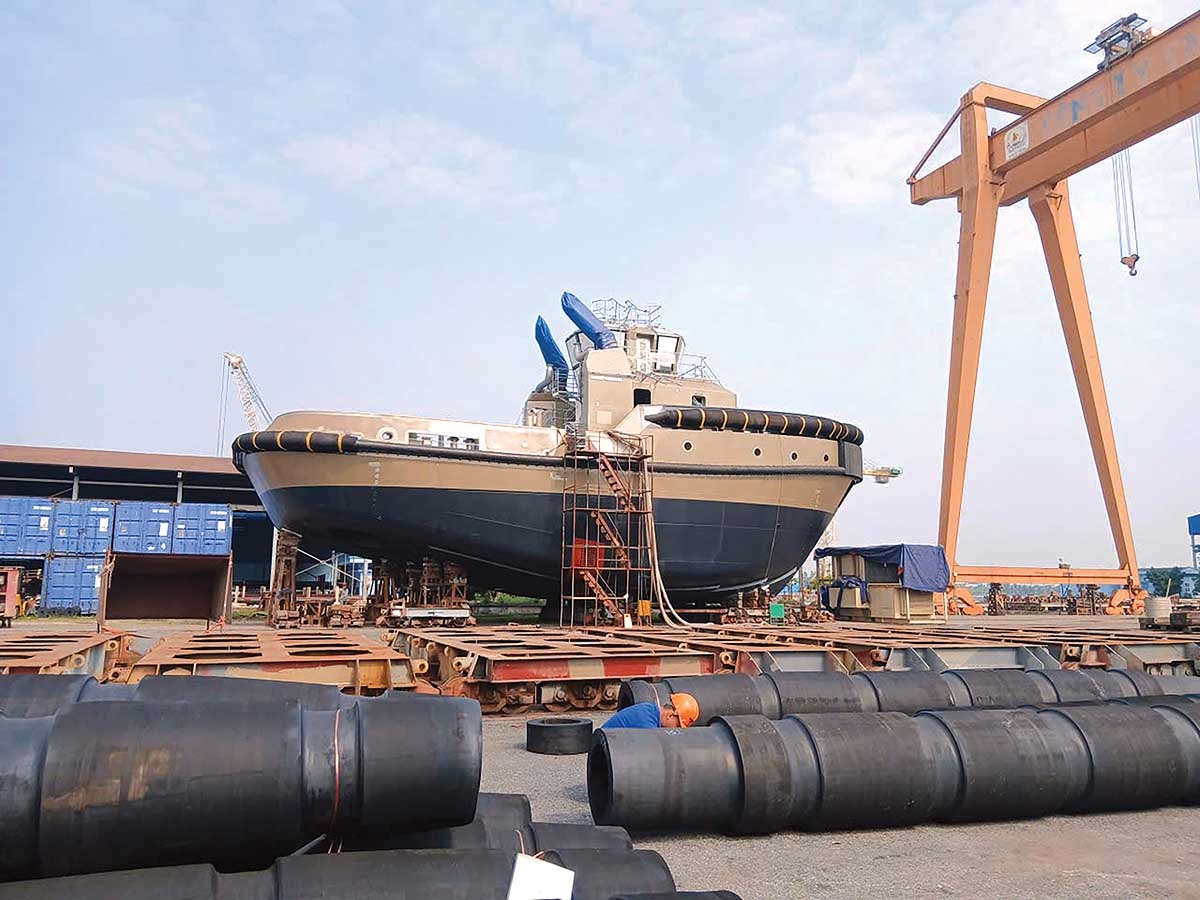
Final assembly of an export tugboat at Song Cam Shipyard
The Vietnam Maritime and Waterway Administration has also been assigned by the MoC to lead the preparation of a scheme to strengthen the capacity of domestic shipbuilding enterprises through 2030, with a vision to 2050.
The implementation of Notice 125 is expected to provide the basis to review and update the scheme in line with the new direction for developing the national maritime industry.
Under Official Letter No.11299/BXD-QLDN, issued on July 21, the MoC assigned the Vietnam Maritime and Waterway Administration to coordinate with relevant agencies in conducting a comprehensive review of Notice 125, developing an implementation plan, and advising the MoC on directives to put the conclusion into practice.
According to Muoi, the most significant aspect of Notice 125 is that, for the first time, the maritime industry has been elevated to the level of a national strategic mission.
Accordingly, the development of the maritime industry, with shipbuilding as one of its core pillars, is intended to support economic growth while strengthening national defence, security, logistics, and supply chain resilience.
Another fundamental shift is the requirement to develop the shipbuilding industry as part of an integrated maritime ecosystem, linking oceangoing vessels, inland waterway craft, seaports, logistics, supporting industries, technical services, training, research, ship registration, finance, and insurance.
“The conclusion emphasises that development should not focus on individual shipyards, localities or products in isolation. Instead, it calls for an integrated value chain that creates a stable market and enhances the overall efficiency of the entire industry. Based on this direction, we will review and update the scheme on strengthening the capacity of domestic shipbuilding enterprises through 2030, with a vision to 2050, to ensure it fully reflects the new policy orientation,” Muoi said.
In the draft scheme submitted to the MoC in mid-July, the drafting agency identified the development of the shipbuilding industry as an essential requirement for implementing Vietnam’s Strategy for the Sustainable Development of the Marine Economy, safeguarding national defense and security, and enhancing the competitiveness of the country’s marine economy.
Under the draft, Vietnam aims to account for 0.8–0.9 per cent of global shipbuilding output by 2030, meeting domestic demand for the construction and replacement of merchant vessels with a total capacity of around 4–5 million tonnes, while gradually enhancing the industry's production capacity.
Looking ahead to 2050, the scheme targets raising Vietnam’s share of global shipbuilding output to around 2 per cent, while increasing the localisation rate to more than 50 per cent.
However, the current draft remains largely focused on enhancing the capacity of the shipbuilding sector, whereas Notice No.125 envisions the creation of a comprehensive national maritime industrial ecosystem, in which shipbuilding forms one component of a broader value chain linked with seaports, shipping fleets, logistics, supporting industries, and emerging marine economic sectors.
This requires the scheme to be reviewed and updated to support the development of a complete maritime industrial ecosystem, aligning demand for oceangoing vessels, inland waterway craft, public service vessels, offshore technical services, and defence and security with domestic industrial capabilities based on the principles of competitiveness, quality and efficiency.
“This is no longer solely a matter for the shipbuilding industry. It is a national maritime industry development agenda that requires the participation of ministries, sectors, local authorities and the business community,” Muoi stressed.
Another key feature of Notice No.125 is its requirement for a comprehensive review of the shipbuilding industry's capabilities.
Party General Secretary and State President To Lam called for a full assessment and classification of the industry's capabilities based on a unified data system, clearly identifying capacities that should be preserved, upgraded, integrated, transformed, or restructured.
The review should also identify strategically valuable enterprises, assets, technologies, data, and skilled technical workforces to ensure they are utilised and developed effectively.
The findings of the review shall provide an important basis for policymaking, resource allocation, and evaluating implementation outcomes.
Source: VIR
Related News

CHARITY / EXHIBITION / OTHER EVENTS
INVESTMENT OPPORTUNITIES IN CA MAU PROVINCE: 96 PROJECTS AND 20 STRATEGIC PROJECTS
We are pleased to share with you information on investment projects currently seeking investors in Ca Mau Province. Should your esteemed company or association be interested, we kindly invite you to review the project information and complete the registration form via the links provided. The Ho Chi Minh City Investment and Trade Promotion Centre (ITPC) will consolidate the expressions of interest and facilitate connections with the leadership of Ca Mau Province at a meeting tentatively scheduled for 13 November 2026 in Ho Chi Minh City.

MEMBER CORNER / PROMOTIONS
BẰNG KIỀU LIVESHOW - A SYMPHONY OF LOVE UNDER THE GOLDEN GLOW
A masterclass in live music that takes the audience on a soulful journey through immortal love songs, guided by the peerless artistry and emotive storytelling of renowned singer Bằng Kiều. The highlight of the night is his seamless musical chemistry with special guest Triệu Hồng Ngọc, promising passionate and deeply resonant duets inside the magnificent Grand Ballroom.
INFRASTRUCTURE / CONSTRUCTION / LOGISTIC / PORT
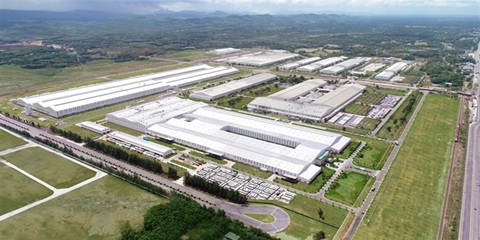
ĐÀ NẴNG GREEN-LIGHTS US$105 MILLION THAI DEVELOPMENT DEAL
The central city has approved an investment proposal by Thailand’s WHA Group to develop infrastructure for the 400ha WHA Đà Nẵng Industrial Park project on two communes of Thăng Bình and Đồng Dương, with an investment of more than VNĐ2.7 trillion (US$105 million). The city said it approved WHA Industrial Development International's status as an investor in the project, which is expected to take place between 2027 and 2034.
VIETNAM ECONOMY INVESTMENT
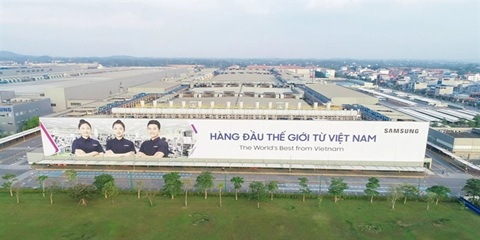
MOBILE PHONE EXPORTS RISE 20% TO $51.8 BILLION IN FIRST NINE MONTHS
Exports of mobile phones and components rose 20 per cent year-on-year to nearly US$51.8 billion in the first nine months of 2026, with China, the US and Republic of Korea accounting for more than half of the total. Shipments to the three markets reached a combined $26.18 billion, or 50.6 per cent of total exports of the product group during the period, according to data from the Vietnam Department of Customs under the Ministry of Finance.
INFRASTRUCTURE / CONSTRUCTION / LOGISTIC / PORT
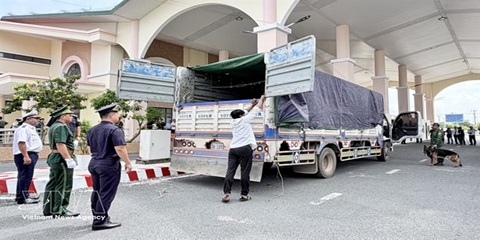
VIỆT NAM-CAMBODIA TRADE GATHERS PACE TOWARDS $20 BILLION TARGET
Trade between Việt Nam and Cambodia continues to grow, remaining a bright spot and a key pillar of bilateral cooperation as the two countries aim to raise two-way trade to US$20 billion in the coming years. After setting a record of more than $11.3 billion last year, bilateral trade reached about $8.7 billion in the first eight months of this year, up 8.3 per cent year on year.
VIETNAM ECONOMY INVESTMENT
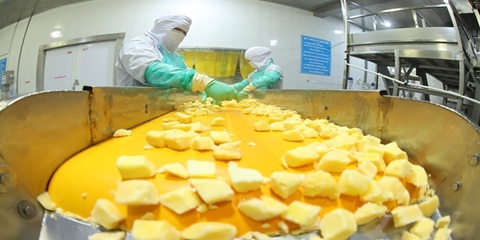
FRUIT AND VEGETABLE EXPORTS POISED TO HIT $10 BILLION IN 2026
Fruit and vegetable exports are on track to reach nearly US$10 billion in 2026, after rising 19.9 per cent year on year to nearly US$7.4 billion in the first nine months, driven by strong seasonal demand and abundant tropical fruit supplies. The Ministry of Agriculture and Environment said the growth reflected stronger international demand for fresh produce and processed agricultural products.
Events Sponsors