Want to be in the loop?
subscribe to
our notification
Business News
VIỆT NAM TARGETS INVESTMENT-GRADE SOVEREIGN CREDIT RATING BY 2030
Việt Nam aims to achieve a rating of at least Baa3 from Moody’s or BBB- from S&P and Fitch by 2030.
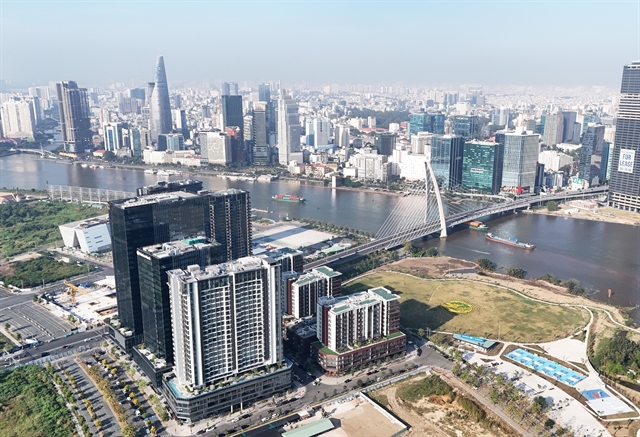
The core area of Việt Nam International Financial Centre in HCM City. Improving the sovereign rating is critical for Việt Nam to enhance the country's international standing, facilitate its access to capital and reduce borrowing costs and sovereign credit risk. — VNA/VNS Photo Hồng Đạt
HÀ NỘI — Việt Nam has revised the plan to improve its sovereign credit rating which sets a target of reaching investment-grade status by 2030 while linking the effort more closely to economic growth, innovation, digital transformation and fiscal sustainability.
Deputy Prime Minister Nguyễn Văn Thắng has signed Decision 1919/QĐ-TTg amending the Government’s 2022 scheme on improving the country’s sovereign credit rating through 2030.
Under the revised plan, Việt Nam aims to achieve a rating of at least Baa3 from Moody’s or BBB- from S&P and Fitch by 2030.
The Government said improving the sovereign rating is critical for Việt Nam to enhance the country's international standing, facilitate its access to capital and reduce borrowing costs and sovereign credit risk.
The revised scheme sets an average annual GDP growth target of at least 10 per cent for 2026-30, with GDP per capita expected to reach about US$8,500 by 2030.
Total social investment is targeted at around 40 per cent of GDP on average during the period, with public investment accounting for 20-22 per cent.
On fiscal policy, the Government aims to keep the average state budget deficit at around 5 per cent of GDP during 2026-30, while public debt would remain below 60 per cent of GDP and government debt below 50 per cent.
The plan calls for a stronger and more sustainable public finance system, broader revenue sources and tighter management of public debt.
The revised scheme also targets stronger resilience of the banking sector. Minimum capital adequacy ratios at commercial banks are expected to move towards Basel III standards and reach 8.625 per cent by 2030 at the latest.
Credit policy will be aligned with macro-economic and monetary-market developments, with lending directed towards production, priority sectors and key growth drivers while risks in potentially vulnerable areas are closely controlled.
The plan also places greater emphasis on improving the financial structure and quality of State-owned enterprises (SOEs) to reduce potential fiscal risks.
SOEs will be encouraged to invest in science and technology, innovation, digital and green transformation, while reforms will focus on corporate governance, restructuring and the management of State capital.
Việt Nam will also develop a system to compile, monitor and analyse its international investment position (IIP), with the data to be made available to sovereign credit-rating agencies when requested.
The revised plan also covers measures to respond proactively to climate change and natural disasters, strengthen resource and environmental management, improve resilience to external risks through market diversification and energy security, and gradually integrate environmental, social and governance (ESG) factors into national governance in line with evolving sovereign credit-rating criteria.
Moody’s in May affirmed Việt Nam’s Ba2 rating but raised its outlook to positive from stable, still below investment-grade status. — VNS
Source: VNS
Việt Nam aims to achieve a rating of at least Baa3 from Moody’s or BBB- from S&P and Fitch by 2030.
The core area of Việt Nam International Financial Centre in HCM City. Improving the sovereign rating is critical for Việt Nam to enhance the country's international standing, facilitate its access to capital and reduce borrowing costs and sovereign credit risk. — VNA/VNS Photo Hồng Đạt
HÀ NỘI — Việt Nam has revised the plan to improve its sovereign credit rating which sets a target of reaching investment-grade status by 2030 while linking the effort more closely to economic growth, innovation, digital transformation and fiscal sustainability.
Deputy Prime Minister Nguyễn Văn Thắng has signed Decision 1919/QĐ-TTg amending the Government’s 2022 scheme on improving the country’s sovereign credit rating through 2030.
Under the revised plan, Việt Nam aims to achieve a rating of at least Baa3 from Moody’s or BBB- from S&P and Fitch by 2030.
The Government said improving the sovereign rating is critical for Việt Nam to enhance the country's international standing, facilitate its access to capital and reduce borrowing costs and sovereign credit risk.
The revised scheme sets an average annual GDP growth target of at least 10 per cent for 2026-30, with GDP per capita expected to reach about US$8,500 by 2030.
Total social investment is targeted at around 40 per cent of GDP on average during the period, with public investment accounting for 20-22 per cent.
On fiscal policy, the Government aims to keep the average state budget deficit at around 5 per cent of GDP during 2026-30, while public debt would remain below 60 per cent of GDP and government debt below 50 per cent.
The plan calls for a stronger and more sustainable public finance system, broader revenue sources and tighter management of public debt.
The revised scheme also targets stronger resilience of the banking sector. Minimum capital adequacy ratios at commercial banks are expected to move towards Basel III standards and reach 8.625 per cent by 2030 at the latest.
Credit policy will be aligned with macro-economic and monetary-market developments, with lending directed towards production, priority sectors and key growth drivers while risks in potentially vulnerable areas are closely controlled.
The plan also places greater emphasis on improving the financial structure and quality of State-owned enterprises (SOEs) to reduce potential fiscal risks.
SOEs will be encouraged to invest in science and technology, innovation, digital and green transformation, while reforms will focus on corporate governance, restructuring and the management of State capital.
Việt Nam will also develop a system to compile, monitor and analyse its international investment position (IIP), with the data to be made available to sovereign credit-rating agencies when requested.
The revised plan also covers measures to respond proactively to climate change and natural disasters, strengthen resource and environmental management, improve resilience to external risks through market diversification and energy security, and gradually integrate environmental, social and governance (ESG) factors into national governance in line with evolving sovereign credit-rating criteria.
Moody’s in May affirmed Việt Nam’s Ba2 rating but raised its outlook to positive from stable, still below investment-grade status. — VNS
Source: VNS
Related News

CHARITY / EXHIBITION / OTHER EVENTS
INVESTMENT OPPORTUNITIES IN CA MAU PROVINCE: 96 PROJECTS AND 20 STRATEGIC PROJECTS
We are pleased to share with you information on investment projects currently seeking investors in Ca Mau Province. Should your esteemed company or association be interested, we kindly invite you to review the project information and complete the registration form via the links provided. The Ho Chi Minh City Investment and Trade Promotion Centre (ITPC) will consolidate the expressions of interest and facilitate connections with the leadership of Ca Mau Province at a meeting tentatively scheduled for 13 November 2026 in Ho Chi Minh City.

MEMBER CORNER / PROMOTIONS
BẰNG KIỀU LIVESHOW - A SYMPHONY OF LOVE UNDER THE GOLDEN GLOW
A masterclass in live music that takes the audience on a soulful journey through immortal love songs, guided by the peerless artistry and emotive storytelling of renowned singer Bằng Kiều. The highlight of the night is his seamless musical chemistry with special guest Triệu Hồng Ngọc, promising passionate and deeply resonant duets inside the magnificent Grand Ballroom.
INFRASTRUCTURE / CONSTRUCTION / LOGISTIC / PORT
ĐÀ NẴNG GREEN-LIGHTS US$105 MILLION THAI DEVELOPMENT DEAL
The central city has approved an investment proposal by Thailand’s WHA Group to develop infrastructure for the 400ha WHA Đà Nẵng Industrial Park project on two communes of Thăng Bình and Đồng Dương, with an investment of more than VNĐ2.7 trillion (US$105 million). The city said it approved WHA Industrial Development International's status as an investor in the project, which is expected to take place between 2027 and 2034.

VIETNAM ECONOMY INVESTMENT
MOBILE PHONE EXPORTS RISE 20% TO $51.8 BILLION IN FIRST NINE MONTHS
Exports of mobile phones and components rose 20 per cent year-on-year to nearly US$51.8 billion in the first nine months of 2026, with China, the US and Republic of Korea accounting for more than half of the total. Shipments to the three markets reached a combined $26.18 billion, or 50.6 per cent of total exports of the product group during the period, according to data from the Vietnam Department of Customs under the Ministry of Finance.

INFRASTRUCTURE / CONSTRUCTION / LOGISTIC / PORT
VIỆT NAM-CAMBODIA TRADE GATHERS PACE TOWARDS $20 BILLION TARGET
Trade between Việt Nam and Cambodia continues to grow, remaining a bright spot and a key pillar of bilateral cooperation as the two countries aim to raise two-way trade to US$20 billion in the coming years. After setting a record of more than $11.3 billion last year, bilateral trade reached about $8.7 billion in the first eight months of this year, up 8.3 per cent year on year.
VIETNAM ECONOMY INVESTMENT
FRUIT AND VEGETABLE EXPORTS POISED TO HIT $10 BILLION IN 2026
Fruit and vegetable exports are on track to reach nearly US$10 billion in 2026, after rising 19.9 per cent year on year to nearly US$7.4 billion in the first nine months, driven by strong seasonal demand and abundant tropical fruit supplies. The Ministry of Agriculture and Environment said the growth reflected stronger international demand for fresh produce and processed agricultural products.
Events Sponsors