Want to be in the loop?
subscribe to
our notification
Business News
VIỆT NAM’S CREDIT CONDITIONS TO REMAIN STABLE IN H2 2025
Despite external pressure, the stable outlook is attributed to the strong domestic operating conditions and supportive policies, which have served as a crucial shock absorber.

The most direct beneficiaries are sectors tied to the government's domestic stimulus, including the infrastructure and construction sectors. Photo cafef.vn
HÀ NỘI — Việt Nam’s credit conditions will remain stable in the second half of 2025, supported by proactive fiscal measures and ongoing institutional reforms, according to analysts of the Vietnam Investors Service (VIS) Rating, an affiliate of Moody’s.
Nguyễn Lý Thanh Lương, Lead Analyst of VIS Rating, notes that despite external pressure, the stable outlook was attributed to the strong domestic operating conditions and supportive policies, which served as a crucial shock absorber.
Lương said: “The government's decisive focus on domestic stimulus and structural reforms is expected to contain the broader impact and soften the blow to the overall economy. Some sectors even earned positive benefits from such strong policy measures and an active domestic market, as opposed to sectors that rely more on the external market. This interplay between external pressure and domestic support is what creates a clear divergence across the market.”
The most direct beneficiaries are sectors tied to the government's domestic stimulus. With accelerated public investment, the infrastructure and construction sectors are clear winners, benefiting from increased government spending on key projects, according to the analyst.
Next, the push to streamline bureaucracy — the 30 per cent cut in administrative procedures and the consolidation of provincial governments — is a huge boost for sectors that have been plagued by legal delays.
Lương said: "We see residential real estate and power projects as key winners here, as they are already gaining business momentum from faster approvals and the resolution of administrative bottlenecks. The decision to fund infrastructure spending and legal mechanisms, such as land approval, will be more centralised and streamlined."
And most strategically, the new Politburo Resolutions signal a major pivot to empower the private sector for long-term growth. They specifically target technology, green industries, and innovative firms with incentives and a stronger legal foundation. These are the designated future growth engines. For instance, Resolution 68 aims for the private sector to contribute up to 58 per cent of GDP by 2030, which will be supported by more favourable laws and regulations.
Regarding the sectors that are facing the most pressure in this environment, Lương said: “In the short term, it's the export-dependent sectors we discussed earlier: manufacturing, seaports, and industrial parks. While the domestic economy gets a powerful boost from these reforms, these industries must bear the full brunt of the external headwinds like tariff risks and weakening global demand. They don't benefit as directly from this domestic policy push, and as a result, are likely to see slower growth and face more pressure on their financial performance.”
The policy directives are creating a powerful tailwind for domestic sectors, while the global uncertainties create a significant headwind for exporters. This divergence is what will fundamentally drive the financial performance across these different groups. It directly translates into who will see strengthening cash flows and who will face pressure on their ability to service debt.
According to Nguyễn Hà My, VIS Rating’s Associate Analyst, as for sector credit profiles outlook, banks will continue to lead, driven by stronger credit fundamentals and unique government support.
Meanwhile, securities firms remain resilient from their low leverage and improving core profits from margin lending and fixed-income operations.
In contrast, finance companies will lag behind from persistent liquidity and funding challenges and elevated asset risks.
For non-financial corporates, resilient cash flows and competitive positioning will be the key determinants of rating resilience, with power companies and infrastructure operators best positioned. For real estate and construction sectors, it will take more time for the balance sheet and cashflow to significantly strengthen. — VNS/BIZHUB
Source: VNS
Related News
VIETNAM ECONOMY INVESTMENT
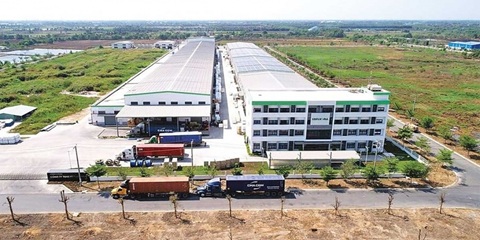
FOREIGN INVESTORS SEEKING A SYNCHRONISED MANUFACTURING ECOSYSTEM
Instead of focusing only on land costs and incentives as usual, foreign investors are seeking a synchronised manufacturing ecosystem, from stable power supply and logistics to shared infrastructure and the convenience of completing residence procedures for experts to serve their long-term investment in the country.
INFRASTRUCTURE / CONSTRUCTION / LOGISTIC / PORT
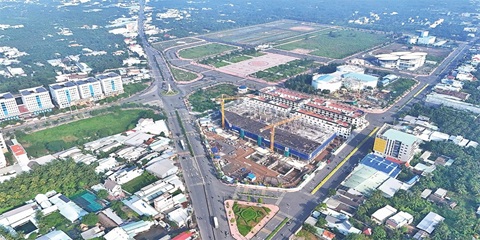
DONG THAP PROVINCE STEPS UP INDUSTRIAL EXPANSION AND INFRASTRUCTURE CONNECTIVITY
Accelerating public investment, strengthening inter-regional connectivity, and expanding industrial land are helping Dong Thap efficiently bolster competitiveness and drive economic growth. Following the 2025 merger of the former Dong Thap and Tien Giang provinces, the expanded Dong Thap province in the Mekong Delta faces mounting pressure to accelerate infrastructure development and strengthen connectivity among local economic zones, urban areas, industrial parks (IPs), and production centres.
PROPERTY / INDUSTRIAL ZONE
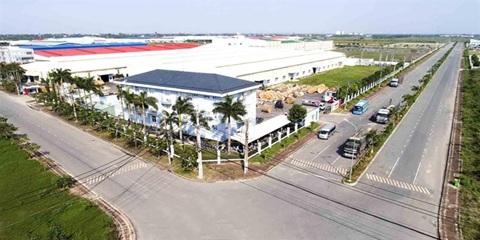
HCM CITY ATTRACTS US$5.7 BILLION INTO EXPORT PROCESSING AND INDUSTRIAL ZONES
HCM City attracted US$5.7 billion in domestic and foreign investment into its export processing and industrial zones during the first nine months of 2026. The figure exceeded the city's full-year target by 31 per cent, highlighting strong momentum in high-quality industrial investment under Resolution No.10-NQ/TW. Total investment reached 131 per cent of the 2026 target of $4.25 billion and represented a 29 per cent increase compared with the same period in 2025, according to the city's Export Processing and Industrial Zones Authority (HEPZA).

BANKING / FINANCE / INSURANCE / TAX
REMITTANCES TO HCM CITY RISE NEARLY 40% IN Q3
Remittances to HCM City reached more than US$2.83 billion in the third quarter of this year, up 39.5 per cent from the previous quarter and 3.6 per cent year-on-year. This was the first quarter showing positive annual growth this year, helping narrow the decline in remittance inflows over the first nine months. According to the State Bank of Vietnam (SBV)’s Regional Branch 2, remittances transferred to HCM City through credit institutions and economic organisations totalled $2.835 billion in Q3, an increase of more than $802 million from the previous quarter.

VIETNAM ECONOMY INVESTMENT
LOCALITIES REPORT BREAKTHROUGH RESULTS IN FDI IN FIRST NINE MONTHS
In Ho Chi Minh City, total registered capital reached $17.2 billion in the first nine months, up 4.2 times from the same period last year. The figure included more than $9.35 billion in newly registered capital and over $4.9 billion in additional capital for existing projects. Foreign investors also registered more than $2.9 billion through capital contributions and share purchases.

TECHNOLOGY
TECH SECTOR GROWTH OPENS UP OPPORTUNITIES FOR VIỆT NAM TO GO GLOBAL
The growth of the electronics, semiconductor and high-tech sectors worldwide is opening up a variety of opportunities for Vietnamese enterprises to integrate more deeply into the global supply chain. However, to become suppliers for these corporations, domestic enterprises must meet rigorous standards regarding quality, technology, productivity and order fulfilment capabilities.
Events Sponsors






















