Want to be in the loop?
subscribe to
our notification
Business News
UNLOCKING MORE THAN $38 BILLION IN PUBLIC INVESTMENT TO DRIVE GROWTH
According to the Ministry of Finance, the Government and Prime Minister have assigned a total public investment plan of VNĐ1.014 quadrillion for this year, including VNĐ364 trillion from the central budget and VNĐ650 trillion from local budgets. Including additional local budget funds, the total planned capital reached VNĐ1.029 quadrillion as of August 6.
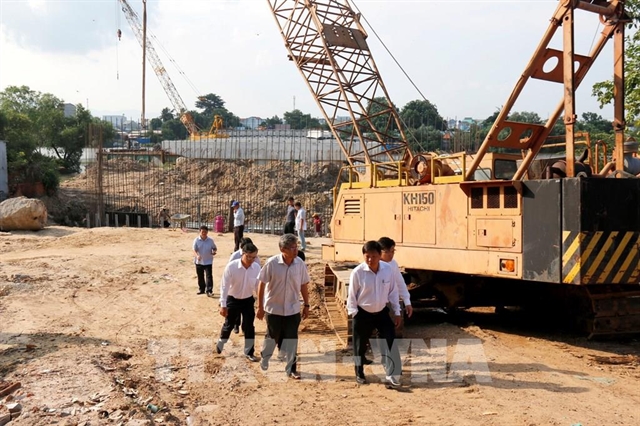
Provincial leaders conduct a quick inspection of public investment disbursement progress at the Văn Thánh Bridge construction project in Phan Thiết Ward, Lâm Đồng Province. — VNA/VNS Photo
HÀ NỘI — Public investment disbursement is emerging as a key driver that Việt Nam can actively harness to support economic growth this year.
With more than VNĐ1 quadrillion (US$38.5 billion) allocated, a record high, the Government is seeking to remove bottlenecks, reallocate capital and accelerate project implementation in ministries, agencies and localities where disbursement remains slow, with the ultimate goal of achieving 100 per cent disbursement.
According to the Ministry of Finance, the Government and the Prime Minister have assigned a total public investment plan worth VNĐ1.01 quadrillion for this year, including VNĐ364 trillion from the central budget and VNĐ650 trillion from local budgets. After including additional local budget funds, total planned capital reached VNĐ1.03 quadrillion as of August 6.
This large-scale funding provides significant resources for infrastructure development and expansion of economic space, but also puts considerable pressure on implementation.
Public investment was estimated at around VNĐ1.1 quadrillion this year, up 31 per cent year-on-year, according to Dr Cấn Văn Lực, chief economist and director of the BIDV Training and Research Institute. He described it as an important source of growth if the capital can be promptly translated into infrastructure and new production capacity.
However, disbursement remains relatively slow. As of August 6, VNĐ433.454 trillion had been disbursed, equivalent to 42.7 per cent of the plan assigned by the PM. The pace also slowed sharply in early August, with disbursement during August 1-6 amounting to only VNĐ8.1 trillion, or about one-fourth of the previous week’s figure.
This means a substantial amount of capital must be disbursed in the remaining months of the year, requiring much faster implementation.
Disbursement performance varies significantly among ministries, central agencies and localities. Eight central ministries and agencies and 22 localities had disbursement rates at or above the national average.
Among the top performers, the Vietnam Bank for Social Policies has fully disbursed its allocated capital, while the Vietnam Expressway Corporation and Vietnam Development Bank reached 84.5 per cent and 78.1 per cent, respectively. The Ministry of Industry and Trade also recorded a relatively high rate of 61.8 per cent.
However, 25 central ministries and agencies and 12 localities remain below the national average, highlighting significant differences in implementation capacity.
Against the backdrop of Việt Nam’s ambitious growth target for 2026, accelerating public investment is more than a matter of fulfilling the State budget plan.
Lực said public investment would remain a key growth driver and that achieving 100 per cent disbursement could add around 1.8 percentage points to economic growth.
The impact goes beyond direct Government spending. Infrastructure projects generate demand for construction materials, machinery, transport and services, while newly developed infrastructure can facilitate investment and production in the years ahead.
Economica Vietnam Director Lê Duy Bình said that amid uncertain external factors, public investment is one of the growth drivers Việt Nam can actively control.
GDP grew 8.18 per cent in the first half of the year, but sustaining strong growth in the second half would depend significantly on public investment disbursement, private investment and the removal of economic bottlenecks.
He noted that effectively disbursing more than VNĐ1 quadrillion would not only boost aggregate demand, but also strengthen infrastructure, expand development space and improve the economy’s competitiveness. He therefore called for disbursement to reach at least 99 per cent, ideally 100 per cent, to support strong growth this year.
One immediate priority is to address capital that has yet to be allocated to specific projects. As of August 6, VNĐ19.8 trillion in central budget capital remained unallocated, equivalent to around 2 per cent of the PM’s assigned plan. Some agencies received additional funds only in June and July and need more time to complete investment procedures, while others have proposed reducing allocations due to a lack of demand.
The use of key performance indicators to monitor and supervise public investment disbursement should also be directly linked to the responsibilities and performance of each unit. The wide gap between units that have disbursed more than 50 per cent of their allocated capital and those that have disbursed less than 10 per cent, or have yet to disburse any funds, shows significant differences in implementation capacity despite operating under the same regulatory framework.
Accelerating public investment should also go hand in hand with removing institutional bottlenecks and encouraging private investment. If public and private capital can be mobilised simultaneously, they could provide a dual boost to aggregate demand and create additional momentum for economic growth in 2026. — VNS
Source: VNS
Related News

BANKING / FINANCE / INSURANCE / TAX
REMITTANCES TO HCM CITY RISE NEARLY 40% IN Q3
Remittances to HCM City reached more than US$2.83 billion in the third quarter of this year, up 39.5 per cent from the previous quarter and 3.6 per cent year-on-year. This was the first quarter showing positive annual growth this year, helping narrow the decline in remittance inflows over the first nine months. According to the State Bank of Vietnam (SBV)’s Regional Branch 2, remittances transferred to HCM City through credit institutions and economic organisations totalled $2.835 billion in Q3, an increase of more than $802 million from the previous quarter.
TECHNOLOGY
TECH SECTOR GROWTH OPENS UP OPPORTUNITIES FOR VIỆT NAM TO GO GLOBAL
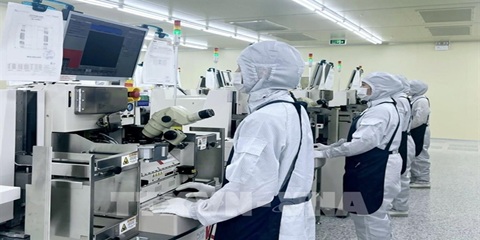
The growth of the electronics, semiconductor and high-tech sectors worldwide is opening up a variety of opportunities for Vietnamese enterprises to integrate more deeply into the global supply chain. However, to become suppliers for these corporations, domestic enterprises must meet rigorous standards regarding quality, technology, productivity and order fulfilment capabilities.
VIETNAM ECONOMY INVESTMENT
FOREIGN INVESTORS SEEKING A SYNCHRONISED MANUFACTURING ECOSYSTEM
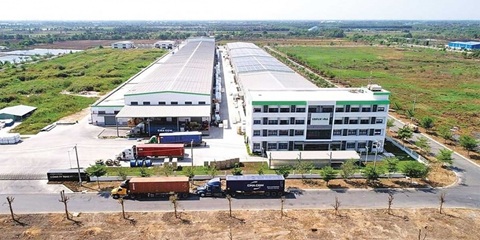
Instead of focusing only on land costs and incentives as usual, foreign investors are seeking a synchronised manufacturing ecosystem, from stable power supply and logistics to shared infrastructure and the convenience of completing residence procedures for experts to serve their long-term investment in the country.
MEMBER CORNER / PROMOTIONS
SENTRYSAFE FHW40200 – PROTECT YOUR VALUABLES, ENJOY PEACE OF MIND!
Looking for a reliable solution to protect your important documents, cash, and valuables from fire and water damage? Genuine SENTRYSAFE - Reliable protection for your valuables and peace of mind! Contact Sen Wai Vietnam for more information and personalized product recommendations.
PROPERTY / INDUSTRIAL ZONE
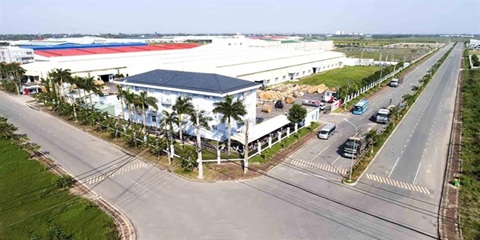
HCM CITY ATTRACTS US$5.7 BILLION INTO EXPORT PROCESSING AND INDUSTRIAL ZONES
HCM City attracted US$5.7 billion in domestic and foreign investment into its export processing and industrial zones during the first nine months of 2026. The figure exceeded the city's full-year target by 31 per cent, highlighting strong momentum in high-quality industrial investment under Resolution No.10-NQ/TW. Total investment reached 131 per cent of the 2026 target of $4.25 billion and represented a 29 per cent increase compared with the same period in 2025, according to the city's Export Processing and Industrial Zones Authority (HEPZA).
INFRASTRUCTURE / CONSTRUCTION / LOGISTIC / PORT
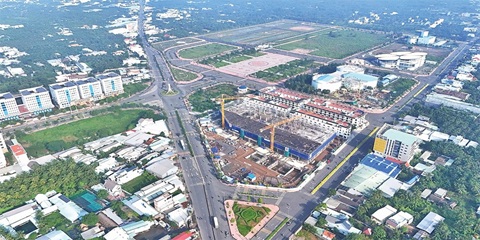
DONG THAP PROVINCE STEPS UP INDUSTRIAL EXPANSION AND INFRASTRUCTURE CONNECTIVITY
Accelerating public investment, strengthening inter-regional connectivity, and expanding industrial land are helping Dong Thap efficiently bolster competitiveness and drive economic growth. Following the 2025 merger of the former Dong Thap and Tien Giang provinces, the expanded Dong Thap province in the Mekong Delta faces mounting pressure to accelerate infrastructure development and strengthen connectivity among local economic zones, urban areas, industrial parks (IPs), and production centres.
Events Sponsors






















