Want to be in the loop?
subscribe to
our notification
Business News
THE 2020-21 BUDGET OF THE HONG KONG SPECIAL ADMINISTRATIVE REGION GOVERNMENT
The 2020-21 Budget was released today (February 26) by the Financial Secretary, Mr Paul Chan. FS unveiled a $120 billion spending plan to support enterprises, safeguard jobs, stimulate the economy and relieve people's burden.
Here are the major highlights that may be of interest to you.
Economy + Fiscal Overview
Economic Performance in 2019
GDP growth: -1.2%
Headline inflation: 2.9%
Underlying inflation: 3.0%
Unemployment (latest): 3.4%
Economic Forecast for 2020
GDP growth: -1.5 to 0.5%
Headline inflation: 1.7%
Underlying inflation: 2.5%
Fiscal Deficit of HK$37.8 billion (about US$4.85 billion) estimated for 2019-20
Deficit of HK$139.1 billion (about US$17.8 billion) forecast for 2020-21
Total fiscal reserves of $1,133.1 billion forecast by 31 March 2020 (about US$145B) – equivalent to 22 months of government expenditure
Almost HK$120 billion (about US$15.4 billion) of deficit for 2020-21 related to cash payout scheme (HK$71 billion) and other one-off relief measures
Total Government Revenue of HK$572.5 billion estimated in 2020-21
Total Government Expenditure of HK$731.1 billion for 2020-21
Spending: Education (HK$112.3b), Social Welfare (HK$115b), Health (HK$97.7b), Infrastructure (HK$78.3b)
Revenue: Profits tax (HK$130.9b), Land premium (HK$118b) and Stamp duties (HK$75b)
Economic development and diversification
Financial Services
· Issue green bonds totalling HK$66 billion (about US$8.5 billion) over the next five years
· Issue inflation-linked retail bonds and Silver Bonds totalling at least HK$13 billion (about US$1.7 billion)
· Waive stamp duty on stock transfers paid by Exchange Traded Fund (ETF) market makers when creating and redeeming EFT units in HK
· Establish a limited partnership regime and provide tax concessions for carried interest issued by private equity funds
Innovation and Technology
· Earmark $3 billion for Phase 2 of the Hong Kong Science Park Expansion Programme
· Inject $2 billion into the Innovation and Technology Fund to launch the Re-industrialisation Funding Scheme, providing matching-basis support for manufacturers setting up smart production lines in HK
· Explore the development of a third InnoHK research cluster
· Increase the grant ceiling under the Technology Voucher Programme to $600,000, raising the Government’s funding ratio to 75 per cent
· Set aside $345 million for a pilot subsidy scheme to encourage the logistics industry to boost productivity through technology
In Addition
· $900 million to the Art Development Matching Grants Scheme
· $700 million to the HKTB for tourism promotion once the epidemic is over
· $150 million to the HKTDC for promotional activities
· $216 million to the Arts Development Council and LCSD for internship, scholarship and on-the-job training, offering about 700 placements
· Nearly 5,000 Government and public organisation short-term internship places to be made available in 2020-21
Housing, healthcare, and developing a liveable city
Land and Housing
· Public housing supply of 100,400 units estimated from 2019-20 to 2023-24
· Private housing supply of 19,600 units estimated annually from 2020 to 2024
· Land supply for 2020-21 expected to provide a total about 15,700 residential units
· 2020-21 Land Sale Programme includes 6 commercial sites capable of producing 830,000 sqm floor space
Healthcare
· Establish a $10 billion public healthcare stabilisation fund
· HK$75 billion recurrent funding for Hospital Authority, 35% increase from 2017-18
· HK$3.6 billion to Hospital Authority to retain talents in next 5 years
· HK$600 million to subsidise interim District Health Centres
· HK$180 million to enhance facilities and strengthen professional training
Liveable City
· Phase out 40,000 Euro IV diesel commercial vehicles, HK$7.1 billion ex-gratia payments to affected owners
· HK$300 million for Cleaner Production Partnership Programme to encourage cleaner production technologies
· HK$200 million Green Tech Fund to support R&D and application of decarbonisation and green technologies
· HK$2 billion to subsidise installation of electric car charging infrastructure at private residential buildings
· HK$80 million to launch pilot scheme for electric light buses
· HK$350 million to launch pilot scheme for electric ferries
· HK$60 million to establish first Geospatial Lab
· HK$300 million for geospatial data sharing platform
Tax relief and other concessions
Cash Payout
· Cash Payout to Hong Kong permanent residents aged 18 or above of HK$10,000
Support for businesses and salary earners
· Concessionary low-interest loan with 100% Government guarantee for enterprises, up to a maximum of HK$2 million
· Reduce profits tax for 2019-20 assessment year by 100%, up to maximum of HK$20,000
· Reduce salaries tax for 2019-20 assessment year by 100%, up to maximum of HK$20,000
· Waive rates for non-domestic properties for 2020-21, up to $5,000 per quarter in first two quarters and $1,500 for remaining two quarters per property
· Waive business registration fees for 2020-21
· Waive registration fees for company annual returns for 2 years
· Electricity subsidies for non-residential accounts and Water and Sewage Charges reduced for non-domestic households
For more comprehensive information, please refer to the website: www.budget.gov.hk/2020/eng/index.html
Related News
VIETNAM ECONOMY INVESTMENT
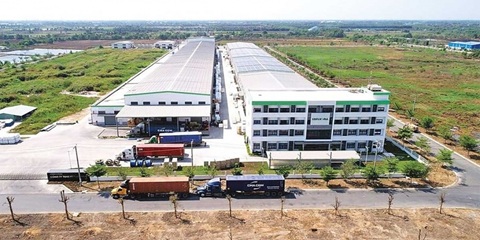
FOREIGN INVESTORS SEEKING A SYNCHRONISED MANUFACTURING ECOSYSTEM
Instead of focusing only on land costs and incentives as usual, foreign investors are seeking a synchronised manufacturing ecosystem, from stable power supply and logistics to shared infrastructure and the convenience of completing residence procedures for experts to serve their long-term investment in the country.
INFRASTRUCTURE / CONSTRUCTION / LOGISTIC / PORT
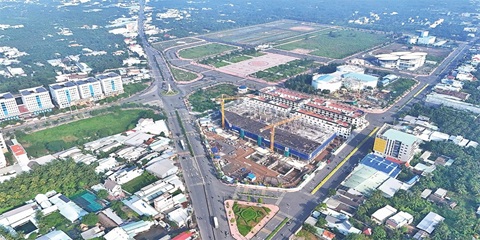
DONG THAP PROVINCE STEPS UP INDUSTRIAL EXPANSION AND INFRASTRUCTURE CONNECTIVITY
Accelerating public investment, strengthening inter-regional connectivity, and expanding industrial land are helping Dong Thap efficiently bolster competitiveness and drive economic growth. Following the 2025 merger of the former Dong Thap and Tien Giang provinces, the expanded Dong Thap province in the Mekong Delta faces mounting pressure to accelerate infrastructure development and strengthen connectivity among local economic zones, urban areas, industrial parks (IPs), and production centres.
PROPERTY / INDUSTRIAL ZONE
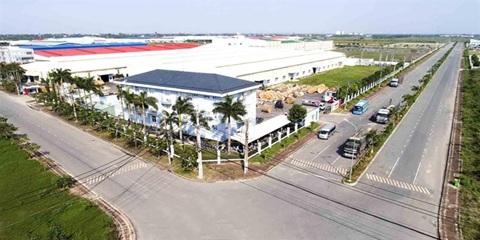
HCM CITY ATTRACTS US$5.7 BILLION INTO EXPORT PROCESSING AND INDUSTRIAL ZONES
HCM City attracted US$5.7 billion in domestic and foreign investment into its export processing and industrial zones during the first nine months of 2026. The figure exceeded the city's full-year target by 31 per cent, highlighting strong momentum in high-quality industrial investment under Resolution No.10-NQ/TW. Total investment reached 131 per cent of the 2026 target of $4.25 billion and represented a 29 per cent increase compared with the same period in 2025, according to the city's Export Processing and Industrial Zones Authority (HEPZA).
BANKING / FINANCE / INSURANCE / TAX
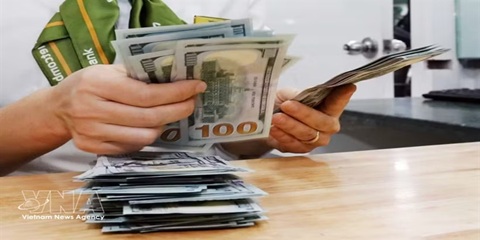
REMITTANCES TO HCM CITY RISE NEARLY 40% IN Q3
Remittances to HCM City reached more than US$2.83 billion in the third quarter of this year, up 39.5 per cent from the previous quarter and 3.6 per cent year-on-year. This was the first quarter showing positive annual growth this year, helping narrow the decline in remittance inflows over the first nine months. According to the State Bank of Vietnam (SBV)’s Regional Branch 2, remittances transferred to HCM City through credit institutions and economic organisations totalled $2.835 billion in Q3, an increase of more than $802 million from the previous quarter.
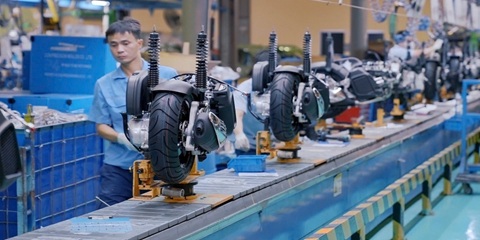
VIETNAM ECONOMY INVESTMENT
LOCALITIES REPORT BREAKTHROUGH RESULTS IN FDI IN FIRST NINE MONTHS
In Ho Chi Minh City, total registered capital reached $17.2 billion in the first nine months, up 4.2 times from the same period last year. The figure included more than $9.35 billion in newly registered capital and over $4.9 billion in additional capital for existing projects. Foreign investors also registered more than $2.9 billion through capital contributions and share purchases.
TECHNOLOGY
TECH SECTOR GROWTH OPENS UP OPPORTUNITIES FOR VIỆT NAM TO GO GLOBAL
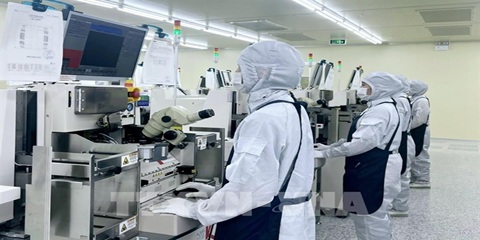
The growth of the electronics, semiconductor and high-tech sectors worldwide is opening up a variety of opportunities for Vietnamese enterprises to integrate more deeply into the global supply chain. However, to become suppliers for these corporations, domestic enterprises must meet rigorous standards regarding quality, technology, productivity and order fulfilment capabilities.
Events Sponsors






















