Want to be in the loop?
subscribe to
our notification
Business News
TAX AND CUSTOMS POLICY TROUBLESHOOTING FOR BUSINESSES
The Ministry of Finance recently coordinated with the Vietnam Chamber of Commerce and Industry (VCCI) to hold a dialogue conference on tax and customs policies and administrative procedures in 2019. This is the 14th year VCCI and the Ministry of Finance jointly hosted this event.
Speaking at the conference, Deputy Finance Minister Tran Xuan Ha said the Ministry of Finance previously cooperated with ministries and branches to adopt many solutions to reform administrative procedures, improve the business investment climate, and facilitate companies and investors to do and develop business. Accordingly, on policy and institutions, the ministry submitted to the Government and the National Assembly for approval of the new Law on Tax Administration, which includes many contents with respect to the reform of tax and customs administrative procedures. The ministry submitted to the Government for promulgation Decree 119 and Circular 68 detailing electronic invoices to lay an important groundwork for reforms in use and management of electronic invoices and documents. Tax and customs authorities continued to apply information technology to tax and customs management. To date, 99.87% of enterprises electronically declared their taxes; 99.53% paid tax online; and 93.61% got tax refund online. 133 out of 304 online public services, graded Level 3 and Level 4, are being provided online. By the end of 2019, up to 188 out of 304 online public services of Level 3 and Level 4. The electronic customs system (VNACCS/VCIS) has been deployed to all units affiliated to the General Department of Vietnam Customs. Tax and customs agencies have smoothly operated the single-window mechanism and provided favorable conditions for taxpayers and customs declarants.
Regarding reforms of the financial sector, VCCI Vice President Hoang Quang Phong stressed that tax and customs are extremely important to the performance of enterprises. This is a main source of revenue for the government and an important factor of an open and favorable business environment. Up to 80% of companies’ feedbacks are guided for solution and answered. According to surveys on their opinions, they appreciated efforts of tax and customs authorities to support, share and guide procedures for enterprises to fix mistakes. Many issues reflected by businesses were listened, exchanged and addressed to generate a great peace for the business community, support businesses to reduce troublesome, overlapping procedures.
Speaking at the conference, Mr. Do Anh Tuan, General Director of Vinahancook Medical Equipment Joint Stock Company, said, imports are largely subject to 10% VAT and some 5% VAT. However, a medical product is imposed 5% VAT. The company’s input tax is always higher than the output tax. Thus, the more the company develops business, the amount of outstanding tax reaches over VND12.5 billion. For that reason, the company hoped the Ministry of Finance will have solutions to early address hardships against businesses.
A representative from Hoa Binh Transport Service Joint Stock Company reflected that the company bought 22 buses for transport business. When it bought the vehicles, the company paid VAT which was not deducted as input VAT. After more than one year of loss, the company sell all these vehicles but tax authorities required the company to declare and pay VAT for these assets. The company believed that taxing a commodity twice is unreasonable and proposed the Ministry of Finance and General Department of Taxation to remove this inadequacy.
Nhat Vuong Joint Stock Company said tax inspectors determined that it sold products below the cost to affiliates and revised up the gross profit margin. However, its consumption market was different from independent units for comparison, so it was concerned whether the tax adjustment was consistent with the spirit of Circular 20/2017/ND-CP on tax management of affiliate transactions.
Affirming that the dialogue was important to bring policies to life, Deputy Minister Tran Xuan Ha said that the Ministry of Finance is ready to listen and share opinions from businesses to further improve policies and remove difficulties and obstacles for businesses. In the coming time, the ministry will urgently develop and submit decrees to the Government for promulgation.
The ministry will also promptly issue and amend instructive circulars and documents for the Law on Tax Administration and the Law on Customs, continue to reform administrative procedures, and provide favorable conditions for business operations of enterprises. The representative of the Ministry of Finance also expressed his hope that Vietnamese companies will actively make good use of opportunities to enhance competitiveness and development and contribute to the overall economic development of the country in the current challenging context.
The similar conference on customs and tax policies and administrative procedures for the southern region took place on November 28 at the Reunification Hall, 135 Nam Ky Khoi Nghia, District 1, Ho Chi Minh City.
Source: VCCI
http://vccinews.com/news/37638/tax-and-customs-policy-troubleshooting-for-businesses.html
************
2/. ADB REVISES UP VIETNAM’S ECONOMIC GROWTH
With unexpectedly strong growth momentum in the third quarter, which is likely to extend into the fourth quarter and next year, Vietnam's economic growth was revised up to 6.9% from 6.8% in 2019 and to 6.8% from 6.7% in 2020, according to the Asian Development Bank (ADB).
According to ADB, Vietnam’s gross domestic product (GDP) growth in the first three quarter of 2019 in Vietnam accelerated to 7%, the highest rate over the same period in the past nine years. Private consumption rose by 7.3%, and investment expanded by 7.7%, boosted by an improved business environment, continued investor confidence, and increased foreign direct investment.
In contrast to Vietnam’s positive prospect, the ADB trimmed its forecasts for economic growth in developing Asia this year and next year as growth in China and India is weighed down by both external and domestic factors.
In a supplement to its Asian Development Outlook 2019 Update released recently, ADB expects the region’s GDP to expand 5.2% in both 2019 and 2020, down from the September forecast of 5.4% growth this year and 5.5% next year.
ADB Chief Economist Yasuyuki Sawada said, “While growth rates are still solid in developing Asia, persistent trade tensions have taken a toll on the region and are still the biggest risk to the longer-term economic outlook. Domestic investment is also weakening in many countries, as business sentiment has declined. Inflation, on the other hand, is ticking up on the back of higher food prices, as African swine fever has raised pork prices significantly.”
The supplement forecasts inflation of 2.8% in 2019 and 3.1% in 2020, up from the September prediction that prices will rise 2.7% this year and next.
In East Asia, growth in China is now expected at 6.1% this year and 5.8% next year due to trade tensions and a slowdown in global activity coupled with weaker domestic demand, with family wallets being hit by pork prices that have doubled relative to a year ago. Growth could accelerate, however, should the United States and China come to an agreement on trade, the report says. In September, ADB forecast GDP growth of 6.2% in 2019 and 6.0% in 2020.
Hong Kong, China, already in technical recession, will see severe downward pressures persist possibly into 2020. The economy is now expected to contract 1.2% this year and grow 0.3% next year.
In South Asia, India’s growth is now seen at a slower 5.1% in fiscal year 2019 as the foundering of a major nonbanking financial company in 2018 led to a rise in risk aversion in the financial sector and a credit crunch. Also, consumption was affected by slow job growth and rural distress aggravated by a poor harvest. Growth should pick up to 6.5% in fiscal year 2020 with supportive policies. In September, ADB forecast India’s GDP to grow 6.5% in 2019 and 7.2% in 2020.
In Southeast Asia, many countries are seeing continued export declines and weaker investment, and growth forecasts have been downgraded for Singapore and Thailand. GDP growth is expected to slow in the Pacific with activity in Fiji, the sub-region’s second largest economy after Papua New Guinea, expected to be more subdued than previously anticipated.
Central Asia is the only subregion where prospects look a little brighter now than in September, largely thanks to increased public spending in Kazakhstan, the region’s largest economy. Central Asia is now forecast to grow 4.6% in 2019, up from the previous prediction for expansion of 4.4%. The forecast for 2020 is growth of 4.5%. Kazakhstan’s economy is seen expanding by 4.1% this year and 3.8% next year.
Source: VCCI
Related News
VIETNAM ECONOMY INVESTMENT
FOREIGN INVESTORS SEEKING A SYNCHRONISED MANUFACTURING ECOSYSTEM
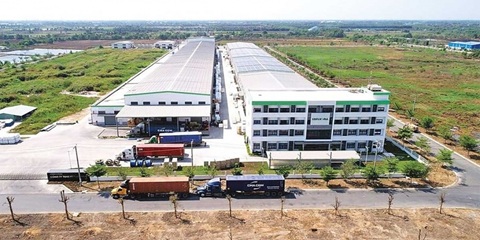
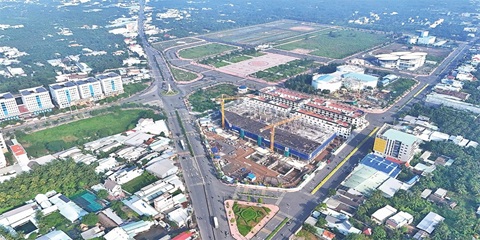
Instead of focusing only on land costs and incentives as usual, foreign investors are seeking a synchronised manufacturing ecosystem, from stable power supply and logistics to shared infrastructure and the convenience of completing residence procedures for experts to serve their long-term investment in the country.
INFRASTRUCTURE / CONSTRUCTION / LOGISTIC / PORT
DONG THAP PROVINCE STEPS UP INDUSTRIAL EXPANSION AND INFRASTRUCTURE CONNECTIVITY
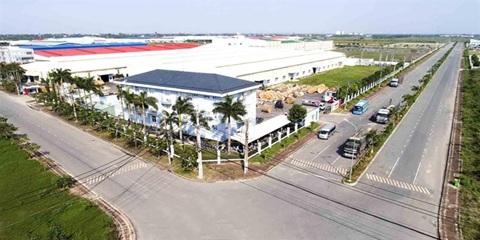
Accelerating public investment, strengthening inter-regional connectivity, and expanding industrial land are helping Dong Thap efficiently bolster competitiveness and drive economic growth. Following the 2025 merger of the former Dong Thap and Tien Giang provinces, the expanded Dong Thap province in the Mekong Delta faces mounting pressure to accelerate infrastructure development and strengthen connectivity among local economic zones, urban areas, industrial parks (IPs), and production centres.
PROPERTY / INDUSTRIAL ZONE
HCM CITY ATTRACTS US$5.7 BILLION INTO EXPORT PROCESSING AND INDUSTRIAL ZONES
HCM City attracted US$5.7 billion in domestic and foreign investment into its export processing and industrial zones during the first nine months of 2026. The figure exceeded the city's full-year target by 31 per cent, highlighting strong momentum in high-quality industrial investment under Resolution No.10-NQ/TW. Total investment reached 131 per cent of the 2026 target of $4.25 billion and represented a 29 per cent increase compared with the same period in 2025, according to the city's Export Processing and Industrial Zones Authority (HEPZA).

BANKING / FINANCE / INSURANCE / TAX
REMITTANCES TO HCM CITY RISE NEARLY 40% IN Q3
Remittances to HCM City reached more than US$2.83 billion in the third quarter of this year, up 39.5 per cent from the previous quarter and 3.6 per cent year-on-year. This was the first quarter showing positive annual growth this year, helping narrow the decline in remittance inflows over the first nine months. According to the State Bank of Vietnam (SBV)’s Regional Branch 2, remittances transferred to HCM City through credit institutions and economic organisations totalled $2.835 billion in Q3, an increase of more than $802 million from the previous quarter.
VIETNAM ECONOMY INVESTMENT
LOCALITIES REPORT BREAKTHROUGH RESULTS IN FDI IN FIRST NINE MONTHS
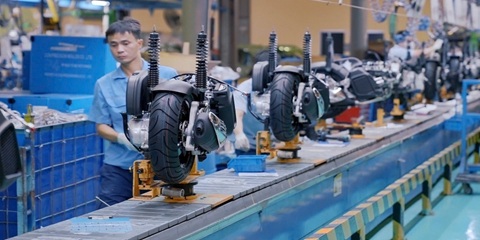
In Ho Chi Minh City, total registered capital reached $17.2 billion in the first nine months, up 4.2 times from the same period last year. The figure included more than $9.35 billion in newly registered capital and over $4.9 billion in additional capital for existing projects. Foreign investors also registered more than $2.9 billion through capital contributions and share purchases.
TECHNOLOGY
TECH SECTOR GROWTH OPENS UP OPPORTUNITIES FOR VIỆT NAM TO GO GLOBAL
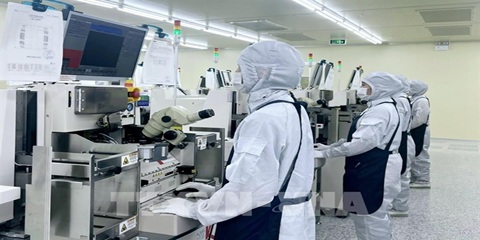
The growth of the electronics, semiconductor and high-tech sectors worldwide is opening up a variety of opportunities for Vietnamese enterprises to integrate more deeply into the global supply chain. However, to become suppliers for these corporations, domestic enterprises must meet rigorous standards regarding quality, technology, productivity and order fulfilment capabilities.
Events Sponsors