Want to be in the loop?
subscribe to
our notification
Business News
REAL ESTATE FIRMS GEAR UP FOR THE RACE AFTER PANDEMIC
Property firms are gearing up to tap opportunities from the post-pandemic recovery of the real estate market, which was predicted to soon get back on its feet.
The real estate market has been frozen since the beginning of this year due to the COVID-19 pandemic.
The Ministry of Construction’s statistics showed that about 80 per cent of real estate sale agents were closed or temporarily halted operations in the first quarter of this year while the others maintained operations at a modest level.
The number of new real estate firms founded in the quarter also dropped by 12 per cent while of those who temporarily halted operation increased by 94 per cent.
Transactions also slumped in the quarter, equivalent to 40 per cent of the same period of 2019. Only 14 per cent of property products available in the market in the quarter were sold, the lowest level in the past four years.
However, industry insiders believed that the impacts would only be short term and the market would be robust in the next two years.
According to Nguyen Quoc Bao, deputy director of real estate firm Danh Khoi Group, the real estate market was undergoing a purification process, pushed by the COVID-19 pandemic, to prepare for a new growth cycle.
This would be a difficult time for companies of weak capacity, but for those with strong financial capacity and professional operation, obstacles like the COVID-19 pandemic would only be short term. The pandemic even created opportunities, he said.
Tran Le Thanh Hien, chairman of Danh Viet Group, said the difficulties of the real estate market were just temporary, adding that in the long term, the market had significant potential for development.
It was time for real estate companies to expand land banks, especially those with strong financial capacity.
According to Pham Lam, chairman of real estate services firm DKRA Vietnam, the market would see increasing competition in the post-pandemic period with the participation of diversified developers, from giants to start-ups, which would create a robust picture in 2020-21.
Nguyen Van Hau, general director of Asian Holding, said that real estate firms must improve resilience and flexibility to cope with market shocks.
Although there were difficulties, the market saw positive signs, Hau said. The State Bank of Viet Nam’s move to cut rates would support the property market, he said.
According to Su Ngoc Khuong, Director of Savills Viet Nam, the COVID-19 pandemic had negative impacts not only on the real estate market but also on more than 50 relevant industries, including construction, building materials, labour and financial markets.
However, the real estate market of Viet Nam still had a number of advantages and was attractive to investors, given the population of nearly 100 million people, 55 per cent aged between 25 and 40 who had high housing demand and strong purchasing power, together with the country’s stable economic growth, improved transport infrastructure and rapid urbanisation.
The Government’s efforts in hastening administrative reforms and speeding up disbursement of public investment were expected to create impetus for economic growth which would benefit the real estate market, Khuong said.
Source: VIR
Related News

BANKING / FINANCE / INSURANCE / TAX
REMITTANCES TO HCM CITY RISE NEARLY 40% IN Q3
Remittances to HCM City reached more than US$2.83 billion in the third quarter of this year, up 39.5 per cent from the previous quarter and 3.6 per cent year-on-year. This was the first quarter showing positive annual growth this year, helping narrow the decline in remittance inflows over the first nine months. According to the State Bank of Vietnam (SBV)’s Regional Branch 2, remittances transferred to HCM City through credit institutions and economic organisations totalled $2.835 billion in Q3, an increase of more than $802 million from the previous quarter.

TECHNOLOGY
TECH SECTOR GROWTH OPENS UP OPPORTUNITIES FOR VIỆT NAM TO GO GLOBAL
The growth of the electronics, semiconductor and high-tech sectors worldwide is opening up a variety of opportunities for Vietnamese enterprises to integrate more deeply into the global supply chain. However, to become suppliers for these corporations, domestic enterprises must meet rigorous standards regarding quality, technology, productivity and order fulfilment capabilities.
VIETNAM ECONOMY INVESTMENT
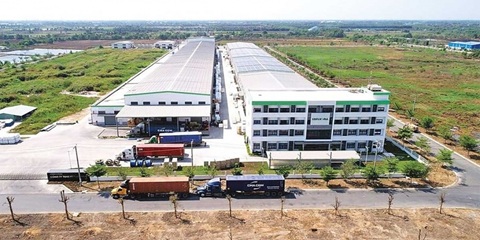
FOREIGN INVESTORS SEEKING A SYNCHRONISED MANUFACTURING ECOSYSTEM
Instead of focusing only on land costs and incentives as usual, foreign investors are seeking a synchronised manufacturing ecosystem, from stable power supply and logistics to shared infrastructure and the convenience of completing residence procedures for experts to serve their long-term investment in the country.
MEMBER CORNER / PROMOTIONS
SENTRYSAFE FHW40200 – PROTECT YOUR VALUABLES, ENJOY PEACE OF MIND!
Looking for a reliable solution to protect your important documents, cash, and valuables from fire and water damage? Genuine SENTRYSAFE - Reliable protection for your valuables and peace of mind! Contact Sen Wai Vietnam for more information and personalized product recommendations.
PROPERTY / INDUSTRIAL ZONE
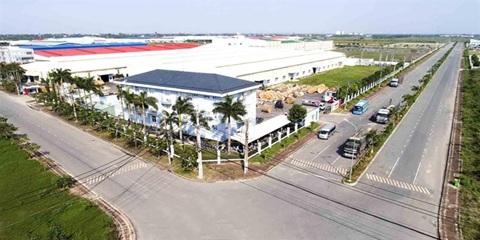
HCM CITY ATTRACTS US$5.7 BILLION INTO EXPORT PROCESSING AND INDUSTRIAL ZONES
HCM City attracted US$5.7 billion in domestic and foreign investment into its export processing and industrial zones during the first nine months of 2026. The figure exceeded the city's full-year target by 31 per cent, highlighting strong momentum in high-quality industrial investment under Resolution No.10-NQ/TW. Total investment reached 131 per cent of the 2026 target of $4.25 billion and represented a 29 per cent increase compared with the same period in 2025, according to the city's Export Processing and Industrial Zones Authority (HEPZA).
INFRASTRUCTURE / CONSTRUCTION / LOGISTIC / PORT
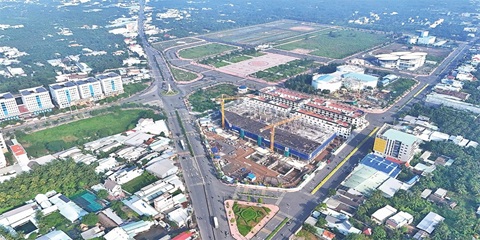
DONG THAP PROVINCE STEPS UP INDUSTRIAL EXPANSION AND INFRASTRUCTURE CONNECTIVITY
Accelerating public investment, strengthening inter-regional connectivity, and expanding industrial land are helping Dong Thap efficiently bolster competitiveness and drive economic growth. Following the 2025 merger of the former Dong Thap and Tien Giang provinces, the expanded Dong Thap province in the Mekong Delta faces mounting pressure to accelerate infrastructure development and strengthen connectivity among local economic zones, urban areas, industrial parks (IPs), and production centres.
Events Sponsors






















