Want to be in the loop?
subscribe to
our notification
Business News
LIVESTOCK INDUSTRY TURNS TO MARKETING TO CAPTURE HIGHER VALUE
The country has the world's sixth-largest pig herd and second-largest waterfowl population, while its animal feed and veterinary medicine industries rank among the largest in Southeast Asia.
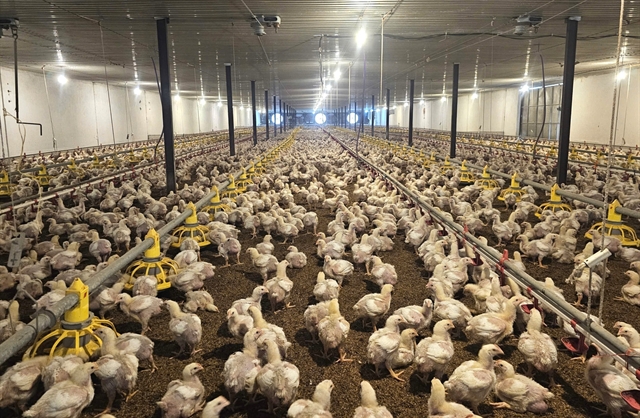
A chicken farm in HCM City. Việt Nam already has a large livestock production base, but is facing pressure to move toward higher value. — VNA/VNS Photo Hương Giang
HÀ NỘI — The livestock industry is facing mounting pressure to shift away from growth driven mainly by herd expansion towards higher-value products, stronger brands and greater export competitiveness amid the impacts of climate change, diseases, environmental issues and increasing competition, experts have said.
After more than two decades of expansion, the industry has reached a scale where increasing herd sizes and output alone are no longer enough to sustain growth, said Phạm Kim Đăng, deputy head of the Department of Livestock Production and Animal Health.
Đăng said Việt Nam already has a large livestock production base. Pork output is about four million tonnes a year, meeting around 90.9 per cent of domestic demand, while poultry meat production stands at about 1.8 million tonnes, covering 81.8 per cent. Egg production exceeds 21.4 billion units, surpassing domestic demand.
The country has the world's sixth-largest pig herd and second-largest waterfowl population, while its animal feed and veterinary medicine industries rank among the largest in Southeast Asia.
Some Vietnamese products, including chicken, dairy products, animal feed and veterinary vaccines, have begun entering markets with stringent requirements, Đăng added.
But exporting products is only the first step. The industry is facing a bigger challenge: how to build brands that can command higher prices and retain more value in Việt Nam.
"Looking at the scale, Việt Nam's livestock industry is not small," said Nguyễn Xuân Dương, chairman of the Vietnam Animal Husbandry Association.
Dương said domestic producers are facing growing pressure as imports increase, while domestic production is growing by only about 2-3 per cent.
Household farmers and domestic companies are also competing with large corporations that have greater scale and stronger financial and technological resources.
The industry thus cannot rely solely on the domestic market, he said. Deeper integration is opening Việt Nam's market to more foreign products while requiring Vietnamese producers to compete more directly in international markets.
China's experience with livestock oversupply highlights the risks of expanding production without sufficient market information and supply chain coordination, according to Dương.
"The question for the next phase is not simply how much to produce, but what products to make, whom to sell to, where to sell them and how much value can be retained across the entire chain," he noted.
Dương said sustainable development should rest on four pillars: economic efficiency, environmental protection, social considerations and animal health and welfare.
Building brands
As output growth is no longer treated as the sole measure, building brands for the livestock industry will become critical to increasing value.
According to Đăng, there are opportunities not only in major products such as pork, poultry and dairy, but also in speciality products and processed foods, such as H'Mong cattle, Hương Sơn deer, bird's nests and honey.
International examples, such as Japan's Kobe beef and the Republic of Korea's Hanwoo beef, show how value can be built around genetics, production standards, quality and branding, rather than volume alone.
However, turning Việt Nam's potential products into export brands will require a coordinated ecosystem covering breeding, production areas, standards, processing, traceability, logistics and trade promotion, he said.
Industry databases must also improve so that supply and demand can be forecast more accurately, allowing producers to align output with market demand.
Companies are also urged to view brands as long-term assets rather than just a way to sell products.
Experts pointed out that Việt Nam remains heavily dependent on imported animal feed ingredients and breeding stock.
In addition, the uneven geographic distribution of livestock production is putting pressure on the environment and creating biosecurity risks, while fragmented slaughtering and distribution systems and weak supply chain links make disease control and food safety management more difficult.
Restructuring the industry thus needs to focus on improving the quality of the entire production chain.
The sector also needs to accelerate the use of science and technology, including genome-based breeding, increase domestic production of feed inputs, digitise industry databases and introduce identification codes for production facilities.
Coordination among regulators, businesses, scientists and farmers will be critical to achieving that goal, experts said.
Under a five-year plan to restructure Việt Nam's livestock industry, the Ministry of Agriculture and Environment has set a target of US$1.5 billion in annual exports of livestock products by 2030.
In the first eight months of this year, exports of livestock products were estimated at $511.9 million, up 30 per cent. — VNS
Source: VNS
Related News

BANKING / FINANCE / INSURANCE / TAX
REMITTANCES TO HCM CITY RISE NEARLY 40% IN Q3
Remittances to HCM City reached more than US$2.83 billion in the third quarter of this year, up 39.5 per cent from the previous quarter and 3.6 per cent year-on-year. This was the first quarter showing positive annual growth this year, helping narrow the decline in remittance inflows over the first nine months. According to the State Bank of Vietnam (SBV)’s Regional Branch 2, remittances transferred to HCM City through credit institutions and economic organisations totalled $2.835 billion in Q3, an increase of more than $802 million from the previous quarter.

TECHNOLOGY
TECH SECTOR GROWTH OPENS UP OPPORTUNITIES FOR VIỆT NAM TO GO GLOBAL
The growth of the electronics, semiconductor and high-tech sectors worldwide is opening up a variety of opportunities for Vietnamese enterprises to integrate more deeply into the global supply chain. However, to become suppliers for these corporations, domestic enterprises must meet rigorous standards regarding quality, technology, productivity and order fulfilment capabilities.
VIETNAM ECONOMY INVESTMENT
FOREIGN INVESTORS SEEKING A SYNCHRONISED MANUFACTURING ECOSYSTEM
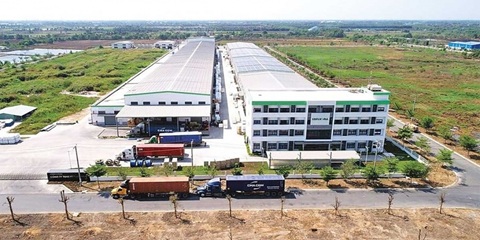
Instead of focusing only on land costs and incentives as usual, foreign investors are seeking a synchronised manufacturing ecosystem, from stable power supply and logistics to shared infrastructure and the convenience of completing residence procedures for experts to serve their long-term investment in the country.
MEMBER CORNER / PROMOTIONS
SENTRYSAFE FHW40200 – PROTECT YOUR VALUABLES, ENJOY PEACE OF MIND!
Looking for a reliable solution to protect your important documents, cash, and valuables from fire and water damage? Genuine SENTRYSAFE - Reliable protection for your valuables and peace of mind! Contact Sen Wai Vietnam for more information and personalized product recommendations.
PROPERTY / INDUSTRIAL ZONE
HCM CITY ATTRACTS US$5.7 BILLION INTO EXPORT PROCESSING AND INDUSTRIAL ZONES
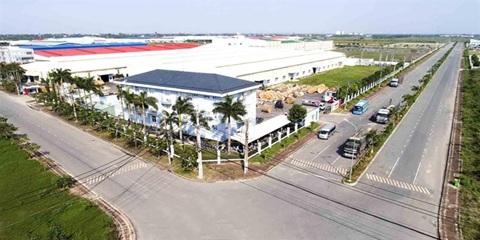
HCM City attracted US$5.7 billion in domestic and foreign investment into its export processing and industrial zones during the first nine months of 2026. The figure exceeded the city's full-year target by 31 per cent, highlighting strong momentum in high-quality industrial investment under Resolution No.10-NQ/TW. Total investment reached 131 per cent of the 2026 target of $4.25 billion and represented a 29 per cent increase compared with the same period in 2025, according to the city's Export Processing and Industrial Zones Authority (HEPZA).
INFRASTRUCTURE / CONSTRUCTION / LOGISTIC / PORT
DONG THAP PROVINCE STEPS UP INDUSTRIAL EXPANSION AND INFRASTRUCTURE CONNECTIVITY
Accelerating public investment, strengthening inter-regional connectivity, and expanding industrial land are helping Dong Thap efficiently bolster competitiveness and drive economic growth. Following the 2025 merger of the former Dong Thap and Tien Giang provinces, the expanded Dong Thap province in the Mekong Delta faces mounting pressure to accelerate infrastructure development and strengthen connectivity among local economic zones, urban areas, industrial parks (IPs), and production centres.
Events Sponsors






















