Want to be in the loop?
subscribe to
our notification
Business News
LAW ON DEPOSIT INSURANCE TO BE AMENDED
According to the SBV, after 12 years of implementing the Law on Deposit Insurance, there have been a number of difficulties and problems that need to be resolved to further enhance the role of the Deposit Insurance of Vietnam (DIV).
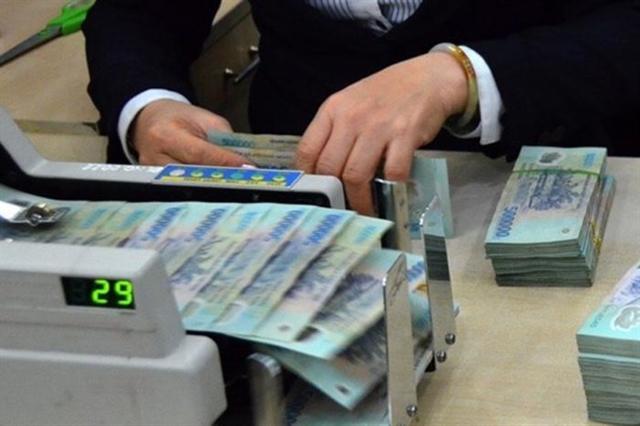
Amendment of the Law on Deposit Insurance will contribute to maintaining the stability and sustainable development of the credit institution system. Photo vneconomy.vn
HÀ NỘI — The State Bank of Vietnam (SBV) has recently submitted to the Government a proposal to amend the Law on Deposit Insurance.
According to the SBV, after 12 years of implementing the Law on Deposit Insurance, there have been a number of difficulties and problems that need to be resolved to further enhance the role of the Deposit Insurance of Vietnam (DIV), ensure the deposit insurance policy to be implemented effectively, and better protect the legitimate rights and interests of depositors.
The SBV expects the changes will contribute to maintaining the stability and sustainable development of the credit institution system.
Under the proposal, the SBV proposes to expand investment forms of deposit insurance organisations in the direction of expanding investment forms. Specifically, the SBV proposes to allow the DIV to buy long-term bonds of credit institutions that receive compulsory transfers.
According to the current regulations, the DIV is allowed to use temporarily idle capital to buy government bonds and SBV’s bills, as well as deposit money at the SBV, to ensure capital safety.
The SBV’s data shows 99 per cent of the total temporarily idle capital of the DIV is currently invested in government bonds as yield of the government bonds is higher than interest rates of SBV’s bills and SBV’s deposits.
However, investment in government bonds has been difficult in recent years and revenue from government bonds has decreased due to low interest rates. This has greatly affected the revenue of the DIV. According to data provided by the DIV, its profitability of idle capital has decreased gradually, from 9.41 per cent in 2013 to only 3.82 per cent in 2023.
Under the SBV’s proposals, the DIV can also participate in developing plans and proposing deposit insurance payment limits for people's credit funds and other credit institutions.
The SBV also proposes regulations to limit risks in investment activities of the DIV. Accordingly, there must be regulations on the responsibilities of the DIV in carrying out investment activities and making provisions for risk for investments according to the Government's instructions. Besides, the Government must stipulate criteria for investment portfolio, investment structure and investment methods of the DIV.
According to the Law on Credit Institutions 2024, the Vietnam Deposit Insurance is assigned a number of new tasks, including the role of participating in restructuring weak credit institutions.
Specifically, the DIV can provide special loans to specially controlled commercial banks according to the SBV’s decision. — VNS
Source: VNS
Related News

INFRASTRUCTURE / CONSTRUCTION / LOGISTIC / PORT
HÀ NỘI'S BUSINESSES URGE ACTION ON CAPITAL, LOGISTICS BOTTLENECKS TO BOOST EXPORTS
Business associations and enterprises in Hà Nội have urged the city to tackle bottlenecks in financing, logistics, infrastructure and regulations to improve competitiveness, expand production and support export growth, as the capital seeks to sustain double-digit economic expansion. Mạc Quốc Anh, vice chairman and secretary general of the Hanoi Association of Small and Medium Enterprises (Hanoisme), said exports were not simply about selling goods overseas but also reflected a company's production capacity, management, ability to meet international standards and reputation.

INFRASTRUCTURE / CONSTRUCTION / LOGISTIC / PORT
PORT THROUGHPUT IN HẢI PHÒNG EXCEEDS EIGHT-MONTH TARGET
Ports in the northern city of Hải Phòng handled an estimated 134.34 million tonnes of goods in the first eight months of 2026, exceeding the eight-month target of 115 million tonnes by 16.8 per cent and rising 11.74 per cent year on year, equivalent to 56.2 per cent of the full-year plan. The strong performance followed a series of measures to optimise port capacity and improve the competitiveness of the city’s seaport system, with a focus on maximising the efficiency of the Lạch Huyện international gateway port as new berths came into operation.

INFRASTRUCTURE / CONSTRUCTION / LOGISTIC / PORT
LÂM ĐỒNG BUILDS TRANSPORT INFRASTRUCTURE AS FOUNDATION FOR GROWTH
With its mountains, highlands and long coastline brought together under one administrative roof, the enlarged Lâm Đồng is now Việt Nam’s largest province by area – and a place where stronger transport links could help turn its diverse economic strengths into a more integrated engine of growth. Against this backdrop, the province is prioritising an integrated transport network to strengthen regional connectivity, expand development space and lay the foundation for sustainable socio-economic growth.
INFRASTRUCTURE / CONSTRUCTION / LOGISTIC / PORT
VIETNAM LOGISTICS COSTS ACCOUNT FOR 16 PER CENT OF GDP
Speaking at a logistics conference on August 26, Ho Thi Quyen, deputy director of the Ho Chi Minh City Investment and Trade Promotion Centre, said that Vietnam is now home to more than 34,000 logistics companies, with the sector contributing around 4.5-5 per cent of GDP. However, logistics costs remain high at approximately 16 per cent of GDP.

INFRASTRUCTURE / CONSTRUCTION / LOGISTIC / PORT
DOMESTIC DEMAND DRIVES STEEL GROWTH AS CONSTRUCTION GATHERS PACE
The steel industry recorded double-digit growth in both production and sales in the first seven months of 2026, while export remained more subdued, highlighting the increasing importance of domestic demand as public investment and construction activity expand. According to the World Steel Association, Việt Nam produced around 15.2 million tonnes of crude steel in the first half of 2026, up 26.9 per cent year-on-year, keeping the country among the world's 10 largest steel producers.

VIETNAM MONTHLY STATISTICAL DATA
INFOGRAPHIC SOCIAL-ECONOMIC PERFORMANCE IN AUGUST OF 2026
The monthly statistical data presents current economic and social statistics on a variety of subjects illustrating crucial economic trends and developments, including production of agriculture, forestry and fishery, business registration situation, investment, government revenues and expenditures, trade, prices, transport and tourism and so on.
Events Sponsors


