Want to be in the loop?
subscribe to
our notification
Business News
LAND RULES DUE FOR A FITTING MAKEOVER
Bottlenecks and conflicts in the current Law on Land continue to put paid to the efficient implementation of foreign-invested projects in Vietnam. The Law on Land 2013 finds application across a wide range of sectors where foreign investment is necessary for the socioeconomic development of Vietnam.
Every project involving land use is subject to the 2013 Law on Land provisions. The importance of this law and how it impacts the future development of investment in Vietnam cannot be understated. Demand for urban land will rise to 450,000 hectares by 2050, a substantial increase from 335,000ha in 2015.
By 2050, urban land will need to serve an expanding population of 52 million people (up from 35 million in 2015). Amid continuous growth, a revised version of the law will be required to facilitate foreign investment, supporting Vietnam’s ambitions to rise to a high-income nation by 2050, and becoming the 20th largest world economy, overtaking Canada and Malaysia in the process.
Despite increasing accessibility of land users to property rights, including access for foreign-invested organisations and individuals, a number of issues remain that still plague the efficient implementation of foreign-invested projects in Vietnam. While an analysis of all investor-related issues could take time, a few issues for an update of the Law on Land can be highlighted.
The most publicised issue for land-related foreign-invested projects in Vietnam is land clearance and compensation. The previous Law on Land allowed for compulsory relocation of residents for the acquisition of land for projects of national defense and security and projects of national or public interest. To minimise such favorable treatment to foreign-invested enterprises, the 2013 version of the law reduces the applicable scope for compulsory land acquisition for projects of national or public interest, excluding privately-funded economic development projects.
According to the law, public interests must be listed in the land use plan while a relocation, support and compensation plan must be agreed with the affected residents. Such compensation must be provided by a third-party and must include any additional investments on such land or land-affixed assets.
Nevertheless, given the ambiguity of the terms “public interest” in the law and the prescribed authority for provincial level governments to interpret and apply such provisions, the results were disparate compensation schemes applied to similarly situated foreign-invested projects.
Some might be classified as falling within the compulsory compensation scheme being considered public interest, while other projects were classified as “private economic purpose” and were therefore subject to a privately-negotiated compensation scheme.
While evidence suggests that the negotiated compensation plans tended to be more successful, often resulting in a more marketable land price value, both negotiated and compulsory land compensation mechanisms often caused dissatisfaction, generating unrest and delays.
Some projects were abandoned due to such delays, leaving land areas partially cleared and compensated with still no project implemented: a lose-lose situation for all interested parties. A clearer approach in a new Law on Land that is fair and definitive would help to ensure that stakeholders are adequately compensated and the projects get implemented.
Another key issue is relevant to the change in land use purpose. For instance, between 2020 and 2021, a power plant struggled to connect to the national power grid. This was caused by constraints in site clearance and compensation, due to land allocation and resettlement issues.
Additionally, the Department of Culture, Sports and Tourism of one of the provinces raised concerns over a section of the project that could affect the environmental landscape of a nearby lake. Simplification of procedures for changing land use purpose and land classification would facilitate the timely delivery of said projects.
A few of the guiding principles for Vietnam’s land use rely upon food security, environmental protection, and national security. Food security meant that Vietnam would always have enough agricultural land for rice production to sustain its entire population. However, such a basis in modern urbanisation is no longer considered an essential tenet.
Vietnam will require much more urban land and a more efficient process for conversion of land use purposes will assist in this goal. Large residential, industrial, or infrastructure projects to mortgage assets also aim to secure favorable financing.
A project enterprise can mortgage land use rights and land-affixed assets in accordance with applicable laws, including the Law on Land.
Nevertheless, foreign-invested enterprises that have leased or acquired land from the state are allowed these rights and assets only through credit institutions licensed in Vietnam and may only execute a mortgage agreement if the full term of the lease has been paid in advance.
This issue greatly affects the bankability of non-recourse investment projects such as energy generation, which needs to secure not only assets on the land but also the land use rights to its lenders. A carve-out for this situation in any new iteration of the Law on Land will help to resolve this impediment.
While conflict among Vietnam’s various laws is always an issue for foreign investors, an outdated Law on Land presents issues. For example, the recently enacted Law on Investment and its guiding decree permit foreign investment in debt trading business without many of conditions that were previously attached to such business lines.
In view of the constraints and Vietnam’s commitment to ensure growth, the implementation of certain measures in a new Law on Land are necessary. Such revisions, among others, would create clearer guidelines eliminating confusion and delay for foreign investors and to prevent difficulties in interpretation and enforcement, while also balancing the needs and values of society.
The principles of a just legal framework, and modernisation of the investment framework aimed at attracting overseas investors, should help Vietnam achieve its goal of becoming a high-income nation in the coming decades.
Source: VIR
Related News

BANKING / FINANCE / INSURANCE / TAX
REMITTANCES TO HCM CITY RISE NEARLY 40% IN Q3
Remittances to HCM City reached more than US$2.83 billion in the third quarter of this year, up 39.5 per cent from the previous quarter and 3.6 per cent year-on-year. This was the first quarter showing positive annual growth this year, helping narrow the decline in remittance inflows over the first nine months. According to the State Bank of Vietnam (SBV)’s Regional Branch 2, remittances transferred to HCM City through credit institutions and economic organisations totalled $2.835 billion in Q3, an increase of more than $802 million from the previous quarter.

TECHNOLOGY
TECH SECTOR GROWTH OPENS UP OPPORTUNITIES FOR VIỆT NAM TO GO GLOBAL
The growth of the electronics, semiconductor and high-tech sectors worldwide is opening up a variety of opportunities for Vietnamese enterprises to integrate more deeply into the global supply chain. However, to become suppliers for these corporations, domestic enterprises must meet rigorous standards regarding quality, technology, productivity and order fulfilment capabilities.
VIETNAM ECONOMY INVESTMENT
FOREIGN INVESTORS SEEKING A SYNCHRONISED MANUFACTURING ECOSYSTEM
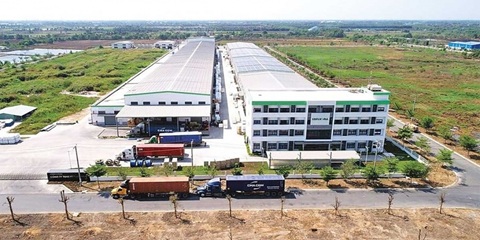
Instead of focusing only on land costs and incentives as usual, foreign investors are seeking a synchronised manufacturing ecosystem, from stable power supply and logistics to shared infrastructure and the convenience of completing residence procedures for experts to serve their long-term investment in the country.
MEMBER CORNER / PROMOTIONS
SENTRYSAFE FHW40200 – PROTECT YOUR VALUABLES, ENJOY PEACE OF MIND!
Looking for a reliable solution to protect your important documents, cash, and valuables from fire and water damage? Genuine SENTRYSAFE - Reliable protection for your valuables and peace of mind! Contact Sen Wai Vietnam for more information and personalized product recommendations.
PROPERTY / INDUSTRIAL ZONE
HCM CITY ATTRACTS US$5.7 BILLION INTO EXPORT PROCESSING AND INDUSTRIAL ZONES
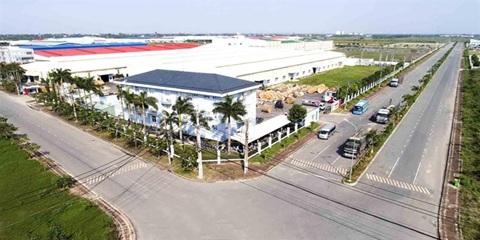
HCM City attracted US$5.7 billion in domestic and foreign investment into its export processing and industrial zones during the first nine months of 2026. The figure exceeded the city's full-year target by 31 per cent, highlighting strong momentum in high-quality industrial investment under Resolution No.10-NQ/TW. Total investment reached 131 per cent of the 2026 target of $4.25 billion and represented a 29 per cent increase compared with the same period in 2025, according to the city's Export Processing and Industrial Zones Authority (HEPZA).
INFRASTRUCTURE / CONSTRUCTION / LOGISTIC / PORT
DONG THAP PROVINCE STEPS UP INDUSTRIAL EXPANSION AND INFRASTRUCTURE CONNECTIVITY
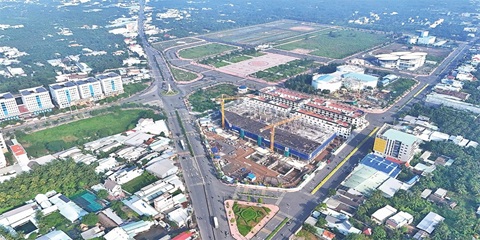
Accelerating public investment, strengthening inter-regional connectivity, and expanding industrial land are helping Dong Thap efficiently bolster competitiveness and drive economic growth. Following the 2025 merger of the former Dong Thap and Tien Giang provinces, the expanded Dong Thap province in the Mekong Delta faces mounting pressure to accelerate infrastructure development and strengthen connectivity among local economic zones, urban areas, industrial parks (IPs), and production centres.
Events Sponsors