Want to be in the loop?
subscribe to
our notification
Business News
LABOUR QUALITY SHOULD BE IMPROVED TO SHARPEN COMPETITIVENESS
Along with the development of economy, labour demand generally increases in all types of businesses and services. According to the statistics of the MOLISA, in 2015 the demand for labour in business sector increased by about 360,000 people (up 3.27 percent) compared to 2014, bringing the total number of workers employed in the country up to 12.3 million. It is expected that by the end of 2015 the percentage of waged workers on the total of employed of around 40 percent.
Labour supply, in general throughout the country is still abundant. In Quarter III/2015, labour force in the working age is estimated at 54.31 million (representing 76.01 percent of the population aged 15 or more). Entering Quarter IV/ 2015 this figure is estimated at 54.43 million (representing 76.11 percent of the population aged 15 and over); along with raising the percentage of workers with jobs, the unemployment rate also continued to decline. As of Quarter IV/2015, the unemployment rate was only 2.38 percent. Structure of urban workers increased slightly, accounting for 30.5 percent.
According to figures from published newsletter, in Quarter II/2015 the country had 52.53 million people employed, up by 103,000 people compared to the previous quarter. The Labour movement from rural to urban areas tends to decrease. The number of workers employed in urban areas is about 15.73 million, decreased 663,000 people compared to the first quarter, making the proportion of employment in urban areas fell from 31.26 percent in Quarter I/2015 to 29.94 percent in Quarter II/2015. However, workers with jobs in rural areas increased in Quarter II / 2015 when the region had 36.81 million people employed, up by 766,000 people compared to Quarter I / 2015, making the proportion of employed people in rural areas increased from 68.74 percent in Quarter I / 2015 to 70.06 percent in Quarter II / 2015.
Specifically, the areas having the most increasing workforce are: processing, manufacturing increased by 223,000 people; information and communication 178,000 people; construction 113,000 people; commerce and repair 77,000 people; hired labour for household and household economy 25,000 people. The sectors having the most reduced Labour force are: education and training sector decreased by 181,000 people; agriculture, forestry and fisheries 114,000 people; social and political organizations, defense and security 98,000 people; transport, warehousing 84,000 people. The share of waged employment in total employment continues to rise in Quarter II / 2015 reaches 38.81 percent. Despite slight fluctuations in the proportion of self-employed workers (decrease) Labour and unpaid family workers (increase), overall proportion of vulnerable employment in total employment has remained high (57.09 percent).
On average income of salaried employment in Quarter II/ 2015 decreased by VND435,000 (8.9 percent) from the previous quarter in which women workers have a lower income, but the reduction is higher than with male workers (corresponding to VND334,000 and 576,000 respectively). The Labour force employed in state enterprises had the highest average monthly salary (VND6.15 million / person), the labour force working in the cooperative sector having lowest income levels (VND2.84 million).
According to Mr Doan Mau Diep, Deputy Minister of Labour, Invalids and Social Affairs, in Quarter II / 2015 the biggest bright spot is the rise of the economy has led to lower Labour pressure. Employment in the processing sector rose, but labourers in agriculture, forestry and fishery declined. Many of the programs are implemented effectively, such as: Over 90,000 workers are exported, exceeding the target by 2015, unemployment support policies have been put into practice.
Deputy Minister Doan Mau Diep said, after December 31, 2015, the first 8 sectors will be prioritized to move freely within ASEAN are: accountants, architects, engineers, dentists, doctors, nurses, transport and tourism employees. This will put pressure on the labour market of Vietnam when joining the TPP and ASEAN Economic Community. The drawback of Vietnam’s labour force is low-skilled, this would be very difficult to compete directly with foreign labour.
So the deputy minister stressed Vietnam should focus on improving the quality of human resources; better organizing the labour market; providing information on employment for workers; mastering labour structure to have adjustment and reducing the unemployment rate to prepare for the accession process of ASEAN Community by the end of 2015.
Source: VCCI
Related News
VIETNAM ECONOMY INVESTMENT
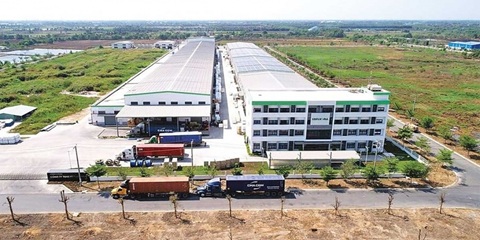
FOREIGN INVESTORS SEEKING A SYNCHRONISED MANUFACTURING ECOSYSTEM
Instead of focusing only on land costs and incentives as usual, foreign investors are seeking a synchronised manufacturing ecosystem, from stable power supply and logistics to shared infrastructure and the convenience of completing residence procedures for experts to serve their long-term investment in the country.
INFRASTRUCTURE / CONSTRUCTION / LOGISTIC / PORT
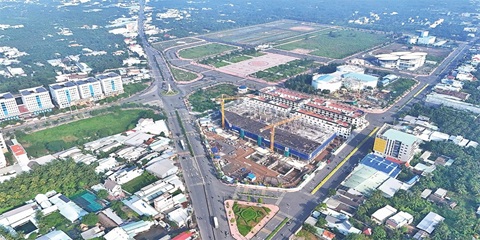
DONG THAP PROVINCE STEPS UP INDUSTRIAL EXPANSION AND INFRASTRUCTURE CONNECTIVITY
Accelerating public investment, strengthening inter-regional connectivity, and expanding industrial land are helping Dong Thap efficiently bolster competitiveness and drive economic growth. Following the 2025 merger of the former Dong Thap and Tien Giang provinces, the expanded Dong Thap province in the Mekong Delta faces mounting pressure to accelerate infrastructure development and strengthen connectivity among local economic zones, urban areas, industrial parks (IPs), and production centres.
PROPERTY / INDUSTRIAL ZONE
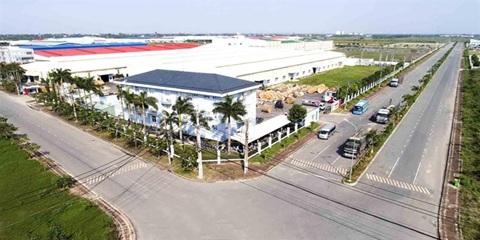
HCM CITY ATTRACTS US$5.7 BILLION INTO EXPORT PROCESSING AND INDUSTRIAL ZONES
HCM City attracted US$5.7 billion in domestic and foreign investment into its export processing and industrial zones during the first nine months of 2026. The figure exceeded the city's full-year target by 31 per cent, highlighting strong momentum in high-quality industrial investment under Resolution No.10-NQ/TW. Total investment reached 131 per cent of the 2026 target of $4.25 billion and represented a 29 per cent increase compared with the same period in 2025, according to the city's Export Processing and Industrial Zones Authority (HEPZA).

BANKING / FINANCE / INSURANCE / TAX
REMITTANCES TO HCM CITY RISE NEARLY 40% IN Q3
Remittances to HCM City reached more than US$2.83 billion in the third quarter of this year, up 39.5 per cent from the previous quarter and 3.6 per cent year-on-year. This was the first quarter showing positive annual growth this year, helping narrow the decline in remittance inflows over the first nine months. According to the State Bank of Vietnam (SBV)’s Regional Branch 2, remittances transferred to HCM City through credit institutions and economic organisations totalled $2.835 billion in Q3, an increase of more than $802 million from the previous quarter.
VIETNAM ECONOMY INVESTMENT
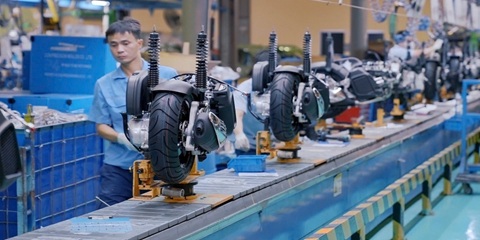
LOCALITIES REPORT BREAKTHROUGH RESULTS IN FDI IN FIRST NINE MONTHS
In Ho Chi Minh City, total registered capital reached $17.2 billion in the first nine months, up 4.2 times from the same period last year. The figure included more than $9.35 billion in newly registered capital and over $4.9 billion in additional capital for existing projects. Foreign investors also registered more than $2.9 billion through capital contributions and share purchases.

TECHNOLOGY
TECH SECTOR GROWTH OPENS UP OPPORTUNITIES FOR VIỆT NAM TO GO GLOBAL
The growth of the electronics, semiconductor and high-tech sectors worldwide is opening up a variety of opportunities for Vietnamese enterprises to integrate more deeply into the global supply chain. However, to become suppliers for these corporations, domestic enterprises must meet rigorous standards regarding quality, technology, productivity and order fulfilment capabilities.
Events Sponsors






















