Want to be in the loop?
subscribe to
our notification
Business News
INFRASTRUCTURE UNDERTAKINGS UNLOCKED VIA PRIVATE FUNDING
More private enterprises are eager to participate in the nation’s crucial transport infrastructure projects, helping to push such undertakings forward and help the state save money.
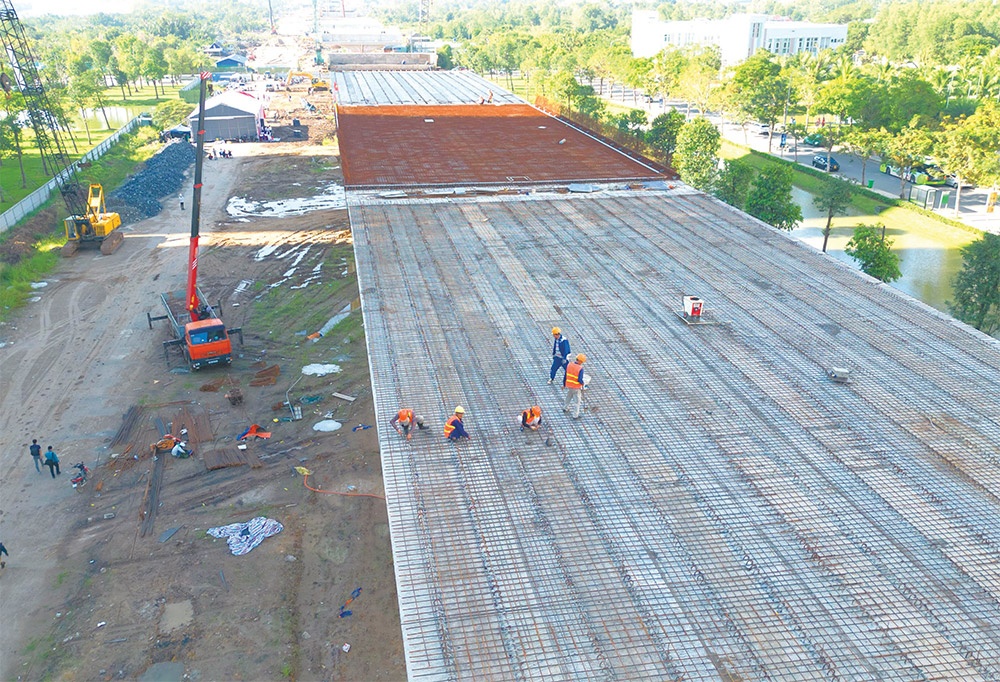
Infrastructure undertakings unlocked via private funding, Photo: Le Toan
Last week, THACO Group expressed its desire to invest in the North-South high-speed railway. The company will contribute 20 per cent of the total capital, nearly $12.27 billion, through equity and legally mobilised domestic capital. The remaining amount, around $50 billion, will be borrowed from domestic and foreign credit institutions that the government guarantee and support all loan interest for 30 years, secured by assets formed from the project.
The company will divide the venture into two implementation phases and complete them within seven years. In addition, THACO wishes to be given priority in allocating land for urban development according to the transit-oriented development model.
Almost two weeks ago, VinSpeed, a subsidiary of Vingroup, was the first private enterprise to propose participation in the same railway. The enterprise seeks direct funding, instead of public capital or a public-private partnership (PPP).
Vietnam is currently encouraging the private economy to participate in key areas of the economy if it has sufficient capacity. If implemented properly, this could be a premise for the formation of private enterprises capable of undertaking national-scale projects like corporations in other developed economies, according to economist Le Xuan Nghia.
“In addition, participating in key initiatives such as high-speed railways help businesses affirm their brands, enhance their reputation, accumulate experience, gradually master technology, and rise in the global value chain,” Nghia said.
“With the implementation of the North-South high-speed railway, Vietnamese enterprises have the opportunity to receive transfer and learn to master core technologies, creating a strong transformation for the railway industry,” Nghia added. “Therefore, when mastering technology, Vietnam can build a railway industry with very high added value, not inferior to the current vehicle industry.”
Meanwhile, in mid-May, the groundbreaking ceremony of the Tu Lien Bridge across the Red River took place in Hanoi. It will connect Dong Anh district and Tay Ho district with a design of two twisted cable-stayed pylons. The total preliminary investment is more than $800 million, which will be implemented under an engineering, procurement, and construction contract.
Vingroup is playing an important role in the venture as the main contractor in the construction consortium, along with Pacific Construction Group from China and others. Vincons Construction Development and Investment JSC, a subsidiary of Vingroup, is also participating in the construction process with a package worth about $435 million.
Previously, Vingroup had proposed to fund construction of Tu Lien Bridge under the build-transfer contract, when the project was expected to be implemented under the PPP form. Hanoi People’s Committee decided to use 100 per cent public capital to ensure progress and effective implementation.
Vietnam has seen many modern infrastructure projects created through the enthusiasm of the private sector.
In the north, Sun Group was attached to the Van Don International Airport, which is the first private airport and considered the most modern in the country. Elsewhere, the Phap Van-Cau Gie Expressway project is the mark of Phuong Thanh Transport Construction and Investment.
In the central region, on National Highway No.1, the name of Deo Ca Group is boldly imprinted in the Deo Ca, Cu Mong, and Co Ma road tunnels in Phu Yen and Binh Dinh provinces, as well as the Hai Van 2 tunnel in Danang. In the South, Deo Ca Group has also left its mark on the Trung Luong-My Thuan Expressway.
Tran Ngoc Chinh, chairman of the Vietnam Urban Planning and Development Association, commented that in recent years, the private sector has demonstrated its capacity in developing key infrastructure projects. These projects were implemented quickly and decisively, without capital increases, to save huge resources for the country.
“Private enterprises are capable of performing well in important tasks for national construction. Therefore, the government should provide policies to attract funding such as preferential loans and appropriate policy mechanisms to meet the common and harmonious development requirements of the country, businesses, and individuals,” he said.
Tran Chung, chairman of the Association of Investors in Vietnam Road Traffic Works, said that mobilising private resources for huge-scale projects is the correct policy.
“With the target of GDP growth of over 8 per cent in 2025 and double digits following that, infrastructure investment is expected to be a strong driving force for the entire economy,” Chung said.
“A modern and synchronous transport and social infrastructure system will serve as the foundation for boosting trade, logistics, production, and livelihoods,” he added.
Source: VIR
Related News

BANKING / FINANCE / INSURANCE / TAX
REMITTANCES TO HCM CITY RISE NEARLY 40% IN Q3
Remittances to HCM City reached more than US$2.83 billion in the third quarter of this year, up 39.5 per cent from the previous quarter and 3.6 per cent year-on-year. This was the first quarter showing positive annual growth this year, helping narrow the decline in remittance inflows over the first nine months. According to the State Bank of Vietnam (SBV)’s Regional Branch 2, remittances transferred to HCM City through credit institutions and economic organisations totalled $2.835 billion in Q3, an increase of more than $802 million from the previous quarter.

TECHNOLOGY
TECH SECTOR GROWTH OPENS UP OPPORTUNITIES FOR VIỆT NAM TO GO GLOBAL
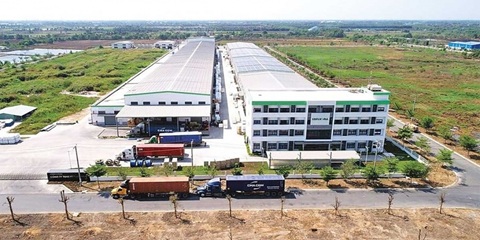
The growth of the electronics, semiconductor and high-tech sectors worldwide is opening up a variety of opportunities for Vietnamese enterprises to integrate more deeply into the global supply chain. However, to become suppliers for these corporations, domestic enterprises must meet rigorous standards regarding quality, technology, productivity and order fulfilment capabilities.
VIETNAM ECONOMY INVESTMENT
FOREIGN INVESTORS SEEKING A SYNCHRONISED MANUFACTURING ECOSYSTEM
Instead of focusing only on land costs and incentives as usual, foreign investors are seeking a synchronised manufacturing ecosystem, from stable power supply and logistics to shared infrastructure and the convenience of completing residence procedures for experts to serve their long-term investment in the country.
MEMBER CORNER / PROMOTIONS
SENTRYSAFE FHW40200 – PROTECT YOUR VALUABLES, ENJOY PEACE OF MIND!
Looking for a reliable solution to protect your important documents, cash, and valuables from fire and water damage? Genuine SENTRYSAFE - Reliable protection for your valuables and peace of mind! Contact Sen Wai Vietnam for more information and personalized product recommendations.
PROPERTY / INDUSTRIAL ZONE
HCM CITY ATTRACTS US$5.7 BILLION INTO EXPORT PROCESSING AND INDUSTRIAL ZONES
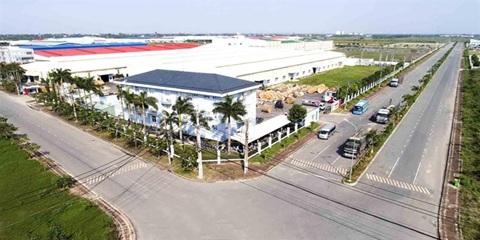
HCM City attracted US$5.7 billion in domestic and foreign investment into its export processing and industrial zones during the first nine months of 2026. The figure exceeded the city's full-year target by 31 per cent, highlighting strong momentum in high-quality industrial investment under Resolution No.10-NQ/TW. Total investment reached 131 per cent of the 2026 target of $4.25 billion and represented a 29 per cent increase compared with the same period in 2025, according to the city's Export Processing and Industrial Zones Authority (HEPZA).
INFRASTRUCTURE / CONSTRUCTION / LOGISTIC / PORT
DONG THAP PROVINCE STEPS UP INDUSTRIAL EXPANSION AND INFRASTRUCTURE CONNECTIVITY
Accelerating public investment, strengthening inter-regional connectivity, and expanding industrial land are helping Dong Thap efficiently bolster competitiveness and drive economic growth. Following the 2025 merger of the former Dong Thap and Tien Giang provinces, the expanded Dong Thap province in the Mekong Delta faces mounting pressure to accelerate infrastructure development and strengthen connectivity among local economic zones, urban areas, industrial parks (IPs), and production centres.
Events Sponsors






















