Want to be in the loop?
subscribe to
our notification
Business News
HCM CITY LEADS ECONOMIC RESTRUCTURING IN SOUTHEAST REGION
Administrative restructuring is creating new opportunities to reorganise the Southeast region’s economic and social development space, experts said at a national conference on September 24.
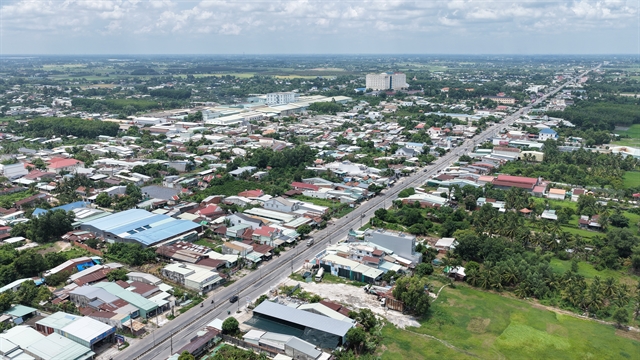
National Highway 22 in Gò Dầu Ward, Tây Ninh Province, is planned to be expanded to eight lanes. — VNA/VNS Photo
HCM CITY — Administrative restructuring is creating new opportunities to reorganise the Southeast region’s economic and social development space, experts said at a recent national conference on socio-economic structure of Southeast provinces after mergers.
According to Associate Professor, Dr Vũ Tuấn Hưng, director of the Institute of Social Sciences of the Southern Region, the Southeast is a strategically important socio-economic space in Việt Nam’s development given its advantages in location, industry, trade, services, logistics, science and technology, urbanisation and human resources.
In the new context, administrative restructuring is no longer simply a matter of reorganising institutions and local governance, but also calls for a broader rethink of development space, socio-economic transformation, resource allocation and regional connectivity.
Hưng said changes in administrative boundaries could open up opportunities to expand development, connect resources and leverage local strengths, but turning them into tangible growth would require an evidence-based approach covering infrastructure, human resources, labour markets, social welfare, governance and sustainability.
Prioritising connectivity
Discussing solutions for restructuring the Southeast’s development space after the mergers, Dr Hoàng Văn Tú of the city's Cadre Academy said investment priorities should be based on network impacts.
High-priority projects should include nodes and transport routes capable of significantly reducing travel and freight times between industrial parks, ports, airports and border gates, while removing bottlenecks and enabling multimodal connectivity.
Project selection should consider the reduction in travel time, potential shifts in freight volumes, the number of localities benefiting and the ability to mobilise non-budgetary capital, he said.
Land should also be prioritised for activities with high value and strong spillover effects.
For locations near airports, ports, ring roads and railways, project assessments should consider value added per hectare, high-skilled employment, linkages with regional businesses, energy consumption and water reuse capacity.
“Regional coordination should focus on project portfolios and economic corridors rather than general discussions. For inter-provincial projects, it is necessary to clearly identify investors, beneficiaries, co-financing mechanisms and common evaluation indicators,” Tú said.
He added that the regional coordination council could focus on projects with impacts beyond administrative boundaries, shared data and the resolution of conflicts of interest.
The region should also periodically publish a common set of indicators covering travel time between growth centres, logistics costs, industrial land productivity, quality FDI, the proportion of skilled workers, worker housing, emissions and public transport use.
Shared data would help ensure that project allocation decisions were less dependent on the individual objectives of each locality, Tú said.
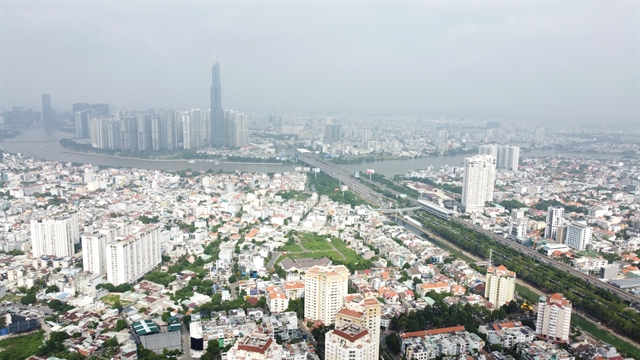
The central area of HCM City plays an important role in the development planning of the Southeast region.— VNA/VNS Photo
Infrastructure and labour
Dr Nguyễn Phúc Khánh Linh of HCM City Open University identified two major bottlenecks facing Southeast localities: infrastructure connectivity barriers and an imbalance in labour supply.
She recommended that authorities at all levels accelerate the completion of major ring roads, including Ring Roads 3, 4, 4.5 and 5, as well as railway systems directly connecting industrial production centres in Đồng Nai and Tây Ninh with the deep-water port complex at Cái Mép-Thị Vải.
Long-term development of urban railway networks and bus rapid transit routes linking neighbouring localities should also be accelerated, she said.
Integrating transit-oriented development (TOD) around major inter-regional transport hubs would increase the capacity of mass passenger transport while encouraging workers to reduce their reliance on private vehicles, thereby easing traffic congestion and reducing environmental pollution.
Linh also highlighted the need to address disparities in labour supply following administrative mergers.
Newly merged localities should establish training-order mechanisms, while major universities in HCM City should expand branches or develop local training partnerships in industrial areas on the outskirts of the city.
Such programmes should focus on equipping local workers with practical skills and updating their technological knowledge to meet the requirements of modern production, she said.
To retain experts, engineers and scientists in newly merged areas, financial incentives alone would not be sufficient. Coordinated investment in social infrastructure, including social housing, hospitals and quality schools, would encourage long-term settlement and help narrow the quality-of-life gap between core and peripheral areas.
At the conference, experts and researchers examined the current situation and trends in restructuring the Southeast’s socio-economic structure, with particular attention to changes in development space, growth centres, economic corridors, industrial structures, ownership structures and resource distribution.
They also identified opportunities, challenges and bottlenecks in regional development, particularly those related to infrastructure, human resources, labour markets, urbanisation, population distribution, access to social services and inclusive development.
The conference further examined the potential, advantages and development orientations of HCM City, Đồng Nai and Tây Ninh following the administrative restructuring.
Experts discussed the potential formation of new value chains and economic spaces, while calling for stronger intra-regional and inter-regional linkages.
The discussions are expected to contribute policy recommendations on improving governance institutions, strengthening coordination, making better use of the strengths of individual localities and promoting regional connectivity.
These measures would provide a foundation for faster and more sustainable development in the Southeast region during the 2026-30 period and beyond, participants said. — VNS
Source: VNS
Related News

CHARITY / EXHIBITION / OTHER EVENTS
INVESTMENT OPPORTUNITIES IN CA MAU PROVINCE: 96 PROJECTS AND 20 STRATEGIC PROJECTS
We are pleased to share with you information on investment projects currently seeking investors in Ca Mau Province. Should your esteemed company or association be interested, we kindly invite you to review the project information and complete the registration form via the links provided. The Ho Chi Minh City Investment and Trade Promotion Centre (ITPC) will consolidate the expressions of interest and facilitate connections with the leadership of Ca Mau Province at a meeting tentatively scheduled for 13 November 2026 in Ho Chi Minh City.

MEMBER CORNER / PROMOTIONS
BẰNG KIỀU LIVESHOW - A SYMPHONY OF LOVE UNDER THE GOLDEN GLOW
A masterclass in live music that takes the audience on a soulful journey through immortal love songs, guided by the peerless artistry and emotive storytelling of renowned singer Bằng Kiều. The highlight of the night is his seamless musical chemistry with special guest Triệu Hồng Ngọc, promising passionate and deeply resonant duets inside the magnificent Grand Ballroom.
INFRASTRUCTURE / CONSTRUCTION / LOGISTIC / PORT
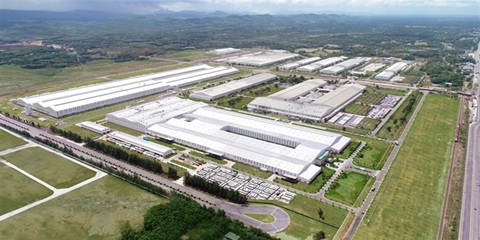
ĐÀ NẴNG GREEN-LIGHTS US$105 MILLION THAI DEVELOPMENT DEAL
The central city has approved an investment proposal by Thailand’s WHA Group to develop infrastructure for the 400ha WHA Đà Nẵng Industrial Park project on two communes of Thăng Bình and Đồng Dương, with an investment of more than VNĐ2.7 trillion (US$105 million). The city said it approved WHA Industrial Development International's status as an investor in the project, which is expected to take place between 2027 and 2034.
VIETNAM ECONOMY INVESTMENT
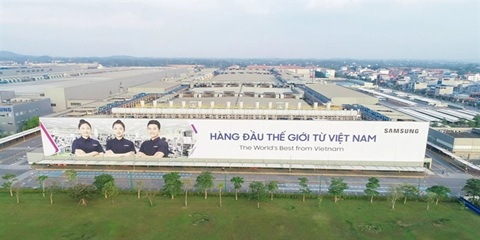
MOBILE PHONE EXPORTS RISE 20% TO $51.8 BILLION IN FIRST NINE MONTHS
Exports of mobile phones and components rose 20 per cent year-on-year to nearly US$51.8 billion in the first nine months of 2026, with China, the US and Republic of Korea accounting for more than half of the total. Shipments to the three markets reached a combined $26.18 billion, or 50.6 per cent of total exports of the product group during the period, according to data from the Vietnam Department of Customs under the Ministry of Finance.
INFRASTRUCTURE / CONSTRUCTION / LOGISTIC / PORT
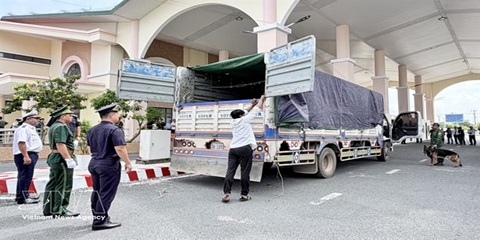
VIỆT NAM-CAMBODIA TRADE GATHERS PACE TOWARDS $20 BILLION TARGET
Trade between Việt Nam and Cambodia continues to grow, remaining a bright spot and a key pillar of bilateral cooperation as the two countries aim to raise two-way trade to US$20 billion in the coming years. After setting a record of more than $11.3 billion last year, bilateral trade reached about $8.7 billion in the first eight months of this year, up 8.3 per cent year on year.
VIETNAM ECONOMY INVESTMENT
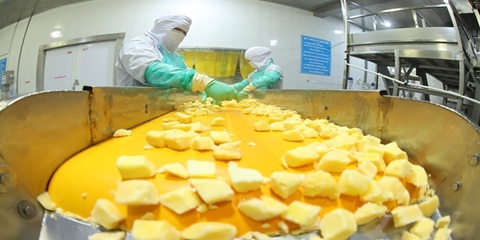
FRUIT AND VEGETABLE EXPORTS POISED TO HIT $10 BILLION IN 2026
Fruit and vegetable exports are on track to reach nearly US$10 billion in 2026, after rising 19.9 per cent year on year to nearly US$7.4 billion in the first nine months, driven by strong seasonal demand and abundant tropical fruit supplies. The Ministry of Agriculture and Environment said the growth reflected stronger international demand for fresh produce and processed agricultural products.
Events Sponsors






















