Want to be in the loop?
subscribe to
our notification
Business News
GREEN TRANSFORMATION IN LOGISTICS IS A SMART PATH TO SUSTAINABILITY
The green transformation in logistics has moved from being a mere trend to an unavoidable imperative. It affects not only a company’s competitiveness, but also its very survival.
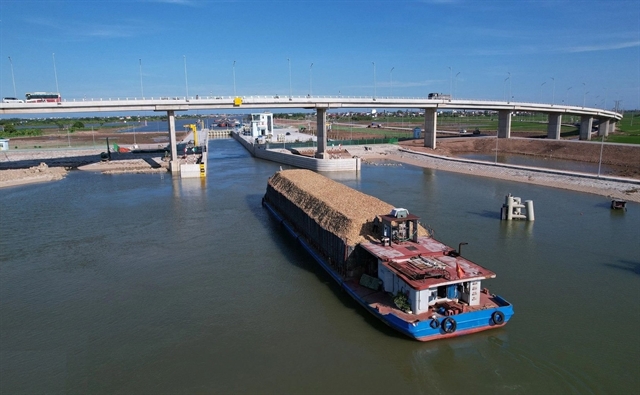
A view of Nghĩa Hưng Canal, dubbed the 'Panama Canal of Việt Nam'. — Photo vlr.vn
HÀ NỘI — Green transformation is not simply about environmental responsibility, but is also a smart approach to enhance competitiveness and ensure long-term survival in a rapidly evolving market landscape, according to experts.
The global economy is undergoing significant shifts. Trade routes are being restructured, supply chains reshaped and the demand for faster, more efficient logistics is growing.
Meanwhile, international regulations are tightening rapidly. From the European Union’s Fit for 55 Package, which aims to reduce carbon emissions drastically by 2030, to the International Maritime Organization (IMO)'s roadmap targeting carbon neutrality in shipping, logistics companies worldwide must 'green' their operations.
The green transformation in logistics has moved from being a mere trend to an unavoidable imperative. It affects not only a company’s competitiveness, but also its very survival.
According to Koen Soenens, board member of the Transportation and Logistics Sector Committee at the European Chamber of Commerce (EuroCham) in Việt Nam, the sector is under considerable pressure, especially as companies seek deeper integration with the European market.
As a representative from DEEP C Industrial Park and also representing the European business community operating in Việt Nam, Soenens also said logistics serves as the heart of the economy, connecting production, circulation and distribution. Yet, the industry must evolve rapidly to meet sustainable development goals.
European businesses operating in Việt Nam have begun adopting green initiatives, such as solar power installations in warehouses, eco-friendly delivery fleets and digital tools that optimise routes to reduce fuel consumption and emissions.
These efforts are not just temporary trends; they are strategic choices aimed at long-term efficiency and competitiveness, Soenens said.
However, challenges remain. Việt Nam’s logistics infrastructure is still fragmented, and inconsistent policies complicate widespread adoption of green practices.
Soenens has also stressed the importance of coordinated efforts among businesses, Government agencies and stakeholders to build a sustainable logistics ecosystem. With increased awareness, financing, skills development and policy alignment, Việt Nam can accelerate its green logistics transformation and establish a competitive edge internationally.
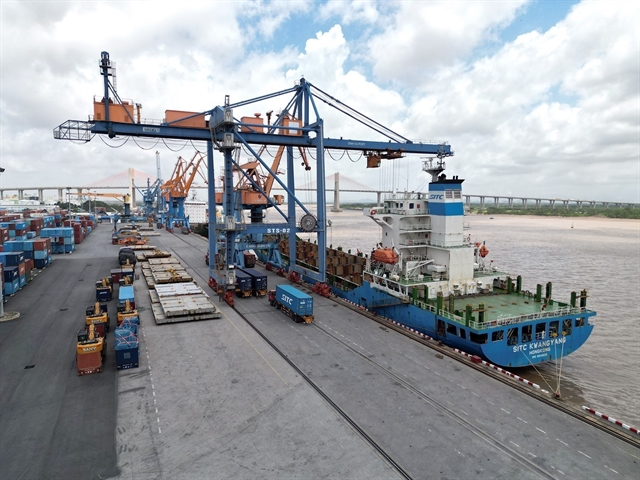
Đình Vũ Port in Hải Phòng, northern Việt Nam’s major customs gateway, illustrates how green logistics can drive regional economic growth. — VNA/VNS Photo
Hải Phòng, northern Việt Nam’s major customs gateway, illustrates how green logistics can drive regional economic growth. The city has sustained customs clearance growth above 10 per cent, positioning it as a crucial hub for future trade routes, including direct connections to northern Europe and the Mediterranean.
Trần Tiến Dũng, deputy chairman of the Vietnam Logistics Services Association and chairman of Hải Phòng Logistics Association, highlights the untapped potential of sea and rail transport in the region.
At present, road transport dominates, accounting for nearly 99 per cent of cargo movement and leading to inefficiencies and higher emissions.
To address this, Macstar Group has launched inland waterway transport routes linking Hải Phòng to Ninh Bình, significantly reducing transit times and expanding cargo capacity via the Nghĩa Hưng Canal, dubbed the 'Panama Canal of Việt Nam'. This waterway offers an open-airspace advantage, allowing larger vessels and more environmentally friendly transport options.
Macstar is also pioneering research into sustainable fuels like solar energy and green hydrogen for its fleet. Still, Dũng notes that Government support is crucial in issuing technical standards and guidelines to enable businesses to adopt these technologies on a larger scale.
Expanding beyond the Hải Phòng-Ninh Bình corridor, Macstar has introduced routes to Nghi Sơn and Vũng Áng, and plans to connect with Quảng Trị Province to facilitate trade with Laos via border gates. These initiatives represent a growing regional network prioritising efficiency and sustainability.
Australia’s green logistics journey also provides valuable insights for Việt Nam. Executive Director of the Australian Chamber of Commerce (AusCham) in Việt Nam Edwin Law explains that in Australia, green logistics is mandatory, not optional. Companies embed sustainability goals into their core strategies, investing in green transportation, renewable energy and environmentally friendly supply chains.
Technology plays a pivotal role. Australian firms use advanced digital platforms and automation to reduce energy consumption and costs while improving service quality. Many of these innovations have been successfully transferred to Việt Nam through partnerships and joint ventures.
Moreover, Vietnamese factories’ recent adoption of energy-saving measures and environmental standards signals a growing commitment to sustainability.
Law emphasised that such progress demonstrates Việt Nam’s dedication to net zero emissions, a goal achievable only through a collaborative ecosystem involving businesses, government and civil society.
Yap Kwong Weng, CEO of Vietnam SuperPort, a joint venture between Singapore’s YCH Group and Vietnam’s T&T Group, advocates for a multimodal, integrated logistics model to accelerate the green transformation.
Vietnam SuperPort combines air cargo terminals, bonded warehouses and cross-border transportation services to optimise efficiency and reduce environmental impacts.
Unlike conventional mass industrial parks, this approach leverages existing assets to create a structural advantage within regional supply chains. For example, where regulations permit, goods can be shipped directly from warehouse to aircraft, cutting transport time and emissions.
Vietnam SuperPort aims to achieve net zero emissions by 2040 through a roadmap that includes deploying renewable energy, automated warehouses, carbon-neutral materials and emissions-free operations. The company is partnering with international organisations like the International Finance Corporation to develop green infrastructure financing models, blending public and private funding sources.
However, Yap stressed that policy support and financial incentives are essential. Encouraging green finance mechanisms and blended finance structures will enable businesses to invest confidently in sustainable logistics solutions. — VNS
Source: VNS
Related News

CHARITY / EXHIBITION / OTHER EVENTS
INVESTMENT OPPORTUNITIES IN CA MAU PROVINCE: 96 PROJECTS AND 20 STRATEGIC PROJECTS
We are pleased to share with you information on investment projects currently seeking investors in Ca Mau Province. Should your esteemed company or association be interested, we kindly invite you to review the project information and complete the registration form via the links provided. The Ho Chi Minh City Investment and Trade Promotion Centre (ITPC) will consolidate the expressions of interest and facilitate connections with the leadership of Ca Mau Province at a meeting tentatively scheduled for 13 November 2026 in Ho Chi Minh City.

MEMBER CORNER / PROMOTIONS
BẰNG KIỀU LIVESHOW - A SYMPHONY OF LOVE UNDER THE GOLDEN GLOW
A masterclass in live music that takes the audience on a soulful journey through immortal love songs, guided by the peerless artistry and emotive storytelling of renowned singer Bằng Kiều. The highlight of the night is his seamless musical chemistry with special guest Triệu Hồng Ngọc, promising passionate and deeply resonant duets inside the magnificent Grand Ballroom.
INFRASTRUCTURE / CONSTRUCTION / LOGISTIC / PORT
ĐÀ NẴNG GREEN-LIGHTS US$105 MILLION THAI DEVELOPMENT DEAL
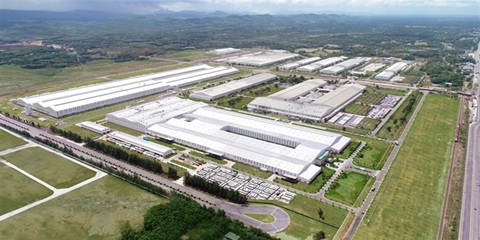
The central city has approved an investment proposal by Thailand’s WHA Group to develop infrastructure for the 400ha WHA Đà Nẵng Industrial Park project on two communes of Thăng Bình and Đồng Dương, with an investment of more than VNĐ2.7 trillion (US$105 million). The city said it approved WHA Industrial Development International's status as an investor in the project, which is expected to take place between 2027 and 2034.
VIETNAM ECONOMY INVESTMENT
MOBILE PHONE EXPORTS RISE 20% TO $51.8 BILLION IN FIRST NINE MONTHS
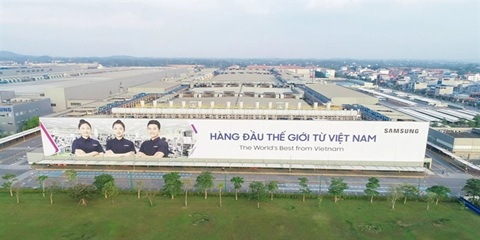
Exports of mobile phones and components rose 20 per cent year-on-year to nearly US$51.8 billion in the first nine months of 2026, with China, the US and Republic of Korea accounting for more than half of the total. Shipments to the three markets reached a combined $26.18 billion, or 50.6 per cent of total exports of the product group during the period, according to data from the Vietnam Department of Customs under the Ministry of Finance.
INFRASTRUCTURE / CONSTRUCTION / LOGISTIC / PORT
VIỆT NAM-CAMBODIA TRADE GATHERS PACE TOWARDS $20 BILLION TARGET
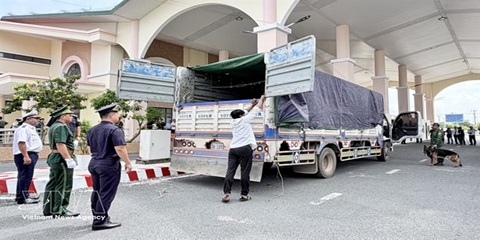
Trade between Việt Nam and Cambodia continues to grow, remaining a bright spot and a key pillar of bilateral cooperation as the two countries aim to raise two-way trade to US$20 billion in the coming years. After setting a record of more than $11.3 billion last year, bilateral trade reached about $8.7 billion in the first eight months of this year, up 8.3 per cent year on year.
VIETNAM ECONOMY INVESTMENT
FRUIT AND VEGETABLE EXPORTS POISED TO HIT $10 BILLION IN 2026
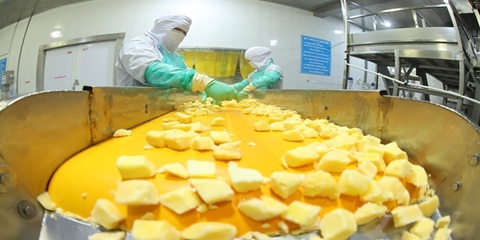
Fruit and vegetable exports are on track to reach nearly US$10 billion in 2026, after rising 19.9 per cent year on year to nearly US$7.4 billion in the first nine months, driven by strong seasonal demand and abundant tropical fruit supplies. The Ministry of Agriculture and Environment said the growth reflected stronger international demand for fresh produce and processed agricultural products.
Events Sponsors






















