Want to be in the loop?
subscribe to
our notification
Business News
GLOBAL BANKING LEADERS TARGETING GROWTH IN SE ASIA
International banks are proactively deploying more resources in Southeast Asia, especially in Vietnam, with the emerging regional economy representing high potential for them.
HSBC will be naming a new head for its Singapore operation, along with its expansion plan in the region. Europe’s largest lender is preparing to announce the outcome of a strategic review next week, alongside its full-year results.
According to Bloomberg, HSBC is seeking to gain a bigger slice in Southeast Asia where it has been struggling to compete with dominant players such as DBS Group Holdings and Standard Chartered. “HSBC wants to further raise its capability and presence in South Asia, and Singapore is central to this drive and ambition,” said Peter Wong, HSBC’s top executive in Asia.
Earlier in February, HSBC had set up a new private banking business in Thailand, the Asia-focused lender’s second onshore expansion in Southeast Asia, due to the country’s increasing rich citizenship status. Last year it merged its businesses to create a new unit that manages more than $1.4 trillion in client assets, with half coming from Asia.
Last year, HSBC Vietnam became the first ever foreign commercial bank to issue bonds in Vietnam, releasing six million in August.
UOB – another major lender from Singapore – completed acquisition of Vietnam Fund Management JSC in January, before changing its name to UOB Asset Management (UOBAM). According to UOBAM, Vietnam’s onshore mutual funds saw a compounded annual growth rate of more than 75 per cent in assets under management from 2016 to the end of September last year.
Thio Boon Kiat, CEO of UOBAM said, “The expertise of our new Vietnamese office will also complement our broader strategies in ASEAN equity and fixed income funds and investment mandates, enriching our product offering for investors and creating more collaboration opportunities with partners across Asia,” he noted.
Elsewhere, Japanese financial institutions are also eyeing the Southeast Asian market. Last December, Gunma Bank, a regional bank based in Gunma Prefecture, opened a representative office in Ho Chi Minh City to meet growing borrower interest in Vietnam. The bank also plans to downgrade its operations in Hong Kong, citing a decline in demand.
Meanwhile, the Bank of Yokohama closed its representative office in London in October in conjunction with its branch opening in Singapore. Nikkei Asia Review stated that the moves follow the Japanese government’s call to manufacturers to build factories in Southeast Asia in a bid to cut overdependence on China.
On the same boat, Japanese megabank Sumitomo Mitsui Financial Group (SMFG) is allegedly planning to acquire an Asian lender, specifically in Vietnam, the Philippines, or India.
Bank of Tokyo-Mitsubishi UFJ (MUFG) failed in purchasing PT Bank Permata – a local lender in Indonesia – which was acquired by Bangkok Bank Pcl. Sumitomo Mitsui already owns PT Bank TPN in the Southeast Asian nation.
MUFG Bank Ltd., a wholly-owned banking unit of MUFG, has a 92.47 per cent stake in Indonesia’s PT Bank Danamon Indonesia Tbk, a 76.88 per cent interest in Thailand’s Bank of Ayudhya PCL, a 20 per cent stake in the Philippines’ Security Bank Corporation, and a 19.73 per cent ownership in VietinBank. The Japanese bank also has extensive branch networks in Asia-Pacific, the Americas, Europe, and the Middle East.
However, the prospects in Southeast Asia are not always attractive. Data from S&P Global Market Intelligence revealed that MUFG will likely continue to face higher credit risks than two other Japanese megabanks in the near term as the lender’s larger international operations leave it more exposed to loan defaults in economies hit hard by the pandemic.
MUFG, which extends more loans overseas than SMFG and Mizuho Financial Group Inc., reported the highest non-performing loan ratios and loan loss provisions among the trio for at least five consecutive quarters. Michael Makdad, analyst at investment research firm Morningstar, says Southeast Asia is the main reason for MUFG’s higher bad debt ratio. Among MUFG’s overseas operations, the subsidiary in Thailand seems to be posing more challenges than others, partly the impact of the pandemic and lack of foreign tourists, Makdad said.
Source: VIR
Related News
VIETNAM ECONOMY INVESTMENT
FOREIGN INVESTORS SEEKING A SYNCHRONISED MANUFACTURING ECOSYSTEM
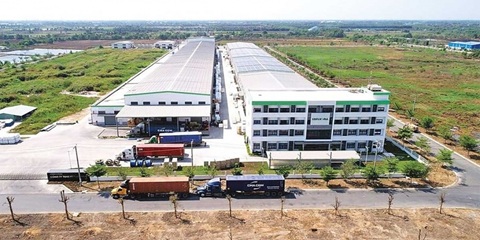
Instead of focusing only on land costs and incentives as usual, foreign investors are seeking a synchronised manufacturing ecosystem, from stable power supply and logistics to shared infrastructure and the convenience of completing residence procedures for experts to serve their long-term investment in the country.
INFRASTRUCTURE / CONSTRUCTION / LOGISTIC / PORT
DONG THAP PROVINCE STEPS UP INDUSTRIAL EXPANSION AND INFRASTRUCTURE CONNECTIVITY
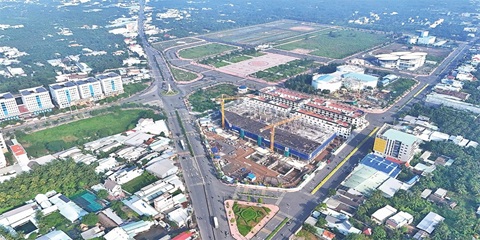
Accelerating public investment, strengthening inter-regional connectivity, and expanding industrial land are helping Dong Thap efficiently bolster competitiveness and drive economic growth. Following the 2025 merger of the former Dong Thap and Tien Giang provinces, the expanded Dong Thap province in the Mekong Delta faces mounting pressure to accelerate infrastructure development and strengthen connectivity among local economic zones, urban areas, industrial parks (IPs), and production centres.
PROPERTY / INDUSTRIAL ZONE
HCM CITY ATTRACTS US$5.7 BILLION INTO EXPORT PROCESSING AND INDUSTRIAL ZONES
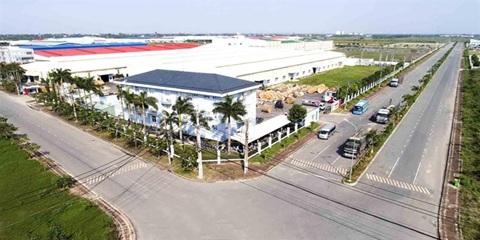
HCM City attracted US$5.7 billion in domestic and foreign investment into its export processing and industrial zones during the first nine months of 2026. The figure exceeded the city's full-year target by 31 per cent, highlighting strong momentum in high-quality industrial investment under Resolution No.10-NQ/TW. Total investment reached 131 per cent of the 2026 target of $4.25 billion and represented a 29 per cent increase compared with the same period in 2025, according to the city's Export Processing and Industrial Zones Authority (HEPZA).

BANKING / FINANCE / INSURANCE / TAX
REMITTANCES TO HCM CITY RISE NEARLY 40% IN Q3
Remittances to HCM City reached more than US$2.83 billion in the third quarter of this year, up 39.5 per cent from the previous quarter and 3.6 per cent year-on-year. This was the first quarter showing positive annual growth this year, helping narrow the decline in remittance inflows over the first nine months. According to the State Bank of Vietnam (SBV)’s Regional Branch 2, remittances transferred to HCM City through credit institutions and economic organisations totalled $2.835 billion in Q3, an increase of more than $802 million from the previous quarter.
VIETNAM ECONOMY INVESTMENT
LOCALITIES REPORT BREAKTHROUGH RESULTS IN FDI IN FIRST NINE MONTHS
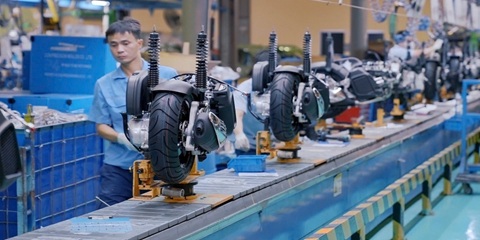
In Ho Chi Minh City, total registered capital reached $17.2 billion in the first nine months, up 4.2 times from the same period last year. The figure included more than $9.35 billion in newly registered capital and over $4.9 billion in additional capital for existing projects. Foreign investors also registered more than $2.9 billion through capital contributions and share purchases.

TECHNOLOGY
TECH SECTOR GROWTH OPENS UP OPPORTUNITIES FOR VIỆT NAM TO GO GLOBAL
The growth of the electronics, semiconductor and high-tech sectors worldwide is opening up a variety of opportunities for Vietnamese enterprises to integrate more deeply into the global supply chain. However, to become suppliers for these corporations, domestic enterprises must meet rigorous standards regarding quality, technology, productivity and order fulfilment capabilities.
Events Sponsors






















