Want to be in the loop?
subscribe to
our notification
Business News
FOREIGN LABOURERS€™ INTERNAL MOVEMENT WITHIN ENTERPRISES: OBSTACLES REMAIN
However, in practice, this Circular has revealed certain shortcomings. With the purpose of gaining feedback and proposals from relevant departments and agencies, representatives of law firms as well as FDI enterprises operating in Vietnam in order to improve Circular 41, the Planning Department in collaboration with the European Trade Policy and Investment Support Project (EU-MUTRAP) recently organised a workshop to introduce Circular 41 as well as other related issues.
In his opening speech, Mr Nguyen Hoang Giang - Deputy Director General of the Planning Department, Ministry of Industry and Trade, said that on September 5, 2013, the government issued Decree 102/2013/ND-CP detailing the implementation of some articles of Labour Code on foreign workers in Vietnam. As stated by Article 7 of the Decree, “The Ministry of Industry and Trade shall provide guidance on the basis and procedure for identifying reassigned foreign workers within 11 aforesaid service industries”. On this basis, the Ministry of Industry and Trade has developed Circular 41 to institutionalise the commitments on services between Vietnam and WTO on labour, also to make the provisions of the Labour Code and the government’s Decree 102/2013/ND-CP more detailed. However, as noted by Mr Giang, like many other legal documents, Circular 41 has its own shortcomings needed to be fixed or adjusted to fit the development trends of the market today.
According to Lawyer Nguyen Viet Hung, Mayer Brown GSM Law Firm, the issuance of Circular 41 was a major policy of the government to attract FDI; also an effort of ministries and agencies to promote the administrative reform. This Circular identifies all forms of commercial presence of foreign enterprises under the Law on Enterprises and the Investment Law 2005. However, it doesn’t include some new forms of investment mentioned in the Enterprise Law and the Investment Law that took effect on July 1, 2015, such as the public-private partnerships (PPP) investment. Lawyer Nguyen Viet Hung therefore suggested the Ministry of Industry and Trade should consider including the PPP as one of the beneficiary exempt from applying for the work permit for workers moving within an enterprise.
Mr Hung also said that moving staff internally in an enterprise of foreign investor was very common and in fact, an understandable move of businesses.
However, Circular 41 had yet to include the case of worker movement between two subsidiaries in the same foreign group. Therefore, to further promote the administrative reform, Lawyer Nguyen Viet Hung suggested that the Ministry of Industry and Trade consider making this case a work permit exemption.
Regarding the moving of expert international labours stipulated in Circular 41, Lawyer Nguyen Thuy Hang, Baker & McKenzie Law Firm, said as the barriers to the movement of foreign labourers into Vietnam was gradually being removed while the demand for expertise international workers continued to climb, at least in the near future, the movement procedure still faced some challenges. These challenges could cause difficulties for Vietnam in complying with international commitments made in terms of affected production and business of enterprises in Vietnam on the micro level. To ensure the implementation of Vietnam's commitments on the free movement of labourers, Lawyer Nguyen Thuy Hang proposed that Vietnam and ASEAN countries should step up discussions on increasing the number of fields covered by agreements on mutual recognition. Additionally, the Ministry of Labour, Invalids and Social Affairs should have specific guidelines on the definition of “internal movement” so that local departments of Labour, Invalids and Social Affairs could work uniformly, making it easier for businesses to use foreign workers. “The synchronisation of regulations and uniform application at local levels play a key role in ensuring Vietnam’s compliance with regional and international commitments,” stressed Ms Hang.
Regarding the provisions of Vietnam's laws relating to the management of foreign labourers in Vietnam, Ms Pham Thi Huyen, Lecturer at National Economics University, said Vietnam had been developing several policies and regulations on the management of foreign workers such as Decree 34/2008/ND - CP dated March 25, 2008 provided for the recruitment and management of foreigners working in Vietnam; Decree 46/2011/ND - CP dated June 17, 2011 amending and supplementing some articles of Decree 34/2008/ND - CP which regulated the employment of foreigners working in Vietnam under employment contract.
Besides Circular 41, in February, the Ministry of Labour, Invalids and Social Affairs also issued Circular 03/2014/ TT - BLDTBXH providing guidelines on some provisions applying to foreign workers working in Vietnam. However, according to Ms Huyen, the implementation of those provisions remained very much limited. Whereas the entrance into the Trans-Pacific Partnership Agreement (TPP) required member states, including Vietnam, to tighten regulations on labour standards. Ms Huyen hoped Circular 41 would help provide businesses and foreign workers more detailed instructions in the use of foreign labourers; especially a specific definition of foreign workers exempted from work permits, as in Article 7 of Decree 102/2013/ND-CP of the government, thereby ensuring the stability of the Vietnamese labour market.
Source: VCCI
Related News
VIETNAM ECONOMY INVESTMENT
FOREIGN INVESTORS SEEKING A SYNCHRONISED MANUFACTURING ECOSYSTEM
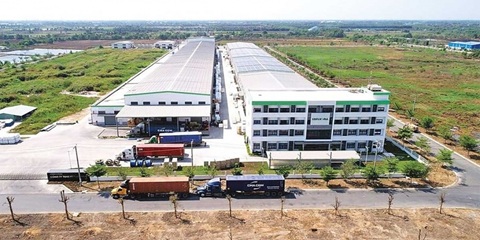
Instead of focusing only on land costs and incentives as usual, foreign investors are seeking a synchronised manufacturing ecosystem, from stable power supply and logistics to shared infrastructure and the convenience of completing residence procedures for experts to serve their long-term investment in the country.
INFRASTRUCTURE / CONSTRUCTION / LOGISTIC / PORT
DONG THAP PROVINCE STEPS UP INDUSTRIAL EXPANSION AND INFRASTRUCTURE CONNECTIVITY
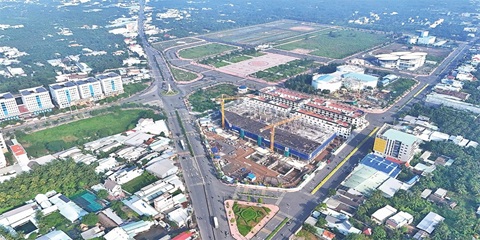
Accelerating public investment, strengthening inter-regional connectivity, and expanding industrial land are helping Dong Thap efficiently bolster competitiveness and drive economic growth. Following the 2025 merger of the former Dong Thap and Tien Giang provinces, the expanded Dong Thap province in the Mekong Delta faces mounting pressure to accelerate infrastructure development and strengthen connectivity among local economic zones, urban areas, industrial parks (IPs), and production centres.
PROPERTY / INDUSTRIAL ZONE
HCM CITY ATTRACTS US$5.7 BILLION INTO EXPORT PROCESSING AND INDUSTRIAL ZONES
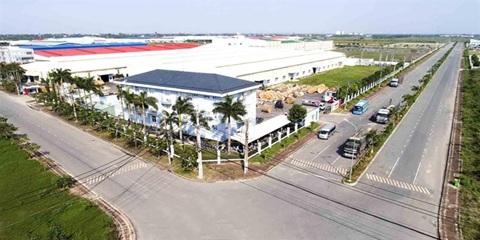
HCM City attracted US$5.7 billion in domestic and foreign investment into its export processing and industrial zones during the first nine months of 2026. The figure exceeded the city's full-year target by 31 per cent, highlighting strong momentum in high-quality industrial investment under Resolution No.10-NQ/TW. Total investment reached 131 per cent of the 2026 target of $4.25 billion and represented a 29 per cent increase compared with the same period in 2025, according to the city's Export Processing and Industrial Zones Authority (HEPZA).

BANKING / FINANCE / INSURANCE / TAX
REMITTANCES TO HCM CITY RISE NEARLY 40% IN Q3
Remittances to HCM City reached more than US$2.83 billion in the third quarter of this year, up 39.5 per cent from the previous quarter and 3.6 per cent year-on-year. This was the first quarter showing positive annual growth this year, helping narrow the decline in remittance inflows over the first nine months. According to the State Bank of Vietnam (SBV)’s Regional Branch 2, remittances transferred to HCM City through credit institutions and economic organisations totalled $2.835 billion in Q3, an increase of more than $802 million from the previous quarter.

VIETNAM ECONOMY INVESTMENT
LOCALITIES REPORT BREAKTHROUGH RESULTS IN FDI IN FIRST NINE MONTHS
In Ho Chi Minh City, total registered capital reached $17.2 billion in the first nine months, up 4.2 times from the same period last year. The figure included more than $9.35 billion in newly registered capital and over $4.9 billion in additional capital for existing projects. Foreign investors also registered more than $2.9 billion through capital contributions and share purchases.

TECHNOLOGY
TECH SECTOR GROWTH OPENS UP OPPORTUNITIES FOR VIỆT NAM TO GO GLOBAL
The growth of the electronics, semiconductor and high-tech sectors worldwide is opening up a variety of opportunities for Vietnamese enterprises to integrate more deeply into the global supply chain. However, to become suppliers for these corporations, domestic enterprises must meet rigorous standards regarding quality, technology, productivity and order fulfilment capabilities.
Events Sponsors