Want to be in the loop?
subscribe to
our notification
Business News
FLEXIBLE TAX POLICY TO PROPEL VIỆT NAM'S ECONOMIC GROWTH IN 2025
The Vietnamese government has extended and enhanced tax relief for 2025, offering reductions and deferrals to boost economic growth.
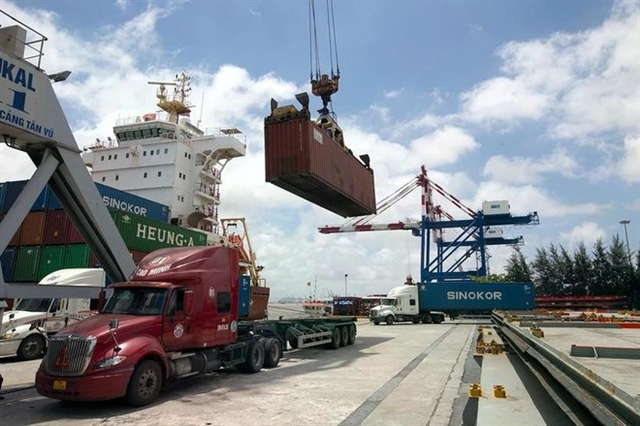
The Ministry of Finance will effectively manage export tariffs, preferential import duties, and goods quotas to address business challenges. — VNA/VNS Photo
HÀ NỘI — In a significant move to support businesses during challenging times, the Vietnamese government has extended and enhanced various tax relief programmes for 2025, with reductions and deferral measures aimed at stimulating economic growth.
According to the Ministry of Finance, the tax and fee incentives put in place between 2020 and 2024 made key contributions to socio-economic recovery and development.
The implementation of tax extensions, exemptions, and reductions, particularly the 2-percentage-point VAT cut, helped stimulate domestic consumption, which is one of the three primary drivers of economic growth.
In 2025, the ministry will continue to implement fee reductions ranging from 10 to 50 per cent to encourage citizens and businesses to utilise online public services. The ministry will also effectively manage export tariffs, preferential import duties, and goods quotas, including adjustments to import-export tax policies to address business challenges.
Assoc. Prof. Dr. Nguyễn Thường Lạng from the National Economics University stated that flexible financial policies have delivered tangible benefits to both citizens and businesses while supporting socio-economic recovery. Despite placing significant pressure on the state budget, these tax and fee reduction measures have provided businesses with substantial liquidity while effectively promoting domestic consumption and production activities.
Tax incentives will serve as an important foundation for sustaining economic development in 2025 and beyond, he said. He elaborated that the government’s tax support policies will enable businesses to invest in technology and improve product quality, thereby enhancing their competitiveness in the market. This will particularly benefit small and medium-sized enterprises, helping them navigate through difficult periods.
Amidst ongoing challenges in business operations, high production costs, and slowing domestic purchasing power, the ministry has proposed the government and National Assembly continue the 2-percentage-point VAT cut. This reduction applies to goods and services currently subject to a 10 per cent tax rate, excluding sectors such as telecommunications, IT, finance, banking, securities, insurance, real estate, metals, mining products, refined petroleum, chemicals, and items subject to special consumption tax.
This measure is effective from January 1 to June 30 of this year.
Financial specialist Dr. Nguyễn Trí Hiếu stated that this move could have positive impacts on the economy, as it will strengthen businesses while stimulating domestic consumption. He added that it must be carried out in harmony with other mechanisms and policies to ensure efficacy. — VNS
Source: VNS
Related News

INFRASTRUCTURE / CONSTRUCTION / LOGISTIC / PORT
HÀ NỘI'S BUSINESSES URGE ACTION ON CAPITAL, LOGISTICS BOTTLENECKS TO BOOST EXPORTS
Business associations and enterprises in Hà Nội have urged the city to tackle bottlenecks in financing, logistics, infrastructure and regulations to improve competitiveness, expand production and support export growth, as the capital seeks to sustain double-digit economic expansion. Mạc Quốc Anh, vice chairman and secretary general of the Hanoi Association of Small and Medium Enterprises (Hanoisme), said exports were not simply about selling goods overseas but also reflected a company's production capacity, management, ability to meet international standards and reputation.

INFRASTRUCTURE / CONSTRUCTION / LOGISTIC / PORT
PORT THROUGHPUT IN HẢI PHÒNG EXCEEDS EIGHT-MONTH TARGET
Ports in the northern city of Hải Phòng handled an estimated 134.34 million tonnes of goods in the first eight months of 2026, exceeding the eight-month target of 115 million tonnes by 16.8 per cent and rising 11.74 per cent year on year, equivalent to 56.2 per cent of the full-year plan. The strong performance followed a series of measures to optimise port capacity and improve the competitiveness of the city’s seaport system, with a focus on maximising the efficiency of the Lạch Huyện international gateway port as new berths came into operation.

INFRASTRUCTURE / CONSTRUCTION / LOGISTIC / PORT
LÂM ĐỒNG BUILDS TRANSPORT INFRASTRUCTURE AS FOUNDATION FOR GROWTH
With its mountains, highlands and long coastline brought together under one administrative roof, the enlarged Lâm Đồng is now Việt Nam’s largest province by area – and a place where stronger transport links could help turn its diverse economic strengths into a more integrated engine of growth. Against this backdrop, the province is prioritising an integrated transport network to strengthen regional connectivity, expand development space and lay the foundation for sustainable socio-economic growth.
INFRASTRUCTURE / CONSTRUCTION / LOGISTIC / PORT
VIETNAM LOGISTICS COSTS ACCOUNT FOR 16 PER CENT OF GDP
Speaking at a logistics conference on August 26, Ho Thi Quyen, deputy director of the Ho Chi Minh City Investment and Trade Promotion Centre, said that Vietnam is now home to more than 34,000 logistics companies, with the sector contributing around 4.5-5 per cent of GDP. However, logistics costs remain high at approximately 16 per cent of GDP.

INFRASTRUCTURE / CONSTRUCTION / LOGISTIC / PORT
DOMESTIC DEMAND DRIVES STEEL GROWTH AS CONSTRUCTION GATHERS PACE
The steel industry recorded double-digit growth in both production and sales in the first seven months of 2026, while export remained more subdued, highlighting the increasing importance of domestic demand as public investment and construction activity expand. According to the World Steel Association, Việt Nam produced around 15.2 million tonnes of crude steel in the first half of 2026, up 26.9 per cent year-on-year, keeping the country among the world's 10 largest steel producers.

VIETNAM MONTHLY STATISTICAL DATA
INFOGRAPHIC SOCIAL-ECONOMIC PERFORMANCE IN AUGUST OF 2026
The monthly statistical data presents current economic and social statistics on a variety of subjects illustrating crucial economic trends and developments, including production of agriculture, forestry and fishery, business registration situation, investment, government revenues and expenditures, trade, prices, transport and tourism and so on.
Events Sponsors


