Want to be in the loop?
subscribe to
our notification
Business News
FIVE TRENDS IDENTIFIED FOR REAL ESTATE MARKET IN 2021
While 2020 is believed to have changed the real estate industry, trends in the sector this year are forecast to sustain or be aligned with demand in the market.
While 2020 is believed to have changed the real estate industry, trends in the sector this year are forecast to sustain or be aligned with demand in the market.
Trang Bui, a senior director at JLL Vietnam, said one of the five main trends in 2021 is “city in the city” and “integrated real estate”, which are popular in large-scale projects.
Vietnam’s property market is becoming more mature, with buyers increasingly interested in a healthy and sustainable living environment rather than simply a place to live.
To attract buyers, developers are, therefore, building residential areas with a range of facilities to help future residents steer clear of problems caused by rapid urbanisation and outdated public infrastructure.
A plus in any large-scale project is the ability to provide different types of housing for many potential groups of buyers, Trang said.
The second trend is the result of a shift to working from home, fuelled by the COVID-19 pandemic, which has changed the face of office property.
Country Director of JLL Vietnam Paul Fisher said the trial of work-from-home policy around the world has shown that technology will continue to be helpful to businesses’ operations.
The lack of direct contact has inadvertently created more working pressure, so some people still want to apply a flexible working approach in the future. However, he noted, offices will still be the centre of business activities.
According to JLL specialists, another trend is the growth of logistics and storage infrastructure, driven by e-commerce.
They noted that Vietnam is now one of the fastest-growing e-commerce markets in Southeast Asia. Amid the pandemic, more and more consumers have opted to shop online, raising demand for cold storage warehousing for food and other essential goods.
E-commerce needs storage space three times larger than that of traditional logistics activities, which also helps boost demand for industrial real estate around the world.
Businesses’ shift to “green” and sustainable activities will be the fourth trend leading the property market in 2021, JLL noted, adding that buildings with high ESG (environmental, social, and governance) ratings may see their rentals rise by up to 33 percent compared to those without similar “green” certification.
Specialists also expect the property sector to play an important role in creating a less polluted environment, to help society build a sustainable future.
The fifth trend in the market will be investors’ increased attention on the healthcare sector amid the pandemic crisis.
Both domestic and foreign investors have targeted healthcare logistics, and they will need more refrigerated warehouses near their clients to meet the rising demand for temperature-sensitive products like cosmetics, food, medicine, and, especially, COVID-19 vaccines and other vaccines in the future, JLL predicted.
Source: VIR
Related News
BANKING / FINANCE / INSURANCE / TAX
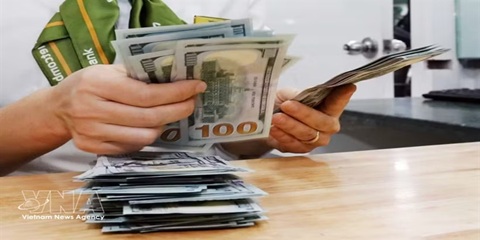
REMITTANCES TO HCM CITY RISE NEARLY 40% IN Q3
Remittances to HCM City reached more than US$2.83 billion in the third quarter of this year, up 39.5 per cent from the previous quarter and 3.6 per cent year-on-year. This was the first quarter showing positive annual growth this year, helping narrow the decline in remittance inflows over the first nine months. According to the State Bank of Vietnam (SBV)’s Regional Branch 2, remittances transferred to HCM City through credit institutions and economic organisations totalled $2.835 billion in Q3, an increase of more than $802 million from the previous quarter.
TECHNOLOGY
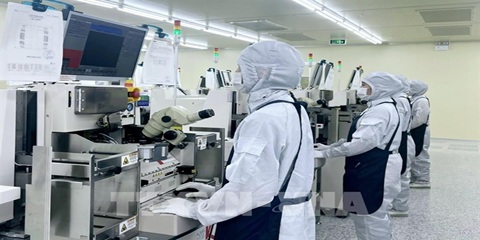
TECH SECTOR GROWTH OPENS UP OPPORTUNITIES FOR VIỆT NAM TO GO GLOBAL
The growth of the electronics, semiconductor and high-tech sectors worldwide is opening up a variety of opportunities for Vietnamese enterprises to integrate more deeply into the global supply chain. However, to become suppliers for these corporations, domestic enterprises must meet rigorous standards regarding quality, technology, productivity and order fulfilment capabilities.
VIETNAM ECONOMY INVESTMENT
FOREIGN INVESTORS SEEKING A SYNCHRONISED MANUFACTURING ECOSYSTEM
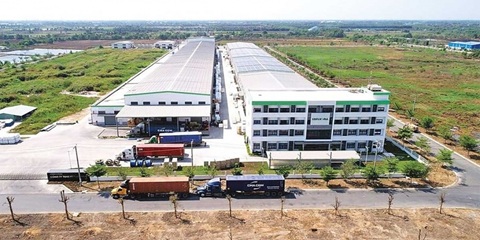
Instead of focusing only on land costs and incentives as usual, foreign investors are seeking a synchronised manufacturing ecosystem, from stable power supply and logistics to shared infrastructure and the convenience of completing residence procedures for experts to serve their long-term investment in the country.
MEMBER CORNER / PROMOTIONS
SENTRYSAFE FHW40200 – PROTECT YOUR VALUABLES, ENJOY PEACE OF MIND!
Looking for a reliable solution to protect your important documents, cash, and valuables from fire and water damage? Genuine SENTRYSAFE - Reliable protection for your valuables and peace of mind! Contact Sen Wai Vietnam for more information and personalized product recommendations.
PROPERTY / INDUSTRIAL ZONE
HCM CITY ATTRACTS US$5.7 BILLION INTO EXPORT PROCESSING AND INDUSTRIAL ZONES
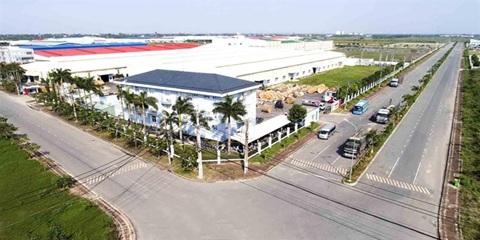
HCM City attracted US$5.7 billion in domestic and foreign investment into its export processing and industrial zones during the first nine months of 2026. The figure exceeded the city's full-year target by 31 per cent, highlighting strong momentum in high-quality industrial investment under Resolution No.10-NQ/TW. Total investment reached 131 per cent of the 2026 target of $4.25 billion and represented a 29 per cent increase compared with the same period in 2025, according to the city's Export Processing and Industrial Zones Authority (HEPZA).
INFRASTRUCTURE / CONSTRUCTION / LOGISTIC / PORT
DONG THAP PROVINCE STEPS UP INDUSTRIAL EXPANSION AND INFRASTRUCTURE CONNECTIVITY
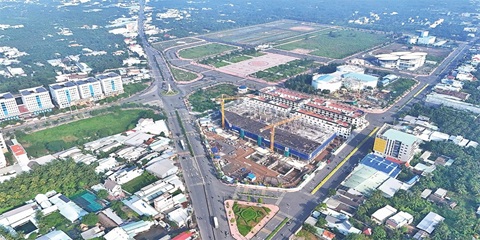
Accelerating public investment, strengthening inter-regional connectivity, and expanding industrial land are helping Dong Thap efficiently bolster competitiveness and drive economic growth. Following the 2025 merger of the former Dong Thap and Tien Giang provinces, the expanded Dong Thap province in the Mekong Delta faces mounting pressure to accelerate infrastructure development and strengthen connectivity among local economic zones, urban areas, industrial parks (IPs), and production centres.
Events Sponsors