Want to be in the loop?
subscribe to
our notification
Business News
ECO-INDUSTRIAL PARKS: SUSTAINABLE APPROACH TO VIETNAM INDUSTRIAL DEVELOPMENT
Eco-industrial parks in Vietnam are one solution for green growth and sustainable development. Developing an eco-industrial park helps improve economic performance while minimizing environmental impacts, improving resource efficiency, reducing waste, and fostering green industry development.
Rapid industrial development and mushrooming industrial zones are generating waste with negative impacts on the environment and human health. According to statistics, 13% of current operational industrial parks have no wastewater treatment plants and 18% of industrial waste is hazardous. Dirty emissions have a great impact on the living environment of communities surrounding industrial parks and export processing zones.
In that context, developing eco-industrial parks is a right approach for environment- friendly and society-conscious sustainable production. Accordingly, the amount of resources consumed will be decreased while economic growth and business performance in eco-industrial parks are not affected.
Three basic elements of an eco-industrial park are environmental management and resource efficiency, cleaner production in each tenant in the industrial park, and industrial interdependent networks of tenants and green infrastructure in the industrial park. Eco-industrial parks have been successful in many countries such as China, South Korea, Japan, the United States, Australia and many European countries.
The Government’s Decree 82/2018/ND-CP dated 22 May 2018 on management of industrial parks and economic zones, effective from July 2018, is the first legal document in Vietnam to lay the foundation for the transition from conventional industrial parks to eco-industrial parks.
Ms. Tuong Anh, representative to the authors of the Technical Guidance Report on Vietnam Eco-Industrial Park, said, if an industrial park recycles and reuses wastewater for production, it can reduce by 40% wastewater discharged into the environment and reduce input clean water costs. Similarly, the opportunity to recover heat from waste to produce hot water and steam for factories in the industrial park will help cut combusting fuel by 20-40%. The symbiotic industrial solution in the eco-industrial park is also one of practical tools for the circular economy for sustainable development.
Currently, the Ministry of Planning and Investment and the United Nations Industrial Development Organization (UNIDO) are deploying the project on “Implementation of eco-industrial park initiatives for a sustainable industrial park model in Vietnam”. The project was launched in 2014 with a total non-refundable funding of more than US$5 million, financed by the Global Environment Facility (GEF) and the Swiss Government through the State Secretariat for Economic Affairs (SECO) in the Global Program for Resource Efficient and Cleaner Production (RECP).
After five years of pilot phase in Khanh Phu Industrial Park (Ninh Binh Province), Hoa Khanh Industrial Park (Da Nang City) and Tra Noc Industrial Parks 1 and 2 (Can Tho City), the project offered more than 900 solutions for effective resource efficient and clean production. These solutions helped businesses save more than VND76 billion (US$3.3 million) a year as a result of reduced consumption of resources and materials. Specifically, they saved more than 22,000 MWh of electricity, 600,000 cubic meters of clean water and more than 140TJ (Terajoule) of fossil fuels, and avoided nearly 3,600 tons of chemicals and wastes. Environmentally, these cuts helped reduce 32 kilotons of carbon dioxide annually.
Particularly, according to a preliminary pilot assessment, all eight joining companies in Hoa Khanh Industrial Park saved 5-10% of electrical energy and 3 -5% of water, reduced carbon dioxide emission by 510.1 tons a year, COD by 95 kilogram a year and Teq PCDD/F by 51.1 µg a year. These companies implemented symbiotic industrial models with six symbiotic solutions (heat, water and solid waste); started to use waste from other companies as inputs for their production or utilize excess heat and energy in production to share with nearby companies. The above results show great potential in saving resources in industrial zones in Vietnam and gradually forming ecological industrial parks.
Following positive results of the first phase and scaling up the application when the legal corridor for eco-industrial parks is established, the Ministry of Planning and Investment proposed building and implementing the second-phase project for at least three years, including six components on strengthening policies and guidelines on eco-industrial parks, building capacity and institutions, conducting feasibility studies on eco-industrial park development tools, improving access to finance and investment for eco-industrial parks, building eco-industrial parks and sharing knowledge.
Needless to say, applying the eco-industrial park model in Vietnam is one solution towards sustainable development. To develop and scale up this model in Vietnam, the policy system plays an extremely important role.
Source: VCCI
Related News

BANKING / FINANCE / INSURANCE / TAX
REMITTANCES TO HCM CITY RISE NEARLY 40% IN Q3
Remittances to HCM City reached more than US$2.83 billion in the third quarter of this year, up 39.5 per cent from the previous quarter and 3.6 per cent year-on-year. This was the first quarter showing positive annual growth this year, helping narrow the decline in remittance inflows over the first nine months. According to the State Bank of Vietnam (SBV)’s Regional Branch 2, remittances transferred to HCM City through credit institutions and economic organisations totalled $2.835 billion in Q3, an increase of more than $802 million from the previous quarter.
TECHNOLOGY
TECH SECTOR GROWTH OPENS UP OPPORTUNITIES FOR VIỆT NAM TO GO GLOBAL
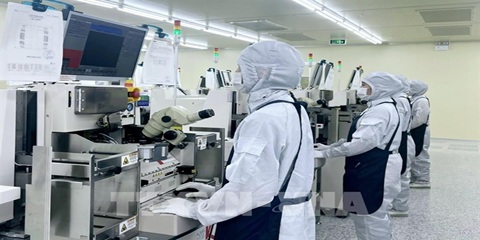
The growth of the electronics, semiconductor and high-tech sectors worldwide is opening up a variety of opportunities for Vietnamese enterprises to integrate more deeply into the global supply chain. However, to become suppliers for these corporations, domestic enterprises must meet rigorous standards regarding quality, technology, productivity and order fulfilment capabilities.
VIETNAM ECONOMY INVESTMENT
FOREIGN INVESTORS SEEKING A SYNCHRONISED MANUFACTURING ECOSYSTEM
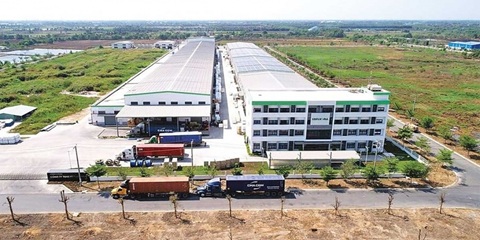
Instead of focusing only on land costs and incentives as usual, foreign investors are seeking a synchronised manufacturing ecosystem, from stable power supply and logistics to shared infrastructure and the convenience of completing residence procedures for experts to serve their long-term investment in the country.
MEMBER CORNER / PROMOTIONS
SENTRYSAFE FHW40200 – PROTECT YOUR VALUABLES, ENJOY PEACE OF MIND!
Looking for a reliable solution to protect your important documents, cash, and valuables from fire and water damage? Genuine SENTRYSAFE - Reliable protection for your valuables and peace of mind! Contact Sen Wai Vietnam for more information and personalized product recommendations.
PROPERTY / INDUSTRIAL ZONE
HCM CITY ATTRACTS US$5.7 BILLION INTO EXPORT PROCESSING AND INDUSTRIAL ZONES
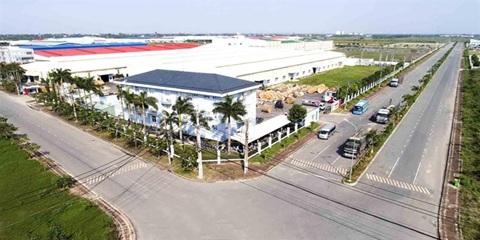
HCM City attracted US$5.7 billion in domestic and foreign investment into its export processing and industrial zones during the first nine months of 2026. The figure exceeded the city's full-year target by 31 per cent, highlighting strong momentum in high-quality industrial investment under Resolution No.10-NQ/TW. Total investment reached 131 per cent of the 2026 target of $4.25 billion and represented a 29 per cent increase compared with the same period in 2025, according to the city's Export Processing and Industrial Zones Authority (HEPZA).
INFRASTRUCTURE / CONSTRUCTION / LOGISTIC / PORT
DONG THAP PROVINCE STEPS UP INDUSTRIAL EXPANSION AND INFRASTRUCTURE CONNECTIVITY
Accelerating public investment, strengthening inter-regional connectivity, and expanding industrial land are helping Dong Thap efficiently bolster competitiveness and drive economic growth. Following the 2025 merger of the former Dong Thap and Tien Giang provinces, the expanded Dong Thap province in the Mekong Delta faces mounting pressure to accelerate infrastructure development and strengthen connectivity among local economic zones, urban areas, industrial parks (IPs), and production centres.
Events Sponsors