Want to be in the loop?
subscribe to
our notification
Business News
CONTAINING COVID-19 WAVE, STAYING PREPARED FOR NEW WAVE OF FOREIGN INVESTMENT
The success story in Covid-19 fight could be the key for Viet Nam to win trust from the international community, including foreign investors, in the post-Coronavirus period.
Last November, Viet Nam reported the first local infection of Covid-19 after nearly three months without a single community transmission case.
Immediately, Prime Minister Nguyen Xuan Phuc ordered Vietnamese competent authorities to promptly take actions to trace, zone off and quarantine related people in order to prevent the third wave of local infections.
Since it was confirmed in Ho Chi Minh City - the country’s biggest economic engine - on November 30, only two more community infection cases were reported during the past week, which indicates the effectiveness of the country’s containment measures.
While pandemic is still evolving swiftly and complicatedly around the world with total infections surpassing 6.5 million, Viet Nam’s patient tally stood at 1,367, including 1,224 recoveries and 35 fatalities as of 6:pm on December 7.
Thanks to early and drastic measures, the pandemic has been basically put under control in Viet Nam, paving the way for the Southeast Asian country to reboot the economy.
According to the General Statistics Office, total trade between Viet Nam and the rest of the world was estimated at US$489.1 billion in the first 11 months this year, up 3.5% from the same period last year.
The World Bank expected that Viet Nam will grow by 2.8% this year even as its neighbor struggle to recover from the ongoing crisis.
In September, the World Bank conservatively estimated that GDP collapse in 2020 could be at 6.1% in Malaysia, 9.9% in the Philippines, and 10.4% in Thailand.
Together, the ten members of the Association of Southeast Asian Nations (ASEAN), excluding Brunei and Singapore, could register a GDP contraction of 4.7% in 2020.
With the above scenario, the only seeming bright spot in Asia is Viet Nam, which ably balanced public health and economics right from the onset of the pandemic.
It is worth noting that after only three weeks of social distancing in April, Viet Nam resumed manufacturing activities, faster than other countries did in the region.
A new wave of foreign investment
Despite the Covid-19 pandemic, foreign investors committed to pouring US$26.43 billion in January-November period, or equivalent to 83.1% compared to the same period last year, official data showed.
Meanwhile, disbursed volume of foreign investment witnessed a year-on-year decree of 2.4% to US$17.2 billion in the reviewed period.
These above figures reflect foreign investment’s high confidence in the Southeast Asian market, which would be further forged by the signing of the Regional Comprehensive Economic Partnership (RCEP) last November.
The RCEP is the world's biggest free trade area measured in terms of GDP and is expected to help signatories to mitigate the crippling cost of the Covid-19 pandemic and ease financial pain.
In the light of Covid-19, the trade deal could enable ASEAN to bounce back more quickly as such a deal allows firms to diversify their supply chains and increase resiliency of the regional economies.
Back in June, Prime Minister Nguyen Xuan Phuc decided to establish a special task force responsible for promoting foreign investment cooperation amid strategic shift of supply chains.
Do Nhat Hoang, Director-General of the Foreign Investment Agency under the Ministry of Planning and Investment, said Viet Nam is likely to count on a new wave of foreign investment as the world’s leading technological companies have taken initial steps to expand operation in Viet Nam.
LG Electronics has moved its entire smartphone production line from South Korea to Hai Phong City in northern Viet Nam, according to the Viet Nam News.
Panasonic plans to move a large production line that makes refrigerators and washing machines from Thailand to Viet Nam in September to improve cost efficiency.
Through its key contractor Foxconn, US tech giant Apple expanded production of its wireless earphones, AirPods, in Viet Nam to four million in the second quarter of this year, or 30% of the entire AirPods output.
Apple is also said to have listed many job vacancies in Viet Nam on LinkedIn, indicating plans to expand its manufacturing in the country.
In February, Heineken invested $68.8 million in Ba Ria-Vung Tau Province to raise its investment to US$381 million. It has increased the production capacity of its plant in the province from the current 610 million litres a year to 1.1 billion liters.
In March, the US’s Universal Alloys Corporation opened the first phase of its US$170 million aerospace components factory in Da Nang City to manufacture aerospace components from aluminium alloys and composites. It is expected to export products worth US$25 million next year, US$85 million in 2022 and US$180 million after 2026.
In June, Qualcomm Viet Nam set up a new research and development facility in Ha Noi, its first in Southeast Asia.
It is clear that the collapse of global trade has hit hardest the countries that primarily depend on exports but Viet Nam, with export of goods constituting 100.9% of its GDP in 2019, has stood out as a miracle as evidenced by positive economic growth rate, strong foreign investment inflows, and more importantly becoming adaptive to global investment relocation wave.
Source: VGP
Related News
VIETNAM ECONOMY INVESTMENT
FOREIGN INVESTORS SEEKING A SYNCHRONISED MANUFACTURING ECOSYSTEM
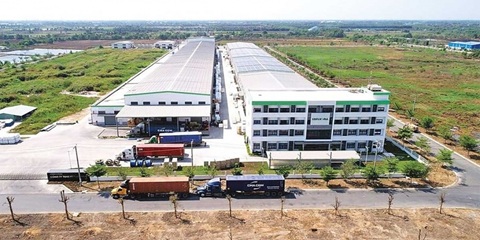
Instead of focusing only on land costs and incentives as usual, foreign investors are seeking a synchronised manufacturing ecosystem, from stable power supply and logistics to shared infrastructure and the convenience of completing residence procedures for experts to serve their long-term investment in the country.
INFRASTRUCTURE / CONSTRUCTION / LOGISTIC / PORT
DONG THAP PROVINCE STEPS UP INDUSTRIAL EXPANSION AND INFRASTRUCTURE CONNECTIVITY
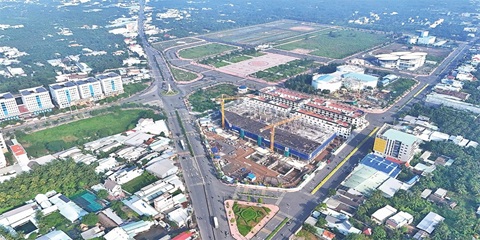
Accelerating public investment, strengthening inter-regional connectivity, and expanding industrial land are helping Dong Thap efficiently bolster competitiveness and drive economic growth. Following the 2025 merger of the former Dong Thap and Tien Giang provinces, the expanded Dong Thap province in the Mekong Delta faces mounting pressure to accelerate infrastructure development and strengthen connectivity among local economic zones, urban areas, industrial parks (IPs), and production centres.
PROPERTY / INDUSTRIAL ZONE
HCM CITY ATTRACTS US$5.7 BILLION INTO EXPORT PROCESSING AND INDUSTRIAL ZONES
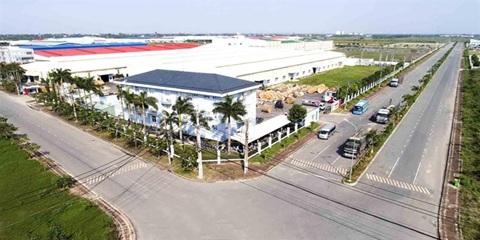
HCM City attracted US$5.7 billion in domestic and foreign investment into its export processing and industrial zones during the first nine months of 2026. The figure exceeded the city's full-year target by 31 per cent, highlighting strong momentum in high-quality industrial investment under Resolution No.10-NQ/TW. Total investment reached 131 per cent of the 2026 target of $4.25 billion and represented a 29 per cent increase compared with the same period in 2025, according to the city's Export Processing and Industrial Zones Authority (HEPZA).

BANKING / FINANCE / INSURANCE / TAX
REMITTANCES TO HCM CITY RISE NEARLY 40% IN Q3
Remittances to HCM City reached more than US$2.83 billion in the third quarter of this year, up 39.5 per cent from the previous quarter and 3.6 per cent year-on-year. This was the first quarter showing positive annual growth this year, helping narrow the decline in remittance inflows over the first nine months. According to the State Bank of Vietnam (SBV)’s Regional Branch 2, remittances transferred to HCM City through credit institutions and economic organisations totalled $2.835 billion in Q3, an increase of more than $802 million from the previous quarter.
VIETNAM ECONOMY INVESTMENT
LOCALITIES REPORT BREAKTHROUGH RESULTS IN FDI IN FIRST NINE MONTHS
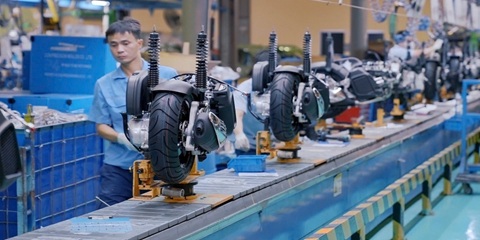
In Ho Chi Minh City, total registered capital reached $17.2 billion in the first nine months, up 4.2 times from the same period last year. The figure included more than $9.35 billion in newly registered capital and over $4.9 billion in additional capital for existing projects. Foreign investors also registered more than $2.9 billion through capital contributions and share purchases.
TECHNOLOGY
TECH SECTOR GROWTH OPENS UP OPPORTUNITIES FOR VIỆT NAM TO GO GLOBAL
The growth of the electronics, semiconductor and high-tech sectors worldwide is opening up a variety of opportunities for Vietnamese enterprises to integrate more deeply into the global supply chain. However, to become suppliers for these corporations, domestic enterprises must meet rigorous standards regarding quality, technology, productivity and order fulfilment capabilities.
Events Sponsors






















