Want to be in the loop?
subscribe to
our notification
Business News
COMPULSORY SOCIAL INSURANCE REQUIRED OF FOREIGN WORKERS IN VIỆT NAM STARTING FROM 2018
Social insurance authorities in Việt Nam are developing a compulsory social insurance scheme for foreign workers in the country, citing the need to follow international practices as the country deepens integration.
Social insurance for foreign workers was made compulsory in the Social Insurance Law 2014, “both to protect the foreign workers’ rights in Việt Nam and to serve as a basis for bilateral and multilateral agreements in which workers’ rights, either Vietnamese or foreigners, are treated equally,” said Trần Đình Liệu, deputy director of the Việt Nam Social Insurance (VSI) at a conference held earlier this week in Hải Phòng to discuss a draft decree on the issue.
“However, the development of the decree is facing numerous issues, such as a consensus on the insurance premium and payout rates, a mutually accessible and synchronised database between countries, as well as currency conversion and tax issues,” he said.
Trần Hải Nam, deputy head of the Social Insurance Department under the Ministry of Labour, Invalids and Social Affairs (MoLISA), cited the increasing number of foreign workers in Việt Nam as justification for detailed legislation on obligatory social insurance.
According to Nam, the number of foreign workers in Việt Nam has jumped nearly sevenfold in more than a decade, from 12,600 in 2004 to the current figure of 84,000, most of whom are highly qualified and fully registered.
The 2014 Law on Social Insurance stipulates that employees who are foreign citizen working in Việt Nam with work permit or practice certificate/licence granted by a Vietnamese agency are entitled to compulsory social insurance.
Hiroshi Karashima, chairman of the Japan Business Association in Việt Nam, said a distinction must be made clear between foreign workers who are obliged to join the social insurance and those who can opt out. He also called for bilateral agreements on social insurance between Việt Nam and other countries so foreign workers won’t have to pay for social insurance in two countries.
According to many businesses, most labourers are on short-term employment or project-based contracts, so they would like to be able to opt for short-term coverage, like illness, maternity, and occupational accidents.
Labourers also want to know if they will receive insurance payouts quickly enough or in the currency of their choosing when their contract ends and they return home. Labourers also complained about the confusing terminology and language of the draft decree.
Phạm Thanh Du, director of VSI’s Finance and Accounting Department, said the nature of social insurance for foreign workers would require social insurance staff to have a good command of foreign languages, IT knowledge, and familiarity with international practices, all of which would require State investment.
Former MoLISA Minister Phạm Minh Huân said social insurance for foreign workers is a necessary move but would “not be easy to implement”, as it involves other countries’ laws. Bilateral agreements are a must, he said, otherwise, foreign workers would not be interested in the insurance, and the implementation would be met with resistance.
The mandatory social insurance decree for foreign workers in Việt Nam is expected to take effect from the beginning of next year, 2018.
Those subject to the decree include foreign workers with employment contracts longer than one month, or those who have obtained work permits from Vietnamese authorities. These workers are required to participate in all five social insurance regimes according to the Law on Social Insurance, which would include sickness, maternity/paternity, occupational accidents or occupational hazards, retirement, and death.
Foreign workers are also eligible for lump-sum payouts.
According to the draft decree, the monthly premium would be 8 per cent of the participant’s monthly salary.
Employers are to pay 18 per cent of their employees’ monthly salary, 3 per cent into sickness and maternity/paternity insurance, 14 per cent into the retirement and death insurance, and 1 per cent into the occupational accidents insurance.
Source: VIR
Related News
VIETNAM ECONOMY INVESTMENT
FOREIGN INVESTORS SEEKING A SYNCHRONISED MANUFACTURING ECOSYSTEM
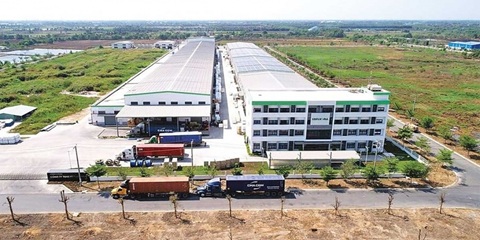
Instead of focusing only on land costs and incentives as usual, foreign investors are seeking a synchronised manufacturing ecosystem, from stable power supply and logistics to shared infrastructure and the convenience of completing residence procedures for experts to serve their long-term investment in the country.
INFRASTRUCTURE / CONSTRUCTION / LOGISTIC / PORT
DONG THAP PROVINCE STEPS UP INDUSTRIAL EXPANSION AND INFRASTRUCTURE CONNECTIVITY
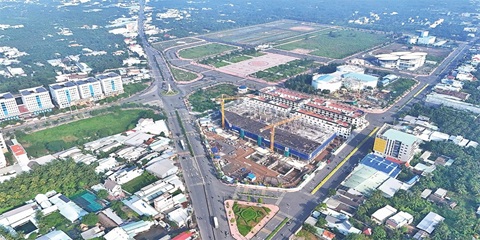
Accelerating public investment, strengthening inter-regional connectivity, and expanding industrial land are helping Dong Thap efficiently bolster competitiveness and drive economic growth. Following the 2025 merger of the former Dong Thap and Tien Giang provinces, the expanded Dong Thap province in the Mekong Delta faces mounting pressure to accelerate infrastructure development and strengthen connectivity among local economic zones, urban areas, industrial parks (IPs), and production centres.
PROPERTY / INDUSTRIAL ZONE
HCM CITY ATTRACTS US$5.7 BILLION INTO EXPORT PROCESSING AND INDUSTRIAL ZONES
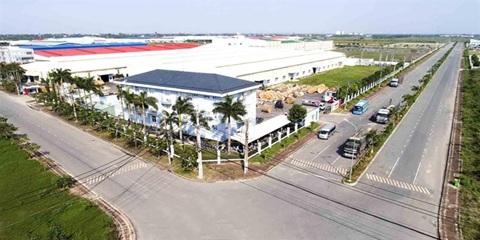
HCM City attracted US$5.7 billion in domestic and foreign investment into its export processing and industrial zones during the first nine months of 2026. The figure exceeded the city's full-year target by 31 per cent, highlighting strong momentum in high-quality industrial investment under Resolution No.10-NQ/TW. Total investment reached 131 per cent of the 2026 target of $4.25 billion and represented a 29 per cent increase compared with the same period in 2025, according to the city's Export Processing and Industrial Zones Authority (HEPZA).

BANKING / FINANCE / INSURANCE / TAX
REMITTANCES TO HCM CITY RISE NEARLY 40% IN Q3
Remittances to HCM City reached more than US$2.83 billion in the third quarter of this year, up 39.5 per cent from the previous quarter and 3.6 per cent year-on-year. This was the first quarter showing positive annual growth this year, helping narrow the decline in remittance inflows over the first nine months. According to the State Bank of Vietnam (SBV)’s Regional Branch 2, remittances transferred to HCM City through credit institutions and economic organisations totalled $2.835 billion in Q3, an increase of more than $802 million from the previous quarter.

VIETNAM ECONOMY INVESTMENT
LOCALITIES REPORT BREAKTHROUGH RESULTS IN FDI IN FIRST NINE MONTHS
In Ho Chi Minh City, total registered capital reached $17.2 billion in the first nine months, up 4.2 times from the same period last year. The figure included more than $9.35 billion in newly registered capital and over $4.9 billion in additional capital for existing projects. Foreign investors also registered more than $2.9 billion through capital contributions and share purchases.

TECHNOLOGY
TECH SECTOR GROWTH OPENS UP OPPORTUNITIES FOR VIỆT NAM TO GO GLOBAL
The growth of the electronics, semiconductor and high-tech sectors worldwide is opening up a variety of opportunities for Vietnamese enterprises to integrate more deeply into the global supply chain. However, to become suppliers for these corporations, domestic enterprises must meet rigorous standards regarding quality, technology, productivity and order fulfilment capabilities.
Events Sponsors