Want to be in the loop?
subscribe to
our notification
Business News
CHINA IMPORTS $1.4 BILLION OF VIETNAMESE SEAFOOD IN FIRST HALF OF 2026
Stronger demand from China – Vietnam's largest shrimp export destination – is creating fresh momentum for the industry's growth amid continuing uncertainty in the US market.
According to the Ministry of Agriculture and Environment (MAE), China continued to increase imports of Vietnamese seafood, particularly shrimp, in the first half of 2026, the ministry reported on July 13.
Vietnam exported more than $5.7 billion worth of seafood in the first half of 2026, up 11.4 per cent from a year earlier. China accounted for nearly $1.4 billion of the total, making it Vietnam’s largest seafood export market, while shipments to the US reached almost $898 million.
Including Hong Kong, exports to the Greater China market totalled around $1.5 billion, an increase of nearly 38 per cent from a year earlier. Japan ranked third with almost $788 million, posting a slight increase over the same period.
According to the Import-Export Department under the MAE, despite the double-digit growth, seafood exporters continue to face multiple challenges, including tighter technical requirements in key export markets, rising production costs, and climate-related risks.
Higher feed, energy, logistics, and freight costs continue to weigh on businesses, while climate change and saltwater intrusion in the Mekong Delta are affecting aquaculture production, highlighting the need for more resilient and fully traceable raw material supply chains.
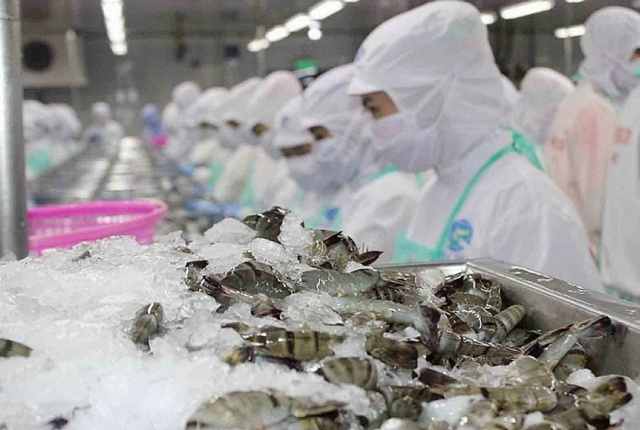
Photo: VASEP
Le Hang, deputy secretary general of the Vietnam Association of Seafood Exporters and Producers (VASEP), said many exporters have shifted their focus towards China as the US and Europe tighten trade barriers.
“Besides having less stringent import requirements, China enjoys a significant geographical advantage, helping reduce logistics costs and delivery times. For live seafood products, exporters can ship goods through border crossings, making preservation easier and more cost-efficient,” she said.
Meanwhile, exports to the US continue to face mounting challenges. According to VASEP, stricter enforcement of the Marine Mammal Protection Act (MMPA) has required exporters of wild-caught seafood to provide additional Certificates of Admissibility (COA), with particularly complicated procedures affecting tuna shipments. Vietnamese shrimp also continues to face high anti-dumping duties.
In addition, a surge in shipments to the US ahead of the implementation of new tariff policies has resulted in rising inventories, while American consumers have become more cautious with spending and increasingly favour lower-priced products. These factors have left seafood exports to the US largely flat during the first half of the year.
VASEP noted that the industry’s export growth in the first six months reflected improving global demand and the ability of Vietnamese exporters to adapt by diversifying markets and adjusting product portfolios. At the same time, overseas buyers have become increasingly cautious, placing smaller and shorter-term orders while demanding more competitive prices and stricter compliance with quality, certification, and traceability standards.
Shrimp remained Vietnam’s largest seafood export, generating approximately $2.3 billion in export revenue during the first half of the year, up 13.6 per cent and accounting for more than 40 per cent of total seafood exports. Growth was driven mainly by demand from mainland China and Hong Kong.
Lobster was among the products seeing the strongest increase in purchases from both markets. Basa fish exports reached around $1.1 billion, up 12.1 per cent, continuing to benefit from competitive pricing and stable global demand for whitefish.
However, the outlook for the second half of the year remains uncertain. Hang said seafood exporters continue to face the risk of additional US trade protection measures and non-tariff barriers, ranging from regulations related to forced labour to the possible introduction of import quotas on certain products. At the same time, refrigerated container freight rates have begun rising again, posing another major challenge for the industry in the coming months.
“In the face of rapidly changing trade policies, businesses have little choice but to continuously monitor market developments, adjust their export strategies, diversify export markets, and increase the share of value-added processed products to mitigate risks and sustain growth,” Hang added.
Source: VIR
Related News

CHARITY / EXHIBITION / OTHER EVENTS
INVESTMENT OPPORTUNITIES IN CA MAU PROVINCE: 96 PROJECTS AND 20 STRATEGIC PROJECTS
We are pleased to share with you information on investment projects currently seeking investors in Ca Mau Province. Should your esteemed company or association be interested, we kindly invite you to review the project information and complete the registration form via the links provided. The Ho Chi Minh City Investment and Trade Promotion Centre (ITPC) will consolidate the expressions of interest and facilitate connections with the leadership of Ca Mau Province at a meeting tentatively scheduled for 13 November 2026 in Ho Chi Minh City.

MEMBER CORNER / PROMOTIONS
BẰNG KIỀU LIVESHOW - A SYMPHONY OF LOVE UNDER THE GOLDEN GLOW
A masterclass in live music that takes the audience on a soulful journey through immortal love songs, guided by the peerless artistry and emotive storytelling of renowned singer Bằng Kiều. The highlight of the night is his seamless musical chemistry with special guest Triệu Hồng Ngọc, promising passionate and deeply resonant duets inside the magnificent Grand Ballroom.

INFRASTRUCTURE / CONSTRUCTION / LOGISTIC / PORT
ĐÀ NẴNG GREEN-LIGHTS US$105 MILLION THAI DEVELOPMENT DEAL
The central city has approved an investment proposal by Thailand’s WHA Group to develop infrastructure for the 400ha WHA Đà Nẵng Industrial Park project on two communes of Thăng Bình and Đồng Dương, with an investment of more than VNĐ2.7 trillion (US$105 million). The city said it approved WHA Industrial Development International's status as an investor in the project, which is expected to take place between 2027 and 2034.

VIETNAM ECONOMY INVESTMENT
MOBILE PHONE EXPORTS RISE 20% TO $51.8 BILLION IN FIRST NINE MONTHS
Exports of mobile phones and components rose 20 per cent year-on-year to nearly US$51.8 billion in the first nine months of 2026, with China, the US and Republic of Korea accounting for more than half of the total. Shipments to the three markets reached a combined $26.18 billion, or 50.6 per cent of total exports of the product group during the period, according to data from the Vietnam Department of Customs under the Ministry of Finance.

INFRASTRUCTURE / CONSTRUCTION / LOGISTIC / PORT
VIỆT NAM-CAMBODIA TRADE GATHERS PACE TOWARDS $20 BILLION TARGET
Trade between Việt Nam and Cambodia continues to grow, remaining a bright spot and a key pillar of bilateral cooperation as the two countries aim to raise two-way trade to US$20 billion in the coming years. After setting a record of more than $11.3 billion last year, bilateral trade reached about $8.7 billion in the first eight months of this year, up 8.3 per cent year on year.

VIETNAM ECONOMY INVESTMENT
FRUIT AND VEGETABLE EXPORTS POISED TO HIT $10 BILLION IN 2026
Fruit and vegetable exports are on track to reach nearly US$10 billion in 2026, after rising 19.9 per cent year on year to nearly US$7.4 billion in the first nine months, driven by strong seasonal demand and abundant tropical fruit supplies. The Ministry of Agriculture and Environment said the growth reflected stronger international demand for fresh produce and processed agricultural products.
Events Sponsors






















