Want to be in the loop?
subscribe to
our notification
Business News
BANK CAPITAL CONTRIBUTION NEEDS INVESTIGATION TO PREVENT CROSS-OWNERSHIP
It is necessary to investigate the investment and capital contribution of individuals or economic organisations related big bosses in the banking sector to prevent cross-ownership and manipulative ownership in banks, experts said.
At a recent workshop on building sustainable financial groups in Việt Nam, lawyer Trương Thanh Đức, Director of ANVI Law Firm, said that the 2024 Law on Credit Institutions supplements many regulations on strengthening the prevention of cross-investment, cross-ownership and manipulative ownership in credit institutions, but no matter how strict the law is, the most important step is implementation and supervision.
According to Đức, whether the law is strict or loose, the most important thing is that banks, shareholders and customers must respect and follow the principles and standards. In addition, inspection and supervision of management authorities must be strengthened to ensure the effectiveness and validity of the law.
According to experts, in Việt Nam, there is a situation whereby an individual, who is the bank’s existing shareholder, can circumvent ownership regulations by asking someone else to hold more of the bank and is its 'name' on paper, but in fact the individual is real owner. Management authorities are having a headache dealing with the situation, while many experts are also worry about the effectiveness of the law.
Banking expert Dr. Nguyễn Trí Hiếu said that due to the situation, management authorities could not control over the real ownership of an individual or an economic organisation in a bank.
However, Hiếu said management authorities can still unveil violation cases if they do it drastically. Investigating the relationship of bank-related people is not so difficult.
Lawyer Nguyễn Thanh Hà, Chairman of SBLAW Law Firm, also said there could be a situation where an employee is the name of the bank owner, but only on paper for their boss in a ‘backyard’ company due to pressure from their leader. Normally, such a ‘backyard’ company will have two boards of directors, in which the real leader is the bank owner. The employee only has the duty of signing on behalf of the leader, but does not have the right to make decisions, leading to major legal consequences.
According to expert Dr Lê Xuân Nghĩa, it is necessary to investigate the cash flow of big bosses investing in the banking sector to control the source of cross-ownership.
In addition, Nghĩa said, management authorities should tightly manage the cash flow of ‘backyard’ loans of bank owners.
Regarding the financial group model in Việt Nam, Phạm Xuân Hòe, former deputy director of the Banking Strategy Institute, said the limitation of this model is the intricate cross-ownership. In a non-transparent environment, it is extremely difficult to control. Under this model, it is easy to flow capital to ‘backyard’ companies or offer unfair and non-transparent preferences, which pose risks throughout the system.
According to Hòe, statistics on the capital assets of 11 large financial groups in Việt Nam show that their assets are nearly VNĐ14 quadrillion, accounting for about 67 per cent of the total value of the nation’s entire financial group system. Their outstanding loans are VNĐ9.9 quadrillion, accounting for 67.3 per cent of the total outstanding loans.
Source: VNS
Related News
VIETNAM ECONOMY INVESTMENT
FOREIGN INVESTORS SEEKING A SYNCHRONISED MANUFACTURING ECOSYSTEM
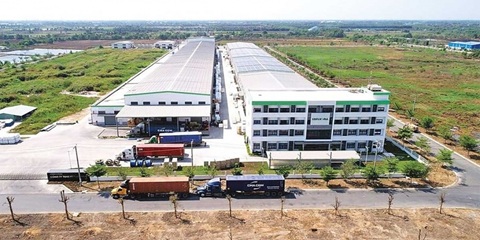
Instead of focusing only on land costs and incentives as usual, foreign investors are seeking a synchronised manufacturing ecosystem, from stable power supply and logistics to shared infrastructure and the convenience of completing residence procedures for experts to serve their long-term investment in the country.

INFRASTRUCTURE / CONSTRUCTION / LOGISTIC / PORT
DONG THAP PROVINCE STEPS UP INDUSTRIAL EXPANSION AND INFRASTRUCTURE CONNECTIVITY
Accelerating public investment, strengthening inter-regional connectivity, and expanding industrial land are helping Dong Thap efficiently bolster competitiveness and drive economic growth. Following the 2025 merger of the former Dong Thap and Tien Giang provinces, the expanded Dong Thap province in the Mekong Delta faces mounting pressure to accelerate infrastructure development and strengthen connectivity among local economic zones, urban areas, industrial parks (IPs), and production centres.
PROPERTY / INDUSTRIAL ZONE
HCM CITY ATTRACTS US$5.7 BILLION INTO EXPORT PROCESSING AND INDUSTRIAL ZONES
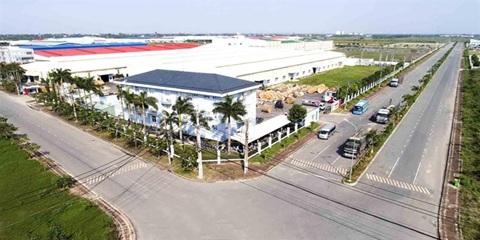
HCM City attracted US$5.7 billion in domestic and foreign investment into its export processing and industrial zones during the first nine months of 2026. The figure exceeded the city's full-year target by 31 per cent, highlighting strong momentum in high-quality industrial investment under Resolution No.10-NQ/TW. Total investment reached 131 per cent of the 2026 target of $4.25 billion and represented a 29 per cent increase compared with the same period in 2025, according to the city's Export Processing and Industrial Zones Authority (HEPZA).

BANKING / FINANCE / INSURANCE / TAX
REMITTANCES TO HCM CITY RISE NEARLY 40% IN Q3
Remittances to HCM City reached more than US$2.83 billion in the third quarter of this year, up 39.5 per cent from the previous quarter and 3.6 per cent year-on-year. This was the first quarter showing positive annual growth this year, helping narrow the decline in remittance inflows over the first nine months. According to the State Bank of Vietnam (SBV)’s Regional Branch 2, remittances transferred to HCM City through credit institutions and economic organisations totalled $2.835 billion in Q3, an increase of more than $802 million from the previous quarter.

VIETNAM ECONOMY INVESTMENT
LOCALITIES REPORT BREAKTHROUGH RESULTS IN FDI IN FIRST NINE MONTHS
In Ho Chi Minh City, total registered capital reached $17.2 billion in the first nine months, up 4.2 times from the same period last year. The figure included more than $9.35 billion in newly registered capital and over $4.9 billion in additional capital for existing projects. Foreign investors also registered more than $2.9 billion through capital contributions and share purchases.

TECHNOLOGY
TECH SECTOR GROWTH OPENS UP OPPORTUNITIES FOR VIỆT NAM TO GO GLOBAL
The growth of the electronics, semiconductor and high-tech sectors worldwide is opening up a variety of opportunities for Vietnamese enterprises to integrate more deeply into the global supply chain. However, to become suppliers for these corporations, domestic enterprises must meet rigorous standards regarding quality, technology, productivity and order fulfilment capabilities.
Events Sponsors






















