Want to be in the loop?
subscribe to
our notification
Business News
BALANCING GROWTH IN IPS AMID SURGING FDI
As Vietnam continues its path toward integration and modernization, industrial parks (IPs) and economic zones (EZs) are playing a pivotal role in driving economic growth, attracting foreign direct investment (FDI), and generating large-scale employment.
Formed through a cooperation model between Vietnam and Singapore, VSIP now operates 20 IPs in Vietnam, covering more than 14,000 ha. It has attracted over 900 FDI projects from 30 countries and territories, generating around 300,000 jobs.
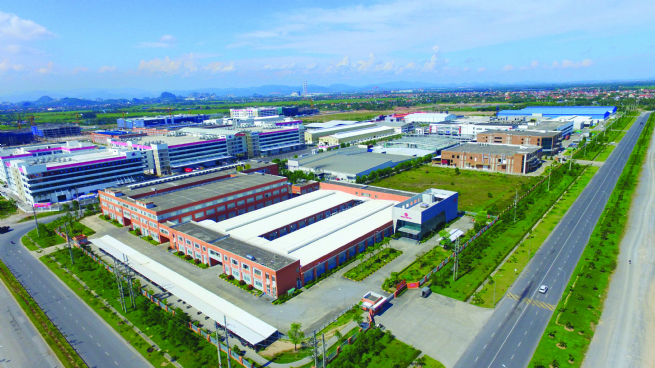
After over 30 years in Vietnam, Amata has established a strong reputation. With 3,000 ha of industrial, commercial, and service land, it has drawn over 220 multinational corporations with total investment exceeding US$6.7 billion, creating more than 60,000 jobs.
Competitive edge of Vietnam’s IPs
One of the most significant advantages propelling Vietnam’s IPs and EZs in the race to attract global investment is their strategic geographical location. Deep C sits adjacent to the Lach Huyen deep-water port and connects directly to the Hanoi–Hai Phong Expressway. VSIP projects in Binh Duong, now integrated into the administrative boundaries of Ho Chi Minh City, have become a key transit hub in the Southern supply chain. Meanwhile, Amata in Dong Nai enjoys seamless access to the Cai Mep–Thi Vai International Port, one of the region’s most critical export gateways.
In the North, Texhong Hai Ha leverages its proximity to the Mong Cai International Border Gate, while Nam Son – Hap Linh and Yen Phong benefit from their close distance to Noi Bai International Airport. Quang Yen EZ is strategically located along the Quang Ninh–Hai Phong–Hanoi economic corridor, and Van Don EZ stands out with a comprehensive infrastructure complex including an international airport and the Van Don–Mong Cai expressway, opening up multidimensional logistics connectivity.
Beyond location, Vietnam’s IPs and EZs are also advancing through increasingly modern and synchronized technical infrastructure. Deep C features a rare liquid cargo jetty in Northern Vietnam capable of handling 20,000 DWT vessels. VSIP incorporates an integrated model of industry, urban living, and services, creating a livable and efficient environment for professionals and high-skilled workers. Amata Dong Nai has invested in state-of-the-art wastewater treatment systems that meet stringent environmental standards.
Infrastructure aside, investment incentives and institutional reforms are key drivers enhancing the appeal of Vietnam’s IPs and EZs. Those located in key economic regions, such as Deep C and Van Don, offer corporate income tax exemptions for the first two years and a 50% reduction over the following four years. Notably, effective from January 15, 2025, the revised Law amending four major laws (Planning, Investment, PPP, and Bidding) introduces a "special investment mechanism" that can shorten procedures by up to 260 days, a major leap in improving the investment climate.
Another notable strength of Vietnam’s IPs and EZs is their capacity to foster diverse and self-sustaining industrial ecosystems. VSIP Trang Due has attracted over 50 supporting firms for LG, while Yen Phong has become a leading electronics manufacturing hub anchored by Samsung. Amata and Texhong Hai Ha are positioning themselves as high-tech centers, catering to streamlined, high-standard production needs.
Strategic shift needed to sustain momentum
One of the most pressing bottlenecks lies in the quality of human resources. FDI enterprises, especially in high-tech sectors such as semiconductors and artificial intelligence, frequently report a mismatch between recruitment needs and the training quality provided by educational institutions. The connection between academia and industry remains weak, resulting in an oversupply of low-skilled labor and a shortage of technically trained workers.
Rapid expansion has placed significant strain on infrastructure in many IPs, particularly in the Mekong Delta and North Central regions. Frequent power shortages, traffic congestion on key transport routes, and delays in planning approvals have all impacted project timelines and investor confidence.
Environmental infrastructure remains another critical shortfall. Statistics indicate that approximately 15% of IPs in Vietnam still lack centralized wastewater treatment systems, a concerning figure given the global shift toward sustainable development standards.
In the increasingly competitive race for global investment, Vietnam is under mounting pressure from countries like Indonesia and India, both of which are rapidly improving their incentive policies and ramping up infrastructure and workforce investments in high-tech sectors. Meanwhile, domestic linkages between Vietnamese firms and FDI enterprises remain weak.
To maintain investor appeal and elevate the stature of its IPs and EZs, Vietnam must implement a broad array of strategic solutions. First and foremost, a new model of collaboration should be built among IPs, businesses, and educational institutions to align training with market demands, especially in digital and core technology fields. Infrastructure investment must be holistic, encompassing power supply, transportation, and waste treatment, while also prioritizing renewable energy and circular economy practices.
Source: VCCI
Related News

BANKING / FINANCE / INSURANCE / TAX
REMITTANCES TO HCM CITY RISE NEARLY 40% IN Q3
Remittances to HCM City reached more than US$2.83 billion in the third quarter of this year, up 39.5 per cent from the previous quarter and 3.6 per cent year-on-year. This was the first quarter showing positive annual growth this year, helping narrow the decline in remittance inflows over the first nine months. According to the State Bank of Vietnam (SBV)’s Regional Branch 2, remittances transferred to HCM City through credit institutions and economic organisations totalled $2.835 billion in Q3, an increase of more than $802 million from the previous quarter.
TECHNOLOGY
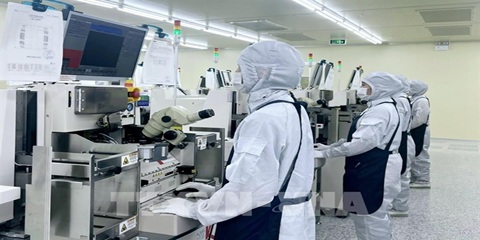
TECH SECTOR GROWTH OPENS UP OPPORTUNITIES FOR VIỆT NAM TO GO GLOBAL
The growth of the electronics, semiconductor and high-tech sectors worldwide is opening up a variety of opportunities for Vietnamese enterprises to integrate more deeply into the global supply chain. However, to become suppliers for these corporations, domestic enterprises must meet rigorous standards regarding quality, technology, productivity and order fulfilment capabilities.
VIETNAM ECONOMY INVESTMENT
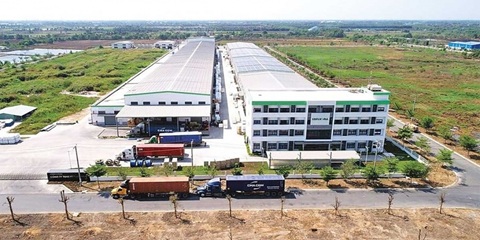
FOREIGN INVESTORS SEEKING A SYNCHRONISED MANUFACTURING ECOSYSTEM
Instead of focusing only on land costs and incentives as usual, foreign investors are seeking a synchronised manufacturing ecosystem, from stable power supply and logistics to shared infrastructure and the convenience of completing residence procedures for experts to serve their long-term investment in the country.
MEMBER CORNER / PROMOTIONS
SENTRYSAFE FHW40200 – PROTECT YOUR VALUABLES, ENJOY PEACE OF MIND!
Looking for a reliable solution to protect your important documents, cash, and valuables from fire and water damage? Genuine SENTRYSAFE - Reliable protection for your valuables and peace of mind! Contact Sen Wai Vietnam for more information and personalized product recommendations.
PROPERTY / INDUSTRIAL ZONE
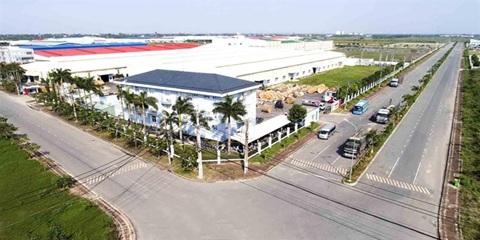
HCM CITY ATTRACTS US$5.7 BILLION INTO EXPORT PROCESSING AND INDUSTRIAL ZONES
HCM City attracted US$5.7 billion in domestic and foreign investment into its export processing and industrial zones during the first nine months of 2026. The figure exceeded the city's full-year target by 31 per cent, highlighting strong momentum in high-quality industrial investment under Resolution No.10-NQ/TW. Total investment reached 131 per cent of the 2026 target of $4.25 billion and represented a 29 per cent increase compared with the same period in 2025, according to the city's Export Processing and Industrial Zones Authority (HEPZA).
INFRASTRUCTURE / CONSTRUCTION / LOGISTIC / PORT
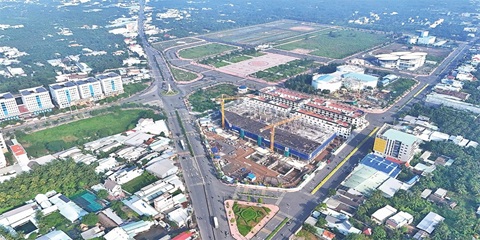
DONG THAP PROVINCE STEPS UP INDUSTRIAL EXPANSION AND INFRASTRUCTURE CONNECTIVITY
Accelerating public investment, strengthening inter-regional connectivity, and expanding industrial land are helping Dong Thap efficiently bolster competitiveness and drive economic growth. Following the 2025 merger of the former Dong Thap and Tien Giang provinces, the expanded Dong Thap province in the Mekong Delta faces mounting pressure to accelerate infrastructure development and strengthen connectivity among local economic zones, urban areas, industrial parks (IPs), and production centres.
Events Sponsors






















