Want to be in the loop?
subscribe to
our notification
Business News
AGRITOURISM BECOMES MORE POPULAR
Agriculture tourism (agritourism) and rural tourism in Việt Nam, where tourists can engage in farm activities, have been attracting many visitors, helping local farmers increase their incomes and enhance the quality of Vietnamese agricultural products.
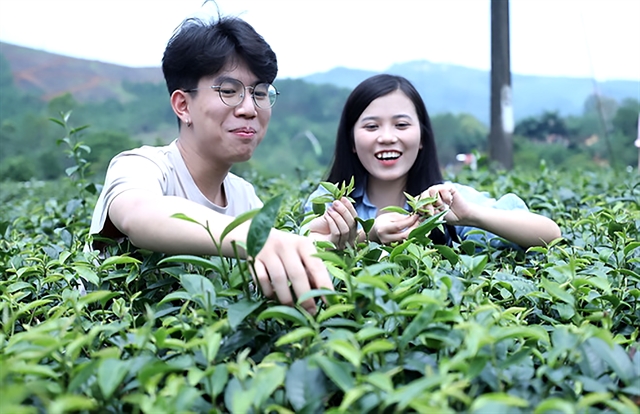
Agritourism attracts may visitors, helping local farmers improve their income. -- VNA/VNS Photo Tuấn Anh
Agriculture tourism (agritourism) and rural tourism in Việt Nam, where tourists can engage in farm activities, have been attracting many visitors, helping local farmers increase their incomes and enhance the quality of Vietnamese agricultural products.
The trend of agricultural and rural tourism is not only growing in many countries worldwide but is particularly suitable for Việt Nam, a country with vast agricultural land where over 62.7 per cent of the population lives in rural areas.
Sharing with Việt Nam News, Varun Grover, country head, Việt Nam at Booking.com said that travellers today are increasingly seeking authentic, immersive and sustainable experiences that connect them with local communities and heritage. This trend is gaining traction among travellers across the world who are increasingly being drawn to responsible tourism practices.
Booking.com's 2024 Sustainable Travel Report underscores this trend in Việt Nam, with 96 per cent of surveyed travellers confirming the importance of sustainable travel and 94 per cent expressing a desire to make more sustainable choices in the next 12 months.
Notably, 21 per cent are motivated to act more sustainably simply because they believe it’s the right thing to do.
Furthermore, the 2024 Holiday Homes Outlook Report highlights the appeal of farm stays (28 per cent) and country cottages (21 per cent) among Vietnamese travellers. This aligns with the broader movement towards green and responsible tourism, where travellers seek deeper connections with destinations, embrace diverse cultures and support local economies.
Việt Nam's rich agricultural heritage, diverse landscapes, the beauty of its rural areas and warm hospitality provide a great foundation for agritourism development. Furthermore, the emphasis on community-based tourism, the desire to support local economies and the growing demand for eco-friendly travel options enhances Việt Nam’s potential in this area, Varun Grover told Việt Nam News.
Previously concentrated in rural areas, agritourism has now become popular in regions near urban centres and major cities. Tourist areas are centred around organic agriculture production, closely linked with craft villages and natural landscapes.
These models offer more than just sightseeing and rural experiences; they also involve activities like participating in the agricultural production process, learning modern farming techniques, and taking cooking classes to prepare food using clean agricultural products.

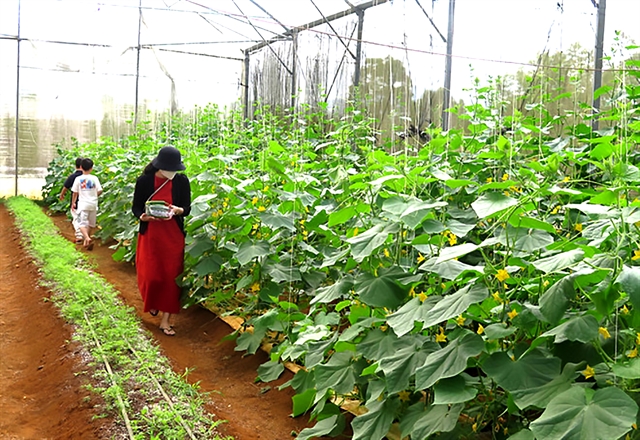
Visitors visit a farm in Măng Đen - a small town in Central Highland Kon Tum Province. -- VNA/VNS Photo Dư Toán
Daidoanket.vn quoted information from the Ministry of Agriculture and Rural Development, saying that the number of visitors participating in agricultural rural activities is increasing.
While income from agricultural production contributes around 27 per cent to total rural income, non-agricultural production and service activities make up the remaining 73 per cent.
Agricultural tourism models involving local residents have enriched the variety and appeal of tourism products and brought higher incomes to rural communities. This approach serves as a means to alleviate poverty and promote sustainable development in challenging regions and rural areas across the country.
Ngô Kiều Oanh, a passionate scientist dedicated to preserving Vietnamese traditional culture, was determined to establish an agricultural and rural tourism model in the foothills of Ba Vì, an area known for its many traditional agricultural craft villages.
"The farm is closely connected with the surrounding farming community to provide interesting information to tourists, while also serving as a promotional unit for agricultural products from the Ba Vì and Sơn Tây regions in particular, and Hà Nội in general. This is a form of development that harmonises nature, culture, and people in urban areas with rural areas, through living, vacationing, admiring scenic beauty, and enjoying fresh local specialities within a cosy family and village atmosphere," Oanh shared.
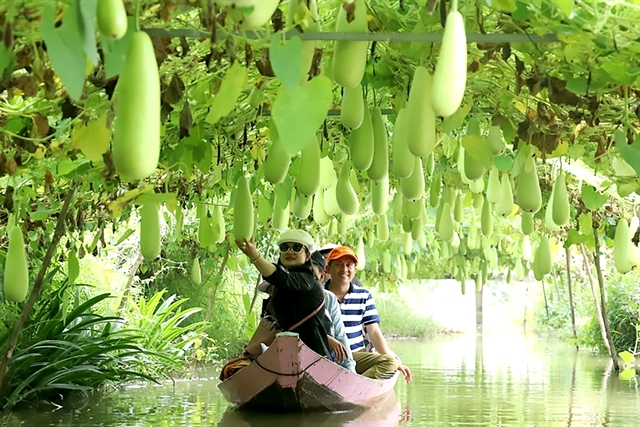
Visitors join in a farming trip in Đồng Tháp Province. Việt Nam's rich agricultural heritage, diverse landscapes, the beauty of its rural areas and warm hospitality provide a great foundation for agritourism development. -- VNA/VNS Photo Văn Trí
Nguyễn Quang Đăng from the Institute for Tourism Development Research describes this unique form of tourism as a combination of cultural experiences and natural environments in rural settings. It encompasses activities such as farm tourism, agricultural tourism, craft village tourism, festival tourism, and ecotourism, provided by farmers and rural communities to attract and serve tourists.
"The experiences from rural tourism activities, such as fishing in ponds, picking tea leaves to make tea, grinding rice with a traditional mortar to make rice paper, all bring about surprising and enjoyable experiences that evoke memories of childhood, making travel more meaningful," Đăng explained.
Comprehensive development
Developing agritourism and rural tourism is a key focus of the National Target Programme for New Rural Development 2021-25.
The programme aims to foster active participation from people, communities, enterprises, co-operatives, and other economic organisations in the effective development of rural tourism through value chain linkages.
For sustainable rural tourism development, Ngô Kiều Oanh stressed the importance of comprehensive engagement from all involved parties, including local authorities and the community. Understanding and valuing the beauty and significance of rural tourism products are critical for those in the tourism sector.
Most importantly, those involved in tourism need to truly understand and appreciate the beauty and value of rural tourism products that they and their localities are preserving and developing.
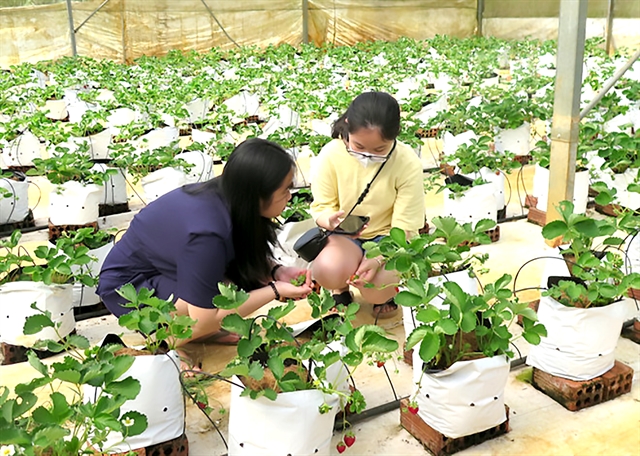
Two young people study high-tech agriculture on a farm. -- VNA/VNS Photo Dư Toán
Phạm Hương Trang underlines the necessity of well-established service spaces for successful agricultural tourism activities, including farms, fields, orchards, traditional craft villages, and culturally rich rural areas.
The crucial involvement of the local community is essential in sharing cultural values and creating unique tourism experiences. By linking the One Commune One Product (OCOP) programme with community tourism services, destinations can enhance their appeal and sustainability.
Integrated rural tourism products with large travel agencies and tourism centres, innovative promotional strategies, and leveraging digital technology are essential for attracting tourists and enhancing their sensory experiences when engaging with promoted tourism products.
In a sharing with media, Đinh Tuấn Hà, director of the non-profit OTA project, noted the need for a clear legal framework to comprehensively manage and develop agricultural tourism models. Establishing these concepts in legal documents provides a foundation for resource utilisation and oversight, fostering effective and sustainable agricultural tourism development. – VNS
Source: VNS
Related News
VIETNAM ECONOMY INVESTMENT
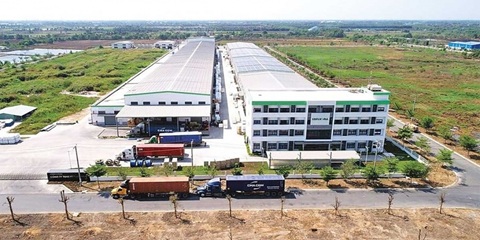
FOREIGN INVESTORS SEEKING A SYNCHRONISED MANUFACTURING ECOSYSTEM
Instead of focusing only on land costs and incentives as usual, foreign investors are seeking a synchronised manufacturing ecosystem, from stable power supply and logistics to shared infrastructure and the convenience of completing residence procedures for experts to serve their long-term investment in the country.
INFRASTRUCTURE / CONSTRUCTION / LOGISTIC / PORT
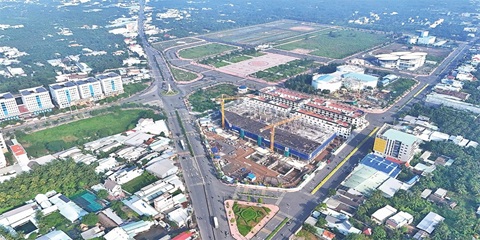
DONG THAP PROVINCE STEPS UP INDUSTRIAL EXPANSION AND INFRASTRUCTURE CONNECTIVITY
Accelerating public investment, strengthening inter-regional connectivity, and expanding industrial land are helping Dong Thap efficiently bolster competitiveness and drive economic growth. Following the 2025 merger of the former Dong Thap and Tien Giang provinces, the expanded Dong Thap province in the Mekong Delta faces mounting pressure to accelerate infrastructure development and strengthen connectivity among local economic zones, urban areas, industrial parks (IPs), and production centres.
PROPERTY / INDUSTRIAL ZONE
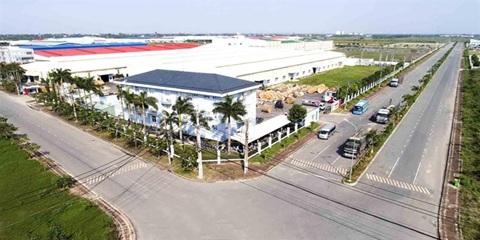
HCM CITY ATTRACTS US$5.7 BILLION INTO EXPORT PROCESSING AND INDUSTRIAL ZONES
HCM City attracted US$5.7 billion in domestic and foreign investment into its export processing and industrial zones during the first nine months of 2026. The figure exceeded the city's full-year target by 31 per cent, highlighting strong momentum in high-quality industrial investment under Resolution No.10-NQ/TW. Total investment reached 131 per cent of the 2026 target of $4.25 billion and represented a 29 per cent increase compared with the same period in 2025, according to the city's Export Processing and Industrial Zones Authority (HEPZA).

BANKING / FINANCE / INSURANCE / TAX
REMITTANCES TO HCM CITY RISE NEARLY 40% IN Q3
Remittances to HCM City reached more than US$2.83 billion in the third quarter of this year, up 39.5 per cent from the previous quarter and 3.6 per cent year-on-year. This was the first quarter showing positive annual growth this year, helping narrow the decline in remittance inflows over the first nine months. According to the State Bank of Vietnam (SBV)’s Regional Branch 2, remittances transferred to HCM City through credit institutions and economic organisations totalled $2.835 billion in Q3, an increase of more than $802 million from the previous quarter.

VIETNAM ECONOMY INVESTMENT
LOCALITIES REPORT BREAKTHROUGH RESULTS IN FDI IN FIRST NINE MONTHS
In Ho Chi Minh City, total registered capital reached $17.2 billion in the first nine months, up 4.2 times from the same period last year. The figure included more than $9.35 billion in newly registered capital and over $4.9 billion in additional capital for existing projects. Foreign investors also registered more than $2.9 billion through capital contributions and share purchases.

TECHNOLOGY
TECH SECTOR GROWTH OPENS UP OPPORTUNITIES FOR VIỆT NAM TO GO GLOBAL
The growth of the electronics, semiconductor and high-tech sectors worldwide is opening up a variety of opportunities for Vietnamese enterprises to integrate more deeply into the global supply chain. However, to become suppliers for these corporations, domestic enterprises must meet rigorous standards regarding quality, technology, productivity and order fulfilment capabilities.
Events Sponsors