Want to be in the loop?
subscribe to
our notification
Business News
ADVANCING 5G NETWORK COMMERCIALIZATION
Once in operation, the 5G mobile network will have great impacts on socioeconomic development, especially in realizing digital transformation goals, empowering innovations and enhancing productivity in all fields.
With such great potential, Vietnam's Ministry of Information and Communications (MIC) is establishing necessary legal corridors and business support mechanisms to promote the deployment of 5G applications.
To commercialize 5G nationwide, in 2019, MIC granted testing licenses to carriers and issued many support policies to promote 5G network and application development. Meanwhile, Vietnamese telecom firms have also constantly invested, researched and implemented many activities to develop and expand 5G network operations.
Policy races to meet 5G
The ministry determined to commercialize 5G nationwide. To achieve this goal, the most difficult matters regarding frequency were solved by the ministry after a successful auction of radio frequency rights for two band blocks B1 (2500-2600 MHz) and C2 (3700 MHz-3800 MHz) in March 2024, after 15 years of regulations on radio frequency auctions in the 2009 Radio Frequency Law.
At the recent Vietnam - Asia DX Summit 2024, Mr. Nguyen Anh Cuong, Director of Economic Department, Vietnam Telecommunications Authority under the Ministry of Information and Communications, said: “This is an event of great significance, a result of efforts to remove major difficulties in frequency band auctions, and a basis for developing digital infrastructure to serve national digital transformation.”
“The C3 frequency band block will also be auctioned soon. In addition, in the near future, MIC will also plan to auction the frequency spectrum 700 to serve 5G network technology,” he added.
Previously, on January 11, 2024, the Prime Minister ratified Vietnam's information and communications infrastructure planning for the 2021-2030 period, with a vision to 2050, in Decision 36/QD-TTg dated.
According to the plan, by 2025, the average download speed will be at least 100 Mbps for the 5G network, and by 2030, the 5G network will cover 99% of the population, aiming to develop the next generation of advanced mobile networks. To realize these goals, 2024 is considered an ideal time to license 5G commercial spectrum bands.
To date, MIC has granted frequency licenses to deploy 5G networks to two carriers, Viettel and VNPT.
In order to facilitate network infrastructure development, especially the construction and installation of transceiver stations, the amended Telecommunications Law 2023 expanded mechanisms and policies to remove difficulties in the shared use of infrastructure and infrastructure deployment on public land. In addition, MIC is finalizing a circular to remove problems in rent management and shared use of infrastructure.
In addition to the above policies, MIC established a 5G Innovation Facility with the purpose of displaying and demonstrating typical technologies and applications of telecommunications carriers and technology businesses; providing an environment for testing applications and services of Vietnam's digital ecosystem infrastructure; acting as a bridge for public enterprises and telecom carriers; and supporting network operators to develop new technologies and apply digital infrastructure for key national industries and fields.
MIC also proposed to develop a National Key Laboratory Project for testing the quality of equipment and goods on the list of potentially unsafe products according to technical regulations adopted by MIC, measuring and testing the quality of telecom services and testing the safety of exposure to electromagnetic fields of radio stations.
MIC believed that 5G deployment and application in industries is a factor for the comprehensive deployment of 5G in Vietnam. The ministry has directed telecom firms to be the core pioneers in actively diving into industries that help develop and transform.
5G coverage plans by network carriers
For many years, military-run Viettel Group has tirelessly strived to become a digital transformation leader in smart industries, provide information technology infrastructure and connectivity solutions on 5G platforms and technology.
Viettel's 5G network technology development journey is marked by important milestones. In 2019, Viettel was the first network operator to announce successful commercial 5G testing. In the five years from 2019 to 2024, Viettel continuously launched 5G testing across the country. To date, Viettel tested 5G in 61 provinces and cities.
In July 2023, Viettel introduced and launched the first 5G PNM mobile network in Vietnam for smart factories in Vietnam. In March 2024, Viettel was the first network operator to win the auction of the "golden frequency band" 2500 - 2600 MHz, helping 5G coverage to be 1.7 times higher than the two frequency band blocks 3700-3800MHz and 3800-3900MHz. A representative of Viettel said that this year and next year, Viettel aims to provide broad commercial 5G coverage in all 63 provinces and cities across the country.
According to its production, business, investment and development plan in 2024, MobiFone Corporation also planned to launch the 5G project; new space project, personalized high-tech application plan, big data system upgrade project. MobiFone planned to focus resources on investing in 5G coverage and enter auctions to acquire the right to use 5G spectrum to provide the fastest service for people, industrial parks, ports, stations and factories.
This carrier will carry out a new broadcast plan for 1,000 5G stations and upgrade the core transmission network ready for 5G business. In addition, MobiFone proposed a plan to develop a digital service and solution ecosystem on the 5G network platform, aiming for high data speed services. To do so, MobiFone planned to cooperate with businesses in the Commission for Management of State Capital at Enterprises to enhance the usability of shared infrastructure and frequency bands and optimize investment and expense efficiency.
Although it has not yet acquired the spectrum for the 5G network through auction like Viettel or VNPT, MobiFone has up to now deployed 5G trials in Ho Chi Minh City, Hue, Nha Trang, Phu Quoc, and other localities. The testing has provided the initial database for the corporation to evaluate and develop future network expansion plans while realizing 5G goals this year.
After successfully auctioning frequency use rights for the 3700-3800 MHz (C2) band blocks in March 2024, Vietnam Posts and Telecommunications Group (VNPT) planned to deploy 5G nationwide, prioritize 5G network infrastructure development to enhance user experiences and provide high speed, large capacity, lowest latency while still optimizing state investment costs and boosting business performance.
Mr. To Dung Thai, President of VNPT Group, said that the 5G network license is a turning point for the group to carry out procedures to provide services for customers. After being granted the license to establish a 5G network and provide terrestrial mobile information services, VNPT planned to deploy 5G nationwide, prioritize 5G network infrastructure development to enhance user experiences, provide high speed, large capacity, lowest latency while still optimizing the State's investment capital costs. VNPT said that it will focus on launching 5G in areas that require high interaction and real-time online communication such as high-tech parks, urban areas and universities in the coming time.
5G deployment is currently one of the key tasks of the "National Digital Transformation Program to 2025 and further to 2030". Compared to older network generations, 5G provides significantly improved data throughput, consumes less energy, supports artificial intelligence (AI) and internet of things (IoT). Its latency of sending and receiving signals is only a fifth of 4G. 5G networks will use about 10 times less energy than 4G, thus contributing to a sustainable and energy-efficient digital environment.
Although 5G deployment faces many challenges in terms of infrastructure, legal basis, and large investment costs, this network technology will bring a lot of potential for economic and social development in the future. Therefore, according to experts, to overcome barriers, it is important to have cooperation between telecom companies, tech companies and relevant authorities to create an enabling environment for 5G development.
Source: VCCI
Related News
VIETNAM ECONOMY INVESTMENT
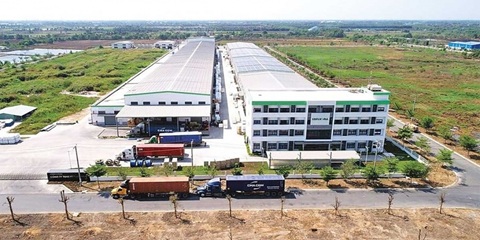
FOREIGN INVESTORS SEEKING A SYNCHRONISED MANUFACTURING ECOSYSTEM
Instead of focusing only on land costs and incentives as usual, foreign investors are seeking a synchronised manufacturing ecosystem, from stable power supply and logistics to shared infrastructure and the convenience of completing residence procedures for experts to serve their long-term investment in the country.
INFRASTRUCTURE / CONSTRUCTION / LOGISTIC / PORT
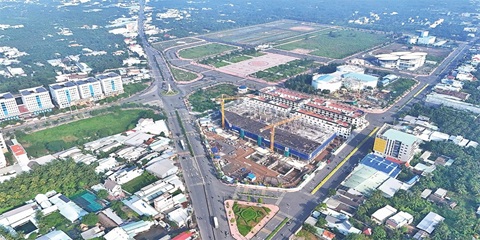
DONG THAP PROVINCE STEPS UP INDUSTRIAL EXPANSION AND INFRASTRUCTURE CONNECTIVITY
Accelerating public investment, strengthening inter-regional connectivity, and expanding industrial land are helping Dong Thap efficiently bolster competitiveness and drive economic growth. Following the 2025 merger of the former Dong Thap and Tien Giang provinces, the expanded Dong Thap province in the Mekong Delta faces mounting pressure to accelerate infrastructure development and strengthen connectivity among local economic zones, urban areas, industrial parks (IPs), and production centres.
PROPERTY / INDUSTRIAL ZONE
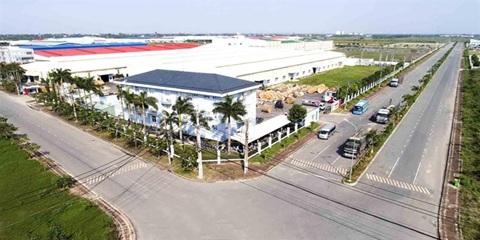
HCM CITY ATTRACTS US$5.7 BILLION INTO EXPORT PROCESSING AND INDUSTRIAL ZONES
HCM City attracted US$5.7 billion in domestic and foreign investment into its export processing and industrial zones during the first nine months of 2026. The figure exceeded the city's full-year target by 31 per cent, highlighting strong momentum in high-quality industrial investment under Resolution No.10-NQ/TW. Total investment reached 131 per cent of the 2026 target of $4.25 billion and represented a 29 per cent increase compared with the same period in 2025, according to the city's Export Processing and Industrial Zones Authority (HEPZA).

BANKING / FINANCE / INSURANCE / TAX
REMITTANCES TO HCM CITY RISE NEARLY 40% IN Q3
Remittances to HCM City reached more than US$2.83 billion in the third quarter of this year, up 39.5 per cent from the previous quarter and 3.6 per cent year-on-year. This was the first quarter showing positive annual growth this year, helping narrow the decline in remittance inflows over the first nine months. According to the State Bank of Vietnam (SBV)’s Regional Branch 2, remittances transferred to HCM City through credit institutions and economic organisations totalled $2.835 billion in Q3, an increase of more than $802 million from the previous quarter.

VIETNAM ECONOMY INVESTMENT
LOCALITIES REPORT BREAKTHROUGH RESULTS IN FDI IN FIRST NINE MONTHS
In Ho Chi Minh City, total registered capital reached $17.2 billion in the first nine months, up 4.2 times from the same period last year. The figure included more than $9.35 billion in newly registered capital and over $4.9 billion in additional capital for existing projects. Foreign investors also registered more than $2.9 billion through capital contributions and share purchases.

TECHNOLOGY
TECH SECTOR GROWTH OPENS UP OPPORTUNITIES FOR VIỆT NAM TO GO GLOBAL
The growth of the electronics, semiconductor and high-tech sectors worldwide is opening up a variety of opportunities for Vietnamese enterprises to integrate more deeply into the global supply chain. However, to become suppliers for these corporations, domestic enterprises must meet rigorous standards regarding quality, technology, productivity and order fulfilment capabilities.
Events Sponsors






















